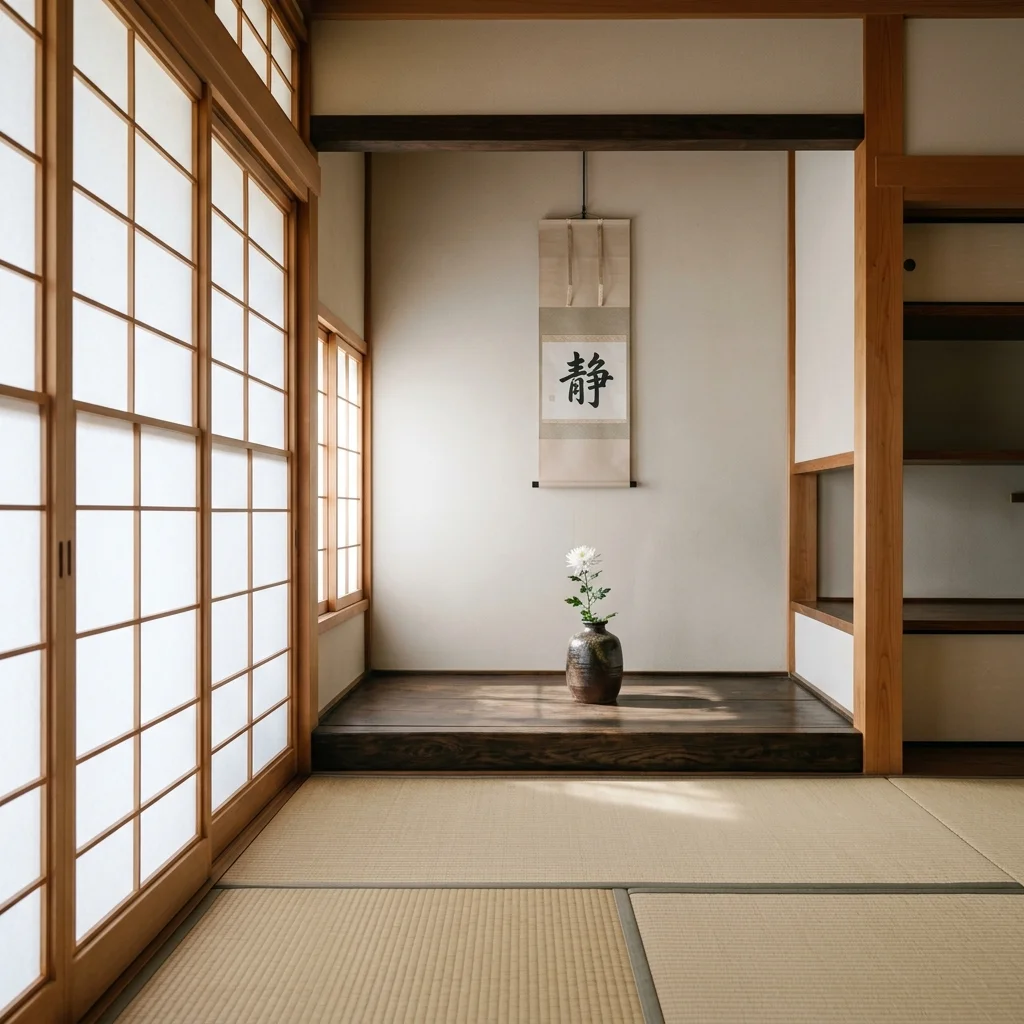
The word Yutori (ゆとり) is a classical Japanese noun derived from the archaic, now obsolete verb yutoru, which meant 'to have room, to possess free space, or to move with comfortable ease'. To understand the elastic nature of this concept, we must examine how it functions in everyday conversational grammar, as it is written strictly in hiragana or hiragana-kana hybrid, which gives it a soft, gentle, and welcoming visual footprint.
Phonetically pronounced as /yoo-toh-ree/, the word carries a smooth, breathy quality. In its raw physical application, yutori refers to **allowance, play, or mechanical leeway**. For example, when a tailor sews a linen jacket, they do not cut the fabric to match the exact physical dimensions of the client's body. Instead, they leave a few extra centimeters of loose fabric—this structural spacing is called yutori, allowing the body to bend, breathe, and move with comfort. Similarly, the slight, intentional 'play' or slack in a car's steering wheel before the gears engage is referred to as yutori. Without this slack, every minor bump on the road would cause the car to swerve violently, leading to a crash.
When applied to human psychology and scheduling, yutori shifts from mechanical slack to **mental and emotional cushioning**. To have 'kokoro no yutori' (心のゆとり) means to possess a heart that has room—a mind that carries a cushioning buffer. It indicates that you are not operating at your maximum structural limit, but have preserved an elastic pocket of energy that allows you to absorb unexpected shocks, react to stress with grace, and maintain a quiet, resilient composure.