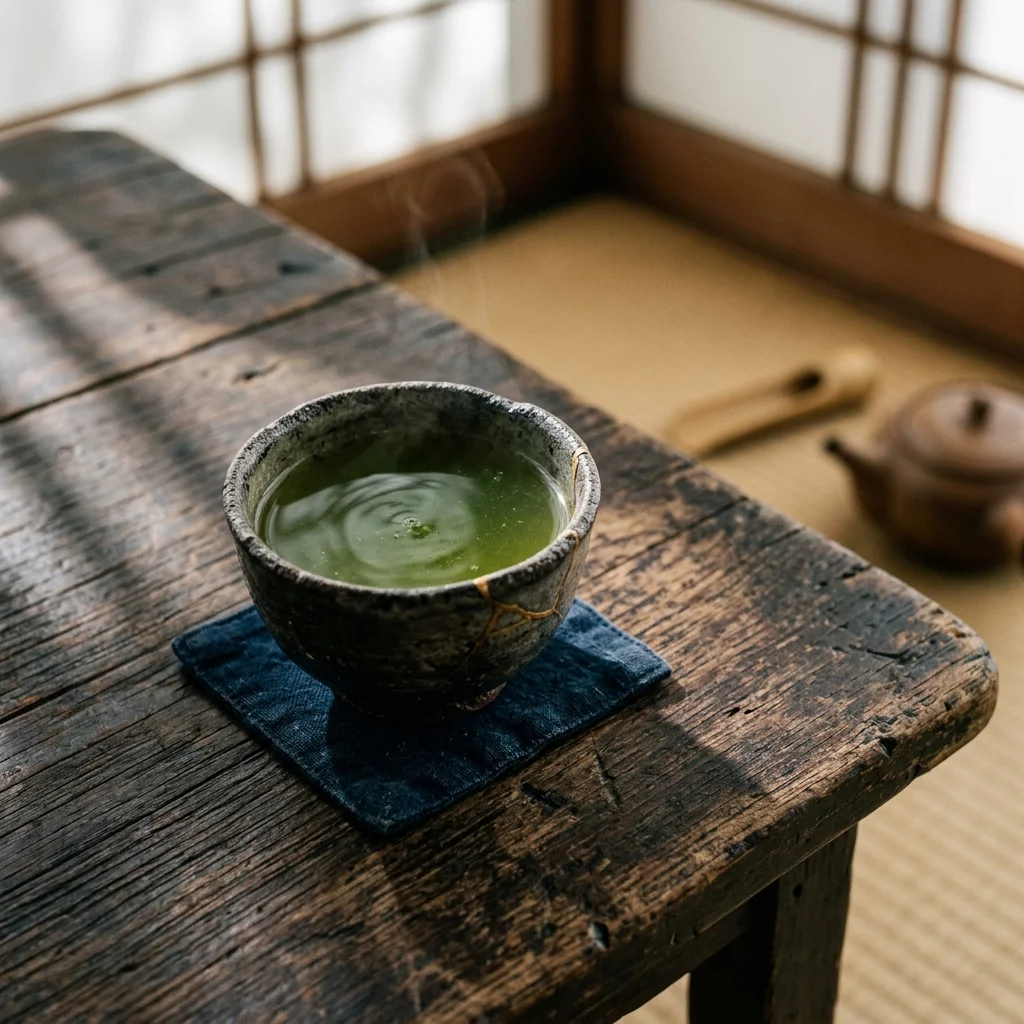
The term Wabi-Sabi (侘寂) is a beautiful linguistic pairing of two highly distinct classical Japanese concepts: Wabi (侘) and Sabi (寂). To grasp the rich emotional and artistic weight of this phrase, we must trace how each kanji character evolved from its dark, melancholic origins into a highly refined philosophy of mindful beauty.
The first character, Wabi (侘), originally stemmed from the verb wabiru, which meant to live in bleak solitude, to feel lonely, or to suffer from impoverishment. In early classical literature, it described the harsh, solitary existence of hermits living in remote mountain huts, cut off from the comforts of urban court society. However, over centuries, this feeling of loneliness underwent a deep spiritual transformation. Zen practitioners began to see this isolation as a voluntary embrace of quiet simplicity, absolute freedom from social competition, and finding inner peace in humble, unpretentious conditions. In modern aesthetics, wabi represents the spiritual refinement of voluntary poverty, quiet contentment, and rustic minimalism.
The second character, Sabi (寂), historically referred to the physical decay, rust, or withered state of material objects. It is etymologically related to the verb sabiru (to rust) and the adjective sabishii (lonely). In its early usage, it carried a negative connotation of decline and death. Yet, as Japanese poets and Zen tea masters looked closely at this decay, they realized that aged, weathered objects possessed a quiet dignity that brand-new items completely lacked. The green patina on copper, the cracks in ancient timber, and the moss growing over stone steps were recognized as beautiful evidence of the inevitable passage of time. Today, sabi represents the aesthetic appreciation of physical age, weathered textures, and the delicate beauty of impermanence.
When combined, these two characters create a harmonious whole: Wabi is the internal, spiritual attitude of finding contentment in simplicity, while Sabi is the external, material appreciation of physical age and impermanence. Phonetically pronounced as /wah-bee-sah-bee/, the word carries a soft, meditative rhythm, inviting readers to slow down and notice the quiet dignity of the natural world.