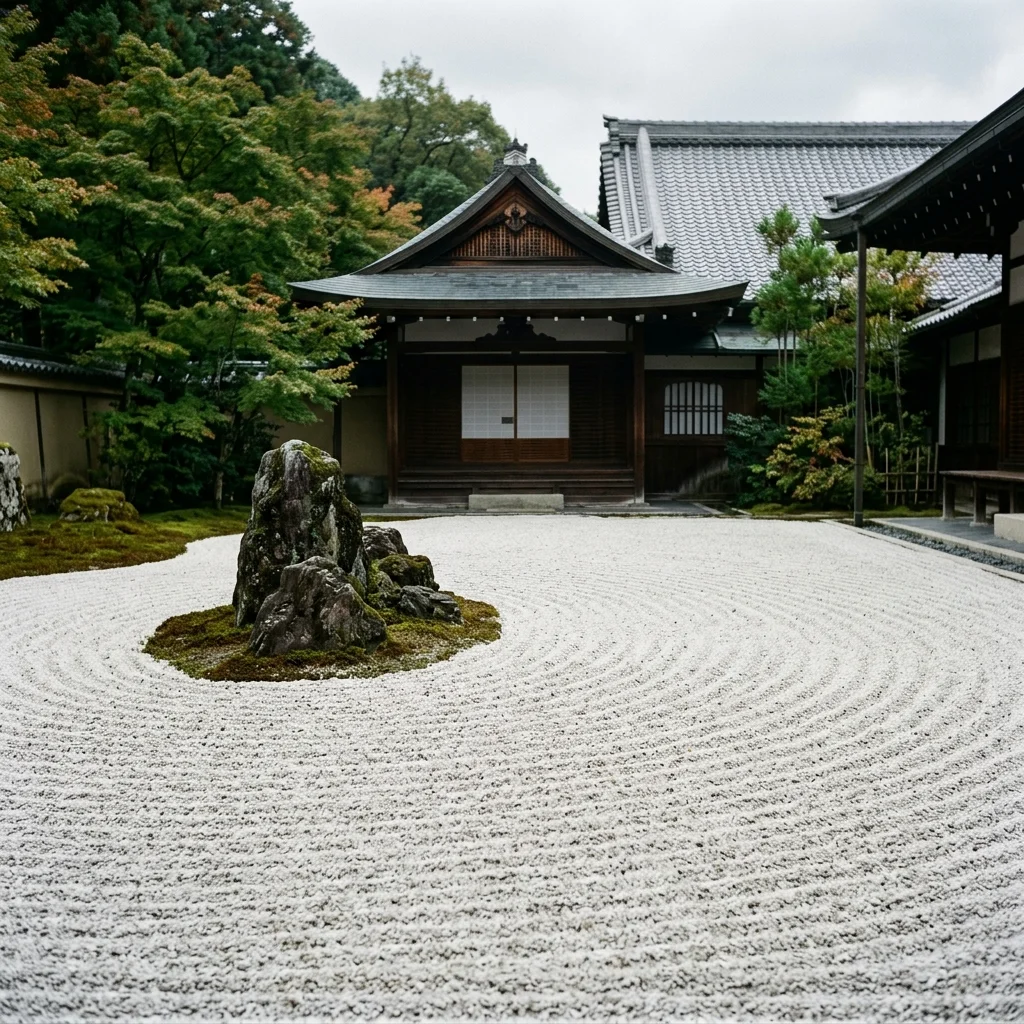
The kanji character for Ma (間) is composed of two distinct radical elements: Mon (門), representing a massive wooden 'gate' or 'doorway', and Hi (日), representing the 'sun'. In its ancient, classical form, the central radical was actually Tsuki (月), representing the 'moon'. The visual layout of the kanji is beautiful: it depicts the sun or moon shining through the narrow cracks of a closed wooden gate, creating a sliver of light.
Phonetically pronounced as a single, open vowel /mah/, the word carries a clean, lingering sound that immediately invites a quiet pause. In Japanese linguistics, the word serves as a highly versatile suffix and root, forming words like Jikan (time/space), Kukan (room/space), Ningen (human being, literally 'between people'), and Machigai (mistake, literally 'gap-mistake'), demonstrating that in the Japanese worldview, all existence, relationships, and time are defined by the quality of the interval that sits in between.