Back to Glossary
Concept Glossary

Chisoku: Finding Contentment - The Zen Art of Sufficiency and Gratitude

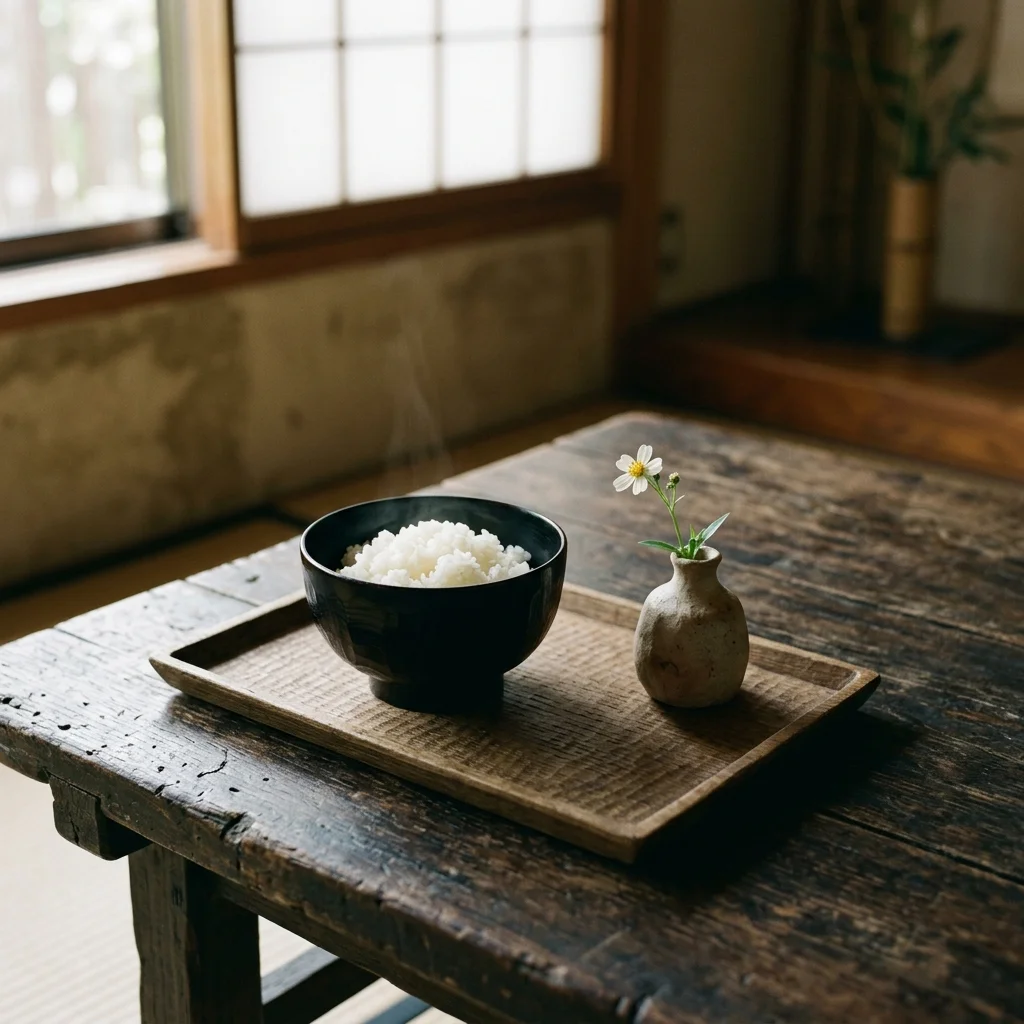
A minimalist Zen wooden tray holding a single black lacquer bowl of rice next to a tiny white wildflower in a small clay vase.
Cultural Concept

CHISOKU

知足 / ちそく

The structural beauty of Chisoku: a simple wooden tray with a single bowl of rice and a wildflower, showing that absolute abundance is found in sufficiency.

Linguistic Definition (TL;DR)

Chisoku is the quintessential Zen Buddhist concept representing contentment in sufficiency—literally 'knowing what is enough'. Rooted deeply in Buddhist monastic discipline, it advocates for voluntary simplicity, encouraging individuals to find absolute fulfillment in their current reality, escaping the endless cycle of modern consumption.

Etymology & Linguistic Analysis

// 01

The word Chisoku (知足) is a compound composed of two profound classical kanji characters: Chi (知), meaning 'to know', 'to recognize', or 'to be conscious of', and Soku (足), which etymologically represents the human 'foot', but is utilized in classical Japanese to mean 'sufficiency', 'satisfaction', or 'abundance'. Literally translated, the term means 'knowing what is sufficient' or 'recognizing abundance'.

Phonetically pronounced as /chee-so-koo/, the word carries a crisp, grounding sound that immediately invites a quiet, introspective focus. In Zen classical texts, the word stands in absolute opposition to the concept of *Muzoku* (insatiability). In written Japanese, it is highly significant that the character *Soku* (足) links the idea of walking on the earth with the feeling of being satisfied, suggesting a physical, down-to-earth practice where the individual is anchored and content in their current reality, defining a cultural worldview where true wealth is measured by what one does not require.

Deep Philosophical Foundations

// 02

At its philosophical core, Chisoku is a direct material extension of **Zen Buddhism** and **Daoist philosophy**. It represents the spiritual recognition that human desire is infinite, while the physical world is finite. Attempting to satisfy infinite desires with finite resources is viewed as the primary source of human suffering.

In the Zen monastic tradition, this philosophy is beautifully codified by the famous stone basin (*Tsukubai*) located at the Ryōan-ji temple in Kyoto. The basin features a central square water reservoir surrounded by four kanji characters. Remarkably, the square reservoir acts as the central radical for all four characters. When read together, they form the phrase: **「吾唯知足」 (Ware tada shiru taru)**, which translates to **'I only know contentment'** or **'I know that I am sufficient'**. The design is a brilliant visual puzzle: it teaches the Zen novice that he who knows contentment is rich even if he possesses nothing, while he who does not know contentment is poor even if he possesses all the wealth in the world.

This philosophy directly feeds into the concept of **Wabi-Sabi**—finding deep beauty in the simple, weathered, and unadorned. Rather than seeking pristine, expensive luxury goods, the *Chisoku* mind finds complete satisfaction in a cracked tea bowl, a patched linen garment, or a simple wooden stool. These items carry the physical record of being loved and used over generations, acquiring a rich character (*Patina*) that represents material honesty and spiritual freedom, liberating the human heart from the exhausting pressure of social status and endless consumption.

Historical Evolution

// 03

The historical lineage of Chisoku spans from the early Buddhist scriptures (*Sutras*) introduced from India to the revolutionary tea room designs of the Azuchi-Momoyama period.

The historical journey began with the *Yuikyogyo* (The Sutra of the Buddha's Last Teachings), where the Buddha famously declared: "He who is content is happy even when sleeping on the ground; he who is not content is dissatisfied even when living in a heavenly palace." This monastic guideline of voluntary simplicity became the operational baseline for Zen temples established during the Kamakura period (1185–1333). The monks were restricted to a few essential possessions—their bowls (*Oryoki*), a simple robe, and a clean sleeping mat—learning to find absolute mental clarity and physical energy within these strict material limits.

By the Sengoku (Warring States) period, as tea masters sought a path to peace amidst constant civil war, the philosophy of *Chisoku* was physically built into the **Tea Ceremony (Chado)**. The legendary tea master Sen no Rikyu revolutionized tea aesthetics by designing the **Taian (待庵)**—a tea room measuring only **two tatami mats** (about six feet square). Rikyu stripped away all luxurious decorations, utilizing mud walls, raw cedar posts, and a simple sliding paper window. The entrance was deliberately built low, forcing guests to crawl inside on their knees, eliminating class distinctions. Within this tiny, rustic space, Rikyu demonstrated that a single bowl of green tea, a simple wildflower, and the soft sound of boiling water were completely sufficient to experience the infinite beauty of the universe, cementing *Chisoku* as a highly prestigious design standard.

Cultural Case Studies

// 04

The practical application of Chisoku can be observed across three key traditional and modern Japanese structures: **Shojin Ryori (Zen Temple Cuisine)**, **Oryoki (Monastic Lacquer Bowl Sets)**, and the modern **Japandi Minimalist Movement**.

1. Shojin Ryori and Ichiju-Issai: Traditional Zen temple cuisine, known as *Shojin Ryori*, is built around the nutritional principle of *Ichiju-Issai* (literally 'one soup, one side dish'). The meal is strictly vegetarian and vegan, constructed around local, seasonal grains and wild vegetables. The chef utilizes every single part of the ingredient—such as using radish skins for pickles and vegetable trimmings for soup stock—ensuring zero waste. The meal is simple and unpretentious, designed to satisfy the body's physical needs while maintaining absolute sensory clarity, demonstrating that high culinary satisfaction is achieved through purity and respect rather than excess.

2. Oryoki (Monastic Lacquer Bowl Sets): In Zen monasteries, monks eat their meals using a nested set of lacquer bowls called *Oryoki* (literally 'the vessel that contains just enough'). The set contains five lightweight wooden bowls that fit perfectly inside one another, wrapped in a simple cloth. During the silent, highly choreographic meal ritual, the monk portions the rice, soup, and vegetables into the bowls, consuming every grain. After eating, the monk washes the bowls inside the dining hall using warm water and a dry cloth, wrapping the set back together. The *Oryoki* is a masterpiece of compact, portable design, showing that a human being requires only five simple bowls to sustain a highly active intellectual and physical life.

3. The Modern Japandi Minimalist Movement: In contemporary global design, the fusion of Japanese *Chisoku* and Scandinavian minimalism—known as *Japandi*—is transforming modern homes. This design movement rejects the consumerist pressure of home decoration. Instead of filling rooms with decorative items and seasonal furniture, *Japandi* interior designers keep spaces open, airy, and uncluttered. They prioritize a few, high-quality furniture pieces made of natural, sustainably sourced timber and raw stone. This visual empty space (*Ma*) reduces cognitive fatigue and stress, allowing residents to experience the home as a peaceful sanctuary of mental rest.
Practical Guide for Foreigners

// 05

For international visitors and modern urban residents, cultivating the spirit of Chisoku is a powerful path to overcome the epidemics of chronic stress, lifestyle inflation, and environmental anxiety.

Dining Mindfully (Ichiju-Issai at Home): You can practice *Chisoku* at your own dinner table by transitioning to the *Ichiju-Issai* model once a week: prepare a single, high-quality bowl of brown rice, a simple seasonal vegetable soup, and a side of natural pickles. Turn off all digital screens, close your eyes for 1 minute before eating to show gratitude for the farmers and natural elements, and eat slowly, appreciating the pure, natural flavors without relying on heavy spices or processed additives.

Escaping the Hedonic Treadmill (Conquering Upgrades): Modern consumerism operates by triggering our *Hedonic Adaptation*—the psychological law where a new purchase brings a temporary spike in happiness, which quickly fades, forcing us to buy the next upgrade. You can practice *Chisoku* by establishing a 'one-in, one-out' rule for your wardrobe and electronics: before upgrading your smartphone or buying a new coat, force yourself to write a list of ten ways your current device or garment is completely sufficient for your daily needs, breaking the cycle of artificial desire.

Appreciating Wabi-Sabi Antiques: When decorating your home or selecting tableware, seek out weathered, handmade, or vintage items rather than sterile mass-produced plastic goods. A wooden table displaying organic scratches, a hand-thrown ceramic mug with slight glaze variations, or an antique copper vase carrying a deep green patina are beautiful physical anchors of *Chisoku*. They remind us that true beauty and abundance are found in items that have weathered time with dignity, rather than flawless, disposable novelties.

Dialogue Scenarios

// 06

Review these bilingual dialogue scenarios to understand how Zen teachers and everyday families discuss and practice the contentment of Chisoku.

Scenario A: A Zen Master and a Wealthy Seeker (寺院の書院で)
A Zen teacher explains to a stressed businessman why accumulating more wealth has failed to bring him peace.

Seeker: I have built a successful global company, purchased three luxury homes, and secured my wealth, yet I feel constantly anxious and empty. What am I missing?
Master: あなたは無限の欲を、有限のモノで満たそうとしている。「知足」の教えを忘れているのです。足るを知る者は貧しくとも富んでおり、足るを知らぬ者は富んでいても貧しいのですよ。
(You are attempting to satisfy infinite desires with finite things. You have forgotten the teaching of Chisoku. He who knows contentment is rich even if poor; he who does not know contentment is poor even if rich.)
Seeker: Contentment in sufficiency... how do I start?
Master: 今日一日、三杯の質素な粥を食べ、静かに座りなさい。あなたがすでに持っている「呼吸」と「今」の豊かさに気づくのです。
(Today, eat three simple bowls of rice porridge and sit quietly. Realize the absolute richness of your breathing and the present moment that you already possess.)

Scenario B: A Parent and Child Discussing Toy Purchase (おもちゃ屋の店先で)
A father gently guides his child to appreciate their existing toys instead of buying a flashy new model.

Child: パパ、この新しいロボットのおもちゃ買って!友達がみんな持ってるんだ。これがあれば絶対に飽きないよ!
(Dad, buy me this new robot toy! All my friends have it. If I have this, I will never get bored!)
Father: お家にあるロボットはまだ動くし、この前も楽しく遊んでいたよね。新しいのを買う前に、今あるおもちゃをもう一度大切に遊んでみよう。「知足」つまり「今あるもので満足する」ことを学ぶと、おもちゃに振り回されずに楽しく暮らせるよ。
(The robot you have at home still works, and you were having fun with it just the other day. Before buying a new one, let's play with and appreciate the toys you have again. When you learn Chisoku—to be satisfied with what you have—you can live happily without being controlled by novelties.)
Child: うーん、そうだね。お家にあるロボット、最近遊んでなかったから、帰ったら一緒に合体させて遊ぼう!
(Hmm, you're right. I haven't played with my robot at home recently. Let's go home and play with it together!)

Modern Ecological & Social Relevance

// 07

In our modern 21st-century society, Chisoku has transitioned from a monastic Zen discipline to a critical global philosophy for environmental preservation, economic degrowth, and global sustainability.

The primary global value of the Chisoku model is its direct challenge to the industrial system of endless consumerism, which drives global deforestation, carbon emissions, and resource depletion. Industrial economies are built on the thermodynamic impossibility of infinite growth on a finite planet. The philosophy of *Chisoku*—advocating for a transition toward voluntary simplicity, zero waste (*Mottainai*), and localized circular economies—provides a highly mature, culturally rich framework for the global **Degrowth (Post-Growth)** movement, demonstrating that a high-quality human life can be achieved with a fraction of the raw materials and energy consumed by modern consumerist lifestyles.

Furthermore, in the realm of clinical psychology and public health, *Chisoku* is driving a major transition in how we treat anxiety, depression, and addiction. Modern advertising operates by continuously triggering our feelings of inadequacy—telling us we are not beautiful, wealthy, or successful enough without purchasing their products. This continuous trigger is a major driver of modern mental health epidemics. By incorporating *Chisoku* into psychological wellness therapies (such as mindfulness-based cognitive therapies that focus on cultivating gratitude for existing physiological and social connections), clinicians are helping patients build robust emotional boundaries against commercial manipulation, proving that true freedom is found in a quiet, content heart that knows it is already completely sufficient.

Practical Mastery

Actionable Cultural Skills

Integrate the philosophical wisdom of Chisoku into your everyday lifestyle through these practical, hands-on Japanese technical disciplines.

Zen Visual Ma Room Clearance

知足の空間整理
初級 (Beginner)⏱️ 1 Hour

Mastering the basic decluttering ritual, keeping only the items that serve a direct functional or spiritual purpose to restore spatial peace.

A clean cardboard sorting boxTenugui cleaning cloth
📋 Practical Steps
  1. 01.Select a single, crowded table or desk surface, and remove absolutely all objects, placing them inside the sorting box.
  2. 02.Wipe the surface completely clean using a damp cloth, appreciating the bare, smooth wood grain and the empty space.
  3. 03.Select exactly two high-quality items from the box that are highly useful or loved, returning them to the table, and store or donate the remaining objects.

Buddhist Shojin Ryori Portioning

精進料理の知足配膳
中級 (Intermediate)⏱️ 45 Minutes

Cooking and portioning a simple, nutritious vegan meal modeled after Zen temple cuisine, celebrating natural flavors without excess.

Refined brown riceSeasonal vegetablesTraditional lacquer bowl set (Oryoki)
📋 Practical Steps
  1. 01.Prepare a simple bowl of brown rice, a bowl of clear vegetable soup, and a small side dish of pickled seasonal vegetables (*Ichiju-Issai*).
  2. 02.Portion the food carefully into the lacquer bowls, adjusting the amounts to satisfy your nutritional needs without leaving excess waste.
  3. 03.Sit quietly for 2 minutes before dining, contemplating the human labor and natural elements that generated the food, and consume every grain with gratitude.

Natural Linseed Oil Wood Preservation

古材の生漆・油手入れ
上級 (Advanced)⏱️ 2 Days

Restoring and preserving weathered wooden furniture using organic oils, celebrating the natural aged patina rather than applying modern plastic veneers.

Weathered timber block or antique wooden tableRaw cold-pressed linseed oilFine-grit sandpaper (#600)Soft cotton polishing cloths
📋 Practical Steps
  1. 01.Gently sand the weathered wood surface along the grain to remove loose debris, taking care to preserve the dark gray aged patina.
  2. 02.Apply a small drop of cold-pressed linseed oil onto a polishing cloth, massaging it into the timber in slow, circular motions to hydrate the dry fibers.
  3. 03.Wipe away all excess oil immediately using a clean, dry cloth, and let the wood cure for 24 hours to yield a soft, matte ambient glow.