Back to Glossary
Concept Glossary

Shinra-Bansho: The Myriad Phenomena of Nature & Universal Creation

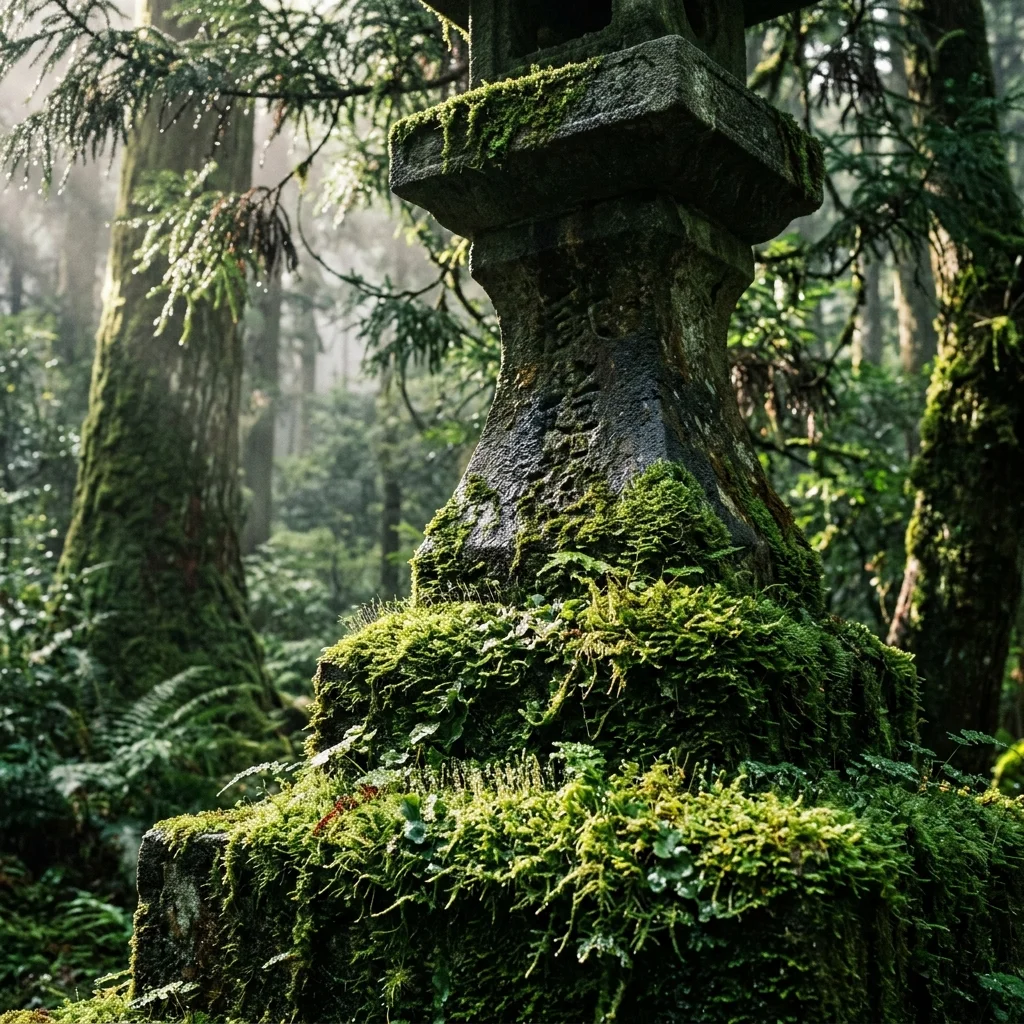
A close-up photograph of thick, vibrant green moss growing on a wet, ancient stone lantern inside a misty cedar shrine forest.
Cultural Concept

SHINRA-BANSHO

森羅万象 / しんらばんしょう

The microscopic world reflecting the macroscopic whole: moss creeping over a weathered granite lantern inside a sacred shrine forest, illustrating the Shinto truth of Shinra-Bansho.

Linguistic Definition (TL;DR)

Shinra-Bansho is a classical Japanese phrase representing all creation, the myriad phenomena of nature, and the entire physical universe. Rooted deeply in Shinto animism and Buddhist interdependency, this term acknowledges the sacred, divine spiritual presence residing inside every single living or non-living entity across our vast cosmos.

Etymology & Linguistic Analysis

// 01

The majestic four-character idiomatic phrase Shinra-Bansho (森羅万象), known in Japanese linguistic terminology as a Yojijukugo, is a beautiful synthesis of Chinese characters that describes the absolute entirety of the universe. To truly comprehend the deep spiritual and architectural weight of this phrase, we must analyze the etymological roots of each individual kanji character in minute detail.

The first character, Shin (森), is composed of three identical radicals representing 'tree' (木). In East Asian logographic systems, the stacking of three trees symbolizes a dense, ancient, and wild forest—a sacred canopy that shields the earth from the harsh sun, creating a self-contained wilderness. It represents the raw, biological depth of nature. The second character, Ra (羅), historically referred to a fine, woven silk gauze net used in high-class Heian garments to filter the hot summer air, or for catching birds in classical fields. In this philosophical context, it represents the concept of spreading out, weaving, or arranging in an intricate, infinite web. The physical transparency and lightness of Ra are metaphorically applied to the unseen, interconnected net of life that binds all elements together. Therefore, the combination of Shinra (森羅) metaphorically means 'arranged and woven together like the countless trees of a dense forest, forming a beautiful, protective net across the earth'.

The third character, Ban (万), translates directly to 'ten thousand' or 'myriad', which historically served as the numerical symbol for infinity, representing a quantity that transcends human measurement. The final character, Sho (象), historically depicted an elephant in ancient Chinese pictographs but evolved to represent visible forms, shapes, phenomena, or cosmic manifestations. When combined as Bansho (万象), the term refers directly to 'the myriad shapes and visible phenomena of the physical cosmos'. Spoken together, Shinra-Bansho creates a rhythmic, breathy cadence—pronounced /sheen-rah-bahn-shoh/—evoking a sense of absolute wholeness, reminding us that every single leaf, stone, and star is woven into a single, infinite fabric of creation that is both physically real and spiritually interconnected.

Deep Philosophical Foundations

// 02

At its deepest philosophical core, Shinra-Bansho is not a secular ecological slogan; it is the ultimate material expression of Japan’s dual spiritual heritage: Shinto animism and Esoteric Buddhist theology.

In the ancient Shinto worldview, the cosmos is not a dead, mechanical clockwork of physical matter waiting to be exploited by humans. Instead, it is a living, breathing sanctuary inhabited by Yaoyorozu no Kami (the Eight Million Kami, or divine spirits). Shinto teaches that divinity is not located in an abstract, distant heaven; it resides directly within the physical elements of the earth. A towering granite boulder, a winding river, an ancient cedar tree, a heavy summer mist, and even microscopic forest insects are recognized as elder living entities that contain their own divine spark. Shinra-Bansho is the verbal recognition of this sacred, living ecosystem. Humans are not considered superior masters of this earth; they are merely one thread woven into the same fabric of creation, requiring a constant state of spiritual humility and active gratitude. Entering the forest allows the trees to actively absorb the spiritual rust (*Kegare*) of urban life, returning the human to a state of *Akaki Kiyoki Kokoro* (a red, pure, and sincere heart) that is open to the cosmos.

Complementing this animistic baseline is the Buddhist concept of Pratītyasamutpāda (dependent origination), which asserts that no physical entity exists in isolation. A single leaf falling from a tree represents an infinite, interconnected web of cosmic events: the mineral-rich soil that nourished the roots, the summer rains that sustained the leaves, the solar radiation that fueled photosynthesis, and the seasonal winds that triggered the fall. Wasting or ignoring a physical object is therefore viewed as a direct failure to recognize this deep interconnectedness. In Zen Buddhism, this is linked to the concept of San-Sui (mountains and rivers), where the physical landscape is viewed not as scenery, but as the literal, radiant body of the cosmic Buddha. Shinra-Bansho invites us to see the infinite within the finite, recognizing that the entire universe is present in a single grain of sand or a drop of morning dew, and that our own survival depends on maintaining this balance.

Historical Evolution

// 03

The historical journey of Shinra-Bansho spans from the early Japanese poetry anthologies of the Heian court to the innovative naturalist studies of the Edo period.

During the Heian period (794–1185), court poets utilized early variations of the phrase to describe the chaotic, beautiful abundance of the natural seasons. The changing colors of the autumn leaves, the soft spring mists, and the cold winter snows were seen as outward signs of a deeper, invisible spiritual order. In these early courtly circles, to have an aesthetic understanding of the world meant to tune one's own emotional state to match the shifting patterns of the surrounding landscape, establishing a cultural DNA of nature-attunement that was deeply emotional and highly refined.

During the Edo period (1603–1867), under the long peace of the Tokugawa shogunate, this poetic appreciation transformed into a highly sophisticated form of natural science and agricultural ethics. Scholars like Kaibara Ekiken (1630–1714) published massive encyclopedic treatises like Yamato Honzo (Japanese Materia Medica), cataloging thousands of local plants, minerals, and animals. Ekiken argued that studying the details of nature was a form of moral cultivation. He taught that by understanding the medical and biological properties of plants, humans could learn how to live in harmony with the earth. This era also saw the growth of sophisticated forestry management techniques in Kyoto and Yoshino. Communities developed sustainable harvest systems (like the famous Daisugi pruning method) to harvest timber without destroying the living forest canopy. Rice farmers collected fallen leaves (*Ochiba*) from community forests to ferment into rich humus (*Taihi*), showing a practical understanding of the nutrient cycle of all phenomena and demonstrating a practical, multi-generational execution of Shinra-Bansho principles that protected the soil for future generations.

Cultural Case Studies

// 04

To understand how the philosophy of Shinra-Bansho manifests in the physical world, we can examine two extraordinary Japanese cultural models: the sacred shrine forests of **Meiji Jingu** and the tactile, traditional discipline of the **Miyadaiku** master temple carpenters.

1. The Sacred Shrine Forest of Meiji Jingu (Chinju-no-mori): Nestled in the absolute center of dense, modern Tokyo, Meiji Jingu is surrounded by a massive 70-hectare forest. Crucially, this forest is not a natural woodland; it was meticulously designed and planted in 1915 by a team of visionary Japanese foresters led by Honda Seiroku. Understanding the laws of ecological succession, these designers rejected generic ornamental trees. Instead, they traveled across Japan, sourcing native species like oaks, camphor trees, and Japanese cedars. They calculated how these species would compete and interact over a hundred years, predicting that the forest would naturally transition into a self-sustaining, climax ecosystem that required zero human fertilizer, weeding, or watering. The local birds and wind acted as natural seed carriers, completing the design. Today, the forest stands as a magnificent, living proof of Shinra-Bansho, where thousands of bird, insect, and plant species live in perfect harmony inside a modern metropolis, filtering the city's air and acting as a cooling thermal shield.

2. The Tactile Devotion of Miyadaiku Temple Builders: Miyadaiku are traditional Japanese carpenters who specialize in building and restoring ancient wooden temples and Shinto shrines without using a single metal nail, relying entirely on complex interlocking wood joinery (Tsugite). Before a master carpenter ever touches a piece of timber with his chisel, he performs a Shinto purification ceremony (*Oharai*) at the base of the living tree, asking the forest spirits for permission to harvest it. When shaping the logs, the carpenter carefully studies the natural grain, rings, and curvature of the wood. A tree that grew on a windy, exposed south-facing mountain slope is placed on the south side of the temple structure, where it will naturally resist the wind. They utilize the high-precision *Kanawa-tsugi* joint, which uses zero glue or metal screws, relying entirely on the natural swelling of the wood fibers under winter humidity. By honoring the individual character and natural history of each piece of wood, the Miyadaiku builder ensures the temple stands for a thousand years, demonstrating absolute respect for the living voice of materials.

Practical Guide for Foreigners

// 05

For international travelers and modern city dwellers, adopting the spirit of Shinra-Bansho is a powerful way to cultivate mindfulness, reduce stress, and build a deep, personal connection to the earth's natural rhythms.

Shrine Visit Etiquette: When visiting a traditional Shinto shrine in Japan, pay close attention to the surrounding trees and rocks. Many shrines feature massive, ancient trees wrapped in a thick, sacred straw rope decorated with white paper zig-zags (known as Shimenawa). This rope indicates that the tree is a Shinboku—a sacred vessel inhabited by a Kami. Never touch, climb, or carve into these trees. Walk along the gravel paths in a quiet, respectful state, and avoid walking in the absolute center of the path (the Seichu), which is reserved for the passage of the divine spirits. Always bow slightly before entering the Torii gate, showing humility before the natural sanctuary.

Cultivating Daily Nature Connections: You do not need to visit a remote Japanese forest to practice Shinra-Bansho. You can apply this mindset in your own urban routine by engaging in slow, daily observation of the micro-nature around you. Take five minutes in the morning to stand on your balcony or look out your window, observing the exact shape of the clouds, the direction of the wind, and the behavior of the local birds. Notice the weeds growing through the cracks in the concrete, realizing that even in the middle of a concrete city, the infinite force of creation is constantly at work. Instead of constantly checking your phone, focus on the changing sunlight patterns on your wall. This simple practice helps break the modern illusion of isolation, ground your thoughts, and nurture deep psychological peace, connecting your breathing to the wider atmosphere of the earth.

Dialogue Scenarios

// 06

To understand how Shinra-Bansho is spoken and integrated into natural Japanese conversations, review this bilingual dialogue scenario between a traveler and a mountain ascetic (Yamabushi).

Scenario A: Walking through the Sacred Peaks (出羽三山の杉林で)
An international traveler climbs the ancient stone steps of Mount Haguro, guided by a traditional Yamabushi monk dressed in ceremonial white robes.

Traveler: These towering cedar trees are incredible. The forest is so dense, and the sound of the wind through the canopy feels almost like a voice. Is it true that you consider every single tree here to be a spirit?
Yamabushi: はい、その通りです。私たちはこの山全体、風も水も、すべての木や岩にも神々が宿っていると信じています。これこそが「森羅万象」の教えです。
(Yes, that is correct. We believe that this entire mountain—the wind, the water, every single tree and rock—houses the divine. This is the core teaching of Shinra-Bansho.)
Traveler: It’s a beautiful perspective. In the West, we often view the forest as a resource for timber or just a scenic backdrop for hiking. Here, it feels like I am walking inside a giant, living temple.
Yamabushi: そうですね。人間は自然の支配者ではありません。私たちもこの森羅万象という大きな命の網の一部に過ぎないのです。だからこそ、一歩一歩に感謝の祈りを捧げて歩くのです。
(Indeed. Humans are not the rulers of nature. We are merely one thread in this grand, living net of Shinra-Bansho. That is why we walk while offering prayers of gratitude with every single step.)
Traveler: I can feel that connection. When I step silently on these ancient stones, my breathing seems to slow down and match the rustle of the leaves above.
Yamabushi: 素晴らしいですね。木々の呼吸と自分の呼吸が重なる。それこそが、森羅万象の生命の巡りを感じている証拠ですよ。
(That is wonderful. Your breathing overlapping with the breathing of the trees. That is the exact proof that you are feeling the life cycle of Shinra-Bansho.)

Modern Ecological & Social Relevance

// 07

In the 21st century, the ancient philosophy of Shinra-Bansho has transcended its spiritual origins to become a crucial global framework for environmental sustainability, advanced food science, and psychological resilience.

As the global scientific community faces the severe ecological threats of climate change, mass extinction, and resource depletion, our modern industrial economies are realizing that the old Western model of treating nature as an infinite drawer of raw materials is no longer viable. Adopting a Shinra-Bansho perspective offers a direct path toward a sustainable, circular economy. By recognizing that all physical elements—from organic food waste to discarded electronic components—possess an inherent value and must be returned to the cycle of creation, modern designers are developing advanced cradle-to-cradle manufacturing systems that eliminate waste completely, mimicking the perfect efficiency of a natural forest. Technology companies are developing green databases to track carbon life cycles from raw extraction to recycling.

In the parallel realm of mental health and social psychology, Shinra-Bansho is playing an increasingly vital role in combating the growing epidemic of 'ecological anxiety' and digital isolation. Modern humans spend over 90% of their lives inside climate-controlled buildings, staring at artificial screens that project simulated realities. This extreme separation from the natural world has been linked by clinical psychologists to high rates of chronic stress, anxiety, and a loss of personal meaning. Shinra-Bansho acts as a soothing, compassionate refuge. It reminds us that we are not separate observers stranded on a hostile planet; we are living parts of a grand, beautiful, and self-regulating universe. By mindfully stepping into this universal flow, we restore our emotional balance, ground our spirits, and find the resilience needed to nurture both ourselves and the earth, protecting the myriad forms of life that share our cosmic home.

Practical Mastery

Actionable Cultural Skills

Integrate the philosophical wisdom of Shinra-bansho into your everyday lifestyle through these practical, hands-on Japanese technical disciplines.

Shinra-yoku Forest Meditative Viewing

森羅の林冠瞑想
初級 (Beginner)⏱️ 30 Minutes

Mastering the ancient art of quiet forest observation, tuning the senses to the subtle, simultaneous movements of the forest canopy.

A quiet natural woodlandCotton sitting mat
📋 Practical Steps
  1. 01.Select a quiet, old-growth woodland location, far removed from modern artificial traffic, and place your cotton mat at the base of a mature cedar or oak tree.
  2. 02.Sit comfortably with your spine erect, closing your eyes for five minutes to allow your heart rate to drop and sync with the ambient wind.
  3. 03.Open your eyes slowly, looking directly upward through the canopy branches, and trace the gentle, interlocking dance of leaves against the sky without focusing on any single leaf.

Miniature Animist Tabletop Garden Design

万象の卓上庭園造形
中級 (Intermediate)⏱️ 1.5 Hours

Designing a miniature, living landscape that represents the infinite harmony of the universe within a compact clay frame.

Handmade shallow clay traySourced forest mossWeathered river stonesFine white sand
📋 Practical Steps
  1. 01.Rinse and dry your handmade clay tray, filling the base with a thin layer of organic forest soil mixed with fine drainage gravel.
  2. 02.Arrange three weathered river stones in an asymmetrical triangular pattern (representing heaven, earth, and humanity), ensuring their heaviest visual bases are buried in the soil.
  3. 03.Gently press different varieties of sourced moss around the stones to represent rolling mountain slopes, leaving a flat area filled with fine white sand to represent the vast flowing ocean.

Sensory Nature Auditory Journaling

自然音の感覚記述
初級 (Beginner)⏱️ 1 Hour

Engaging your hearing to detect and record the layered acoustic patterns of natural wilderness, capturing the voice of all creation.

Textured washi paper notebookFine ink pen
📋 Practical Steps
  1. 01.Find a comfortable seating spot near running water or a dense grove of trees, keeping your notebook open and your pen resting in your hand.
  2. 02.Close your eyes and listen specifically for three distinct acoustic layers: the sharp foreground (rustling grass), the midground (flowing stream), and the distant background (wind over peaks).
  3. 03.Open your eyes and write down short, poetic, sensory descriptions of these sounds in your notebook, reflecting the Shinto truth that every sound is a manifestation of the Kami.