Back to Glossary
Concept Glossary

Yugen: The Beauty of Hidden Grace & Profound Suggestive Imagery

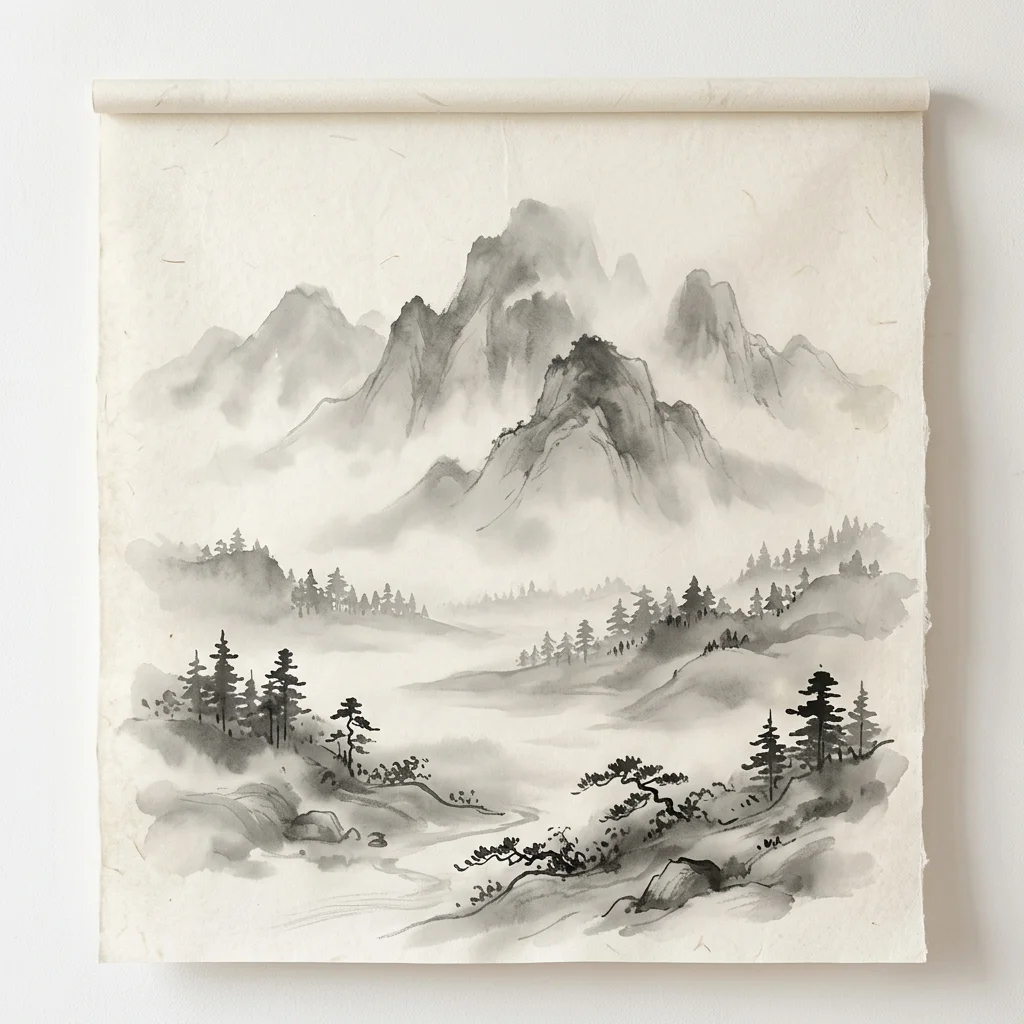
A minimalist landscape reminiscent of traditional Japanese Sumi-e ink wash painting.
Cultural Concept

YUGEN

幽玄 / ゆうげん

A minimalist Sumi-e landscape of mist-shrouded mountain peaks and distant pine tree silhouettes, illustrating the unseen depth and suggestive grace of Yugen.

Linguistic Definition (TL;DR)

Yugen is a profound concept in traditional Japanese aesthetics, capturing an elusive, mysterious grace and deep beauty that cannot be fully expressed in words. Expressed through mist-shrouded mountain vistas, subtle shadows, and minimalist Zen paintings, it invites quiet contemplation of the infinite universe beyond physical reality.

Etymology & Linguistic Analysis

// 01

The word Yugen (幽玄) is one of the most intellectually profound and elusive terms in classical Japanese aesthetics. Expressing a highly complex emotional state rather than a concrete material object, its linguistic breakdown reveals a deep, mysterious view of reality.

To understand the poetic and philosophical weight of the word, we must look closely at its individual kanji characters:

  • Yu (幽): The first character is composed of the radical for 'thread' (幺) doubled and sheltered under the radical for 'mountain' (山). In its ancient Chinese origins, it represented something tiny, hidden behind mountain folds, or shrouded in mist. Linguistically, it conveys a sense of darkness, silence, and that which is deep, faint, and invisible to the naked eye. It is the quality of being hidden, out of sight, yet felt intuitively.
  • Gen (玄): The second character historically represented a dark, deep color—specifically, a profound shade of reddish-black that was associated with the primary, chaotic state of the cosmos. In Daoist philosophy, Gen represents the profound, mysterious source of all existence—the boundary where the visible universe dissolves into the infinite void. It is synonymous with ultimate truth, mystery, and the deep, silent gravity of the cosmos.

When combined as Yugen, the term literally translates to 'deep mystery', 'faint darkness', or 'invisible depth'. Phonetically pronounced as /yoo-gen/, the word is spoken with a long, resonant drawl, inviting the listener to quiet their thoughts and contemplate the vast, unseen layers of existence that lie beneath the surface of everyday reality.

Deep Philosophical Foundations

// 02

At its core, Yugen is not a simple secular design trend or a standard theatrical technique; it is a direct extension of Japan's deep spiritual heritage: **Zen Buddhism**, **Daoism**, and the aesthetic concept of **Ma (間 - negative space)**.

In Zen philosophy, the ultimate reality cannot be expressed in words or captured in concrete forms. The physical world we see, hear, and touch is merely a transient manifestation of the infinite void. To present an object in its complete, highly polished state is to limit its potential, trapping the mind in a single, shallow perspective. Yugen represents the aesthetic expression of this boundless void. By intentionally obscuring details, using deep shadows, and leaving space empty, the Zen artist invites the viewer to look past the physical material, using their own spiritual intuition to complete the work. It is the realization that the unseen is infinitely more powerful and beautiful than the seen.

Complementing this is the Daoist concept of the **Dao (the Way)** as a flowing, mysterious force that cannot be named. Daoism teaches that true harmony is achieved by aligning oneself with this unseen, natural flow. Yugen represents the visual and emotional manifestation of this alignment. A mist-shrouded mountain peak, a silent moon hidden behind thin clouds, and the faint scent of wild plum blossoms are all expressions of Yugen. They do not force themselves upon the observer; instead, they suggest a vast, hidden beauty, encouraging a state of quiet humility and deep, peaceful contemplation of the cosmos.

Historical Evolution

// 03

The historical journey of Yugen spans from the ancient poetry matches of the Heian period to the highly structured, spiritual theater of the Muromachi period.

During the Heian period (794–1185), the term was primarily used in literary criticism to praise poetry that possessed a deep, suggestive grace. A poem was considered to have yugen if its words carried a lingering emotional echo that could not be explained by its literal meaning. The great poet Fujiwara no Shunzei (1114–1204) championed this style, arguing that high-quality poetry should be like a beautiful woman standing in the soft, misty twilight—obscured, mysterious, and elegant.

The ultimate transformation of Yugen occurred during the Muromachi period (1336–1573) through the development of **Noh Theater** by the legendary actor and playwright **Zeami Motokiyo (1363–1443)**. Zeami redefined the entire purpose of dramatic performance. Prior to his work, theater was often a loud, athletic display of direct actions. Zeami integrated Zen principles into Noh, declaring that the ultimate goal of the actor was to embody Yugen—a quiet, mysterious, and graceful beauty that transcended the physical boundaries of the stage.

To achieve this, Zeami designed a highly stylized, slow dramatic language:

  • The Noh Mask (Noh-men): Crafted from wood and painted with a neutral expression, the mask is designed so that when the actor slightly tilts their head up or down (actions known as teru and kumoru), the play of shadows on the wood creates incredibly deep, shifting expressions of sorrow, joy, or mystery, showing that the mask's true voice is found in the shadows.
  • The Slow Walk (Suriashi): Actors slide their feet slowly across the polished cypress stage, maintaining a perfectly level torso. This incredibly restrained, silent movement suggests an immense, hidden physical power, turning every step into a profound spiritual act.
Zeami's revolutionary theatrical philosophy established Yugen as the supreme aesthetic value of Japanese high art, shaping the development of the tea ceremony, ink painting, and garden design for generations.

Cultural Case Studies

// 04

The physical manifestation of Yugen can be observed in three unique Japanese domains: the ink wash paintings of **Sumi-e**, the traditional **listening to incense (Monko)**, and the shadows of **traditional architecture**.

1. Sumi-e (Ink Wash Painting): In traditional Japanese ink painting, Yugen is the guiding principle. The artist uses only black sumi ink and water on raw washi paper. Crucially, the artist does not paint a detailed, realistic portrait of a mountain or forest. Instead, they use a few swift, confident brush strokes to suggest the outline of a pine branch or a rocky peak, leaving the rest of the paper completely white and empty. This vast empty space is not blank; it is filled with mist, wind, and sky. The viewer's mind completes the painting, experiencing a profound sense of the infinite universe beyond the page.

2. Monko (Listening to Incense): In the traditional Japanese incense ceremony (Kodo), practitioners do not 'smell' the burning wood; they 'listen' (kiku) to it. A tiny, microscopic sliver of rare agarwood is placed on a thin plate of mica, which is warmed gently over hot ash without producing heavy smoke. The scent is extremely subtle, faint, and elusive, disappearing and reappearing in the air. By closing their eyes and focusing their minds to catch this faint aroma, participants practice extreme sensory mindfulness, listening to the invisible, spiritual essence of the forest.

3. Shadow Aesthetics in Architecture: As explored by the famous writer Junichiro Tanizaki in his classic essay In Praise of Shadows, traditional Japanese architecture is designed around Yugen. Unlike modern Western spaces that use bright, direct lighting to illuminate every corner, traditional Japanese homes feature deep overhanging eaves and sliding paper screens (Shoji) that block direct sun. The interior of the room is filled with soft, diffused shadows, and the beautiful gold lacquer screens are designed to catch this faint light, glowing quietly in the darkness and suggesting a rich, hidden world beneath the shadows.

Practical Guide for Foreigners

// 05

For international travelers and modern artists, adopting the spirit of Yugen is a powerful way to deepen your sensory experiences and bring quiet, suggestive elegance into your everyday life.

How to Experience Yugen in Japan: When traveling in Japan, seek out places that allow you to quiet your mind and experience the suggestive beauty of nature. Visit the moss garden of Saiho-ji temple on a rainy, misty morning, and watch the green colors dissolve into the mountain fog. Attend a traditional Noh performance in Kyoto, and rather than looking for a clear, fast plot, focus on the slow, graceful movements of the actors and the changing shadows on their wooden masks. These slow experiences will tune your mind to the silent depth of the culture.

Designing with Shadow and Space: You can bring Yugen into your living space by using light and shadow to create ambient mystery. Avoid harsh, direct overhead lights; instead, use low-positioned paper lamps, candles, or dimmers that cast soft, long shadows across the room. Leave plenty of empty wall space (negative space) rather than filling every wall with decorations, allowing the eyes and mind to rest in the empty space and find comfort in the quiet simplicity.

Mindful Communication: You can practice Yugen in your daily life by embracing the power of understatement and silent listening. Modern communication is often loud, direct, and over-saturated with information. Try to speak with gentle restraint, allowing space (Ma) in your conversations for others to speak, and listen closely to the unexpressed emotions, thoughts, and feelings of those around you, building a deep, empathetic connection to the people in your life.

Dialogue Scenarios

// 06

Review this bilingual dialogue scenario to understand how Yugen is discussed in everyday Japanese life when admiring the mystery of a mountain landscape.

Scenario A: Looking at a Mist-Shrouded Mountain Vista (山間のお寺の縁側で)
A traveler and a local monk sit on the wooden veranda of a mountain temple, watching the fog roll through the pine trees.

Traveler: The fog is so thick today that we can barely see the mountains. Only the silhouettes of a few pine branches are showing through the mist. It's a shame we can't see the beautiful peaks clearly.
Local Friend: Ah, but to us, this is the most beautiful state of the mountain. This mist creates a perfect expression of yugen. If the sky were completely clear, the mountain would be finished, and there would be no room for imagination.
Traveler: I think I understand. Because the peaks are hidden, they feel much grander and more mysterious.
The space in between the trees feels alive.
Local Friend: Exactly! In Japan, we say that the true essence of beauty lies in what is hidden, not in what is exposed. That mist invites your mind to contemplate the infinite space of the universe. That quiet feeling of wonder is yugen.
Traveler: It really is peaceful. Staring into the gray mist makes me feel incredibly quiet and connected to the silence of these ancient mountains.

Modern Ecological & Social Relevance

// 07

In our modern globalized society, the concept of Yugen has emerged as a critical element in environmental sustainability, global architecture, and advanced mental wellness.

As the world faces the severe ecological pressures of climate change and biodiversity loss, our relationship with nature has become increasingly shallow, exploitative, and transactional. We often look at the natural world as a collection of resources to be cataloged, measured, and extracted. Adopting a Yugen mindset offers a direct path toward a respectful, harmonious future. By reminding us that the natural world contains deep, mysterious ecosystems and quiet complexities that can never be fully captured by human technology, Yugen encourages a state of quiet humility and sacred reverence, helping us protect wild, pristine spaces for their own sake rather than their economic value.

In the parallel realm of mental health and advanced architecture, Yugen is playing an increasingly vital role. Modern urban spaces are saturated with bright, synthetic fluorescent lights and endless digital noise that overstimulate the nervous system, leading to global chronic fatigue and mental strain. Architects are using these principles to design green, sustainable buildings that integrate natural shadows, indoor gardens, and soft, natural light filters. By creating quiet, suggestive spaces that allow the mind to escape the digital noise, Yugen stands as a timeless design philosophy, showing that human wellness is nurtured not by loud stimulation, but by the quiet beauty of the unseen.

Practical Mastery

Actionable Cultural Skills

Integrate the philosophical wisdom of Yugen into your everyday lifestyle through these practical, hands-on Japanese technical disciplines.

Chiaroscuro Ink Painting (Sumi-e)

水墨画の濃淡技法
中級 (Intermediate)⏱️ 1.5 Hours

Mastering the traditional Japanese ink gradient method, using water ratios and single brush strokes to paint misty mountain valleys.

Sumi Ink StickSuzuri InkstoneFude Bamboo BrushRaw Washi Paper
📋 Practical Steps
  1. 01.Grind the dry sumi ink stick on the wet suzuri stone in slow, circular motions, creating a deep, velvety black liquid with zero clumps.
  2. 02.Dip the fude brush in fresh water first, then touch only the tip to the dark ink to create a natural, flowing gradient across the bristles.
  3. 03.Paint a single pine silhouette on the washi paper in a swift, confident stroke, letting the ink fade naturally into the paper to evoke mist.

Fragrant Wood Incense Listening (Monko)

聞香(香木を聞く)
上級 (Advanced)⏱️ 1 Hour

Conducting a formal incense appreciation ceremony, listening to the invisible, spiritual layers of agarwood scent without direct flame burning.

Aged Agarwood (Jinko) SliceListening Incense BurnerClean CharcoalWhite Ash
📋 Practical Steps
  1. 01.Light a piece of pure charcoal, placing it deep inside the ash-filled burner and molding the ash into a neat cone shape using specialized metal tools.
  2. 02.Place a tiny sliver of aged agarwood on a thin mica plate directly over the hot ash, taking care not to burn the wood directly to prevent heavy smoke.
  3. 03.Cup the burner in both hands, lift it gently to your face, and take three slow breaths to listen to the deep, silent aroma of the wood.

Shadow & Negative Space Photography

余白と光影の写し
初級 (Beginner)⏱️ 30 Minutes

Framing everyday textures using dramatic shadows and negative space (Ma) to suggest deep, hidden mystery beyond the physical borders.

Manual DSLR Camera or Mobile CameraNatural Shadowed Setting
📋 Practical Steps
  1. 01.Find a setting where direct light creates long, sharp shadows, such as sunlight streaming through a bamboo screen or shoji paper door.
  2. 02.Compose the shot so that at least sixty percent of the frame consists of plain negative space or dark shadows, highlighting the subject.
  3. 03.Underexpose the image slightly, letting the details dissolve gently into the shadows to evoke a sense of hidden, mysterious depth.