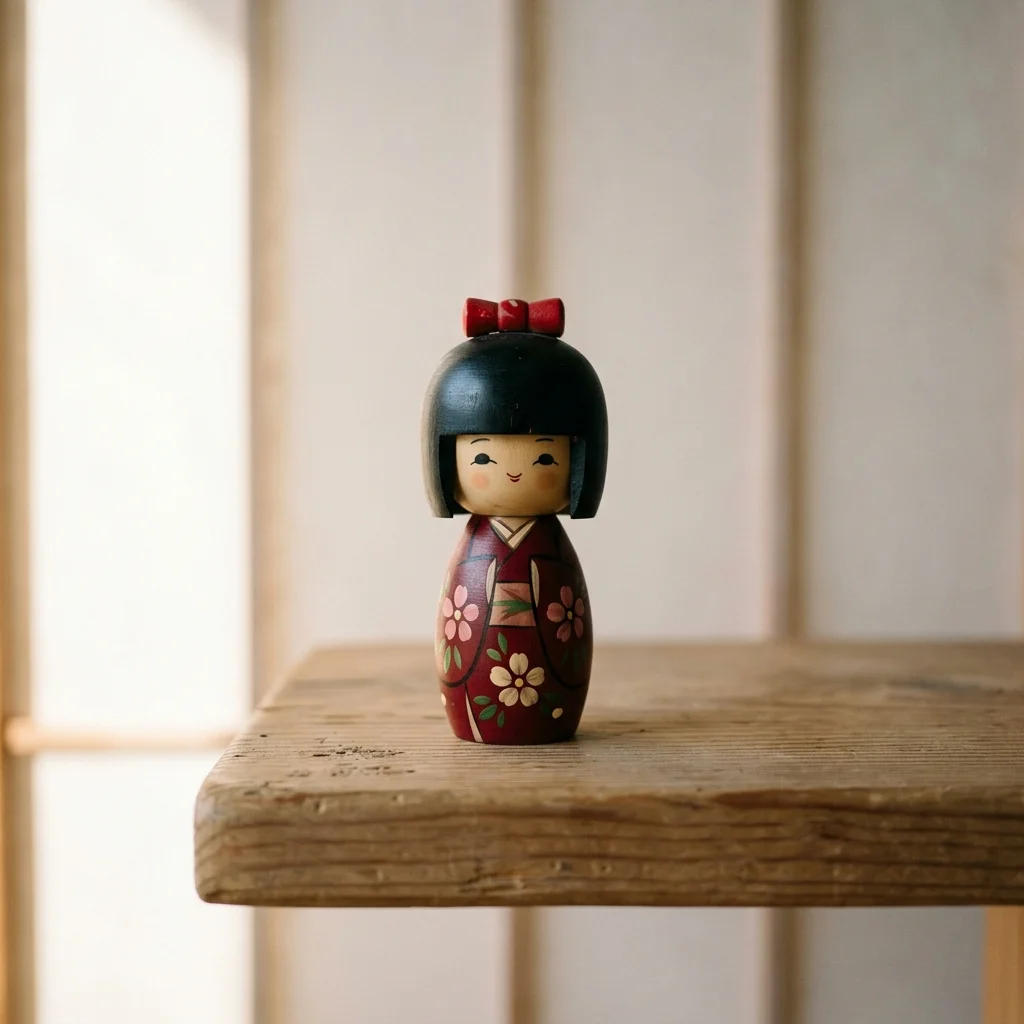
The practical application of Kawaii can be studied through three iconic case studies: the visual communication design of **Tokyo's Construction Mascots**, the architectural integration of **Kokeshi Dolls in Tohoku**, and the global design philosophy of **Nintendo's Animal Crossing**.
Historical Case Study: Tokyo Construction Mascots and Public Safety
When walking through a major Western city, construction sites are typically cordoned off with harsh, high-contrast black-and-yellow hazard tape, metal barbed wire, and aggressive signs shouting 'KEEP OUT' or 'DANGER'. In Tokyo, however, construction sites are designed with **Kawaii safety barriers**. These heavy plastic barriers are shaped like pink rabbits, green frogs, or friendly monkeys, linked together to form a soft, protective wall along the sidewalk. The warning signs feature cartoon characters bowing deeply, saying: *'We apologize for the noise and inconvenience. Thank you for your cooperation.'* This design strategy completely transforms the psychological impact of the construction zone. Instead of triggering urban anxiety, threat responses, or visual pollution, the site feels friendly, safe, and integrated into the neighborhood. This shows that public safety is best achieved by lowering stress and inviting cooperation, rather than shouting commands.
Artisan Experience: The Tohoku Kokeshi and Sustainable Timber
In the snowy mountains of Miyagi and Yamagata Prefectures, master wood-turners (*Kijishi*) continue to craft traditional *Kokeshi* dolls using tools and techniques unchanged for over two hundred years. The craft is a masterclass in minimalist design. The artisan selects a seasoned branch of dogwood (*Mizuki*), mounts it on a foot-powered lathe, and turns the timber into a clean cylinder. Using a natural wolf-hair brush, they paint the simple eyes, nose, and floral kimono in seconds, using natural pigments derived from safflower and indigo. There are no detailed limbs, no complex clothing, and no plastic accessories. The doll's cute facial expression is incredibly subtle—a tiny curved line representing a faint, wabi-sabi smile. By utilizing raw local timber and minimal, honest decoration, the Tohoku Kokeshi represents the sustainable soul of traditional kawaii design, showing that cuteness does not require plastic mass-production, but rather a deep respect for organic materials.
Design Metaphor: Animal Crossing and Cognitive Relief
Nintendo's global video game franchise **Animal Crossing (Atsumare Doubutsu no Mori)** is the ultimate modern digital application of Kawaii. The game features no violent combat, no high-speed racing, and no complex score metrics. Instead, the player lives on a quiet, peaceful island, catching bugs, planting flowers, and talking to friendly, rounded animal neighbors who have large eyes and soft, endearing voices. The game's lead designers utilized the mathematical rules of kawaii proportions to design every single item, from the rounded wooden furniture to the slow, hopping walk cycles of the characters. During the global lockdowns of 2020, the game became a massive international phenomenon, praised by psychologists as a vital tool for cognitive relief and anxiety management. By providing a digital sanctuary filled with visual comfort, slow pacing, and non-aggressive characters, Animal Crossing proved that the ultimate digital engagement is achieved not through high-stress excitement, but through the gentle, empathetic embrace of cuteness.