Back to Glossary
Concept Glossary

Omoiyari: The Spirit of Empathy, Compassion, and Altruistic Hospitality

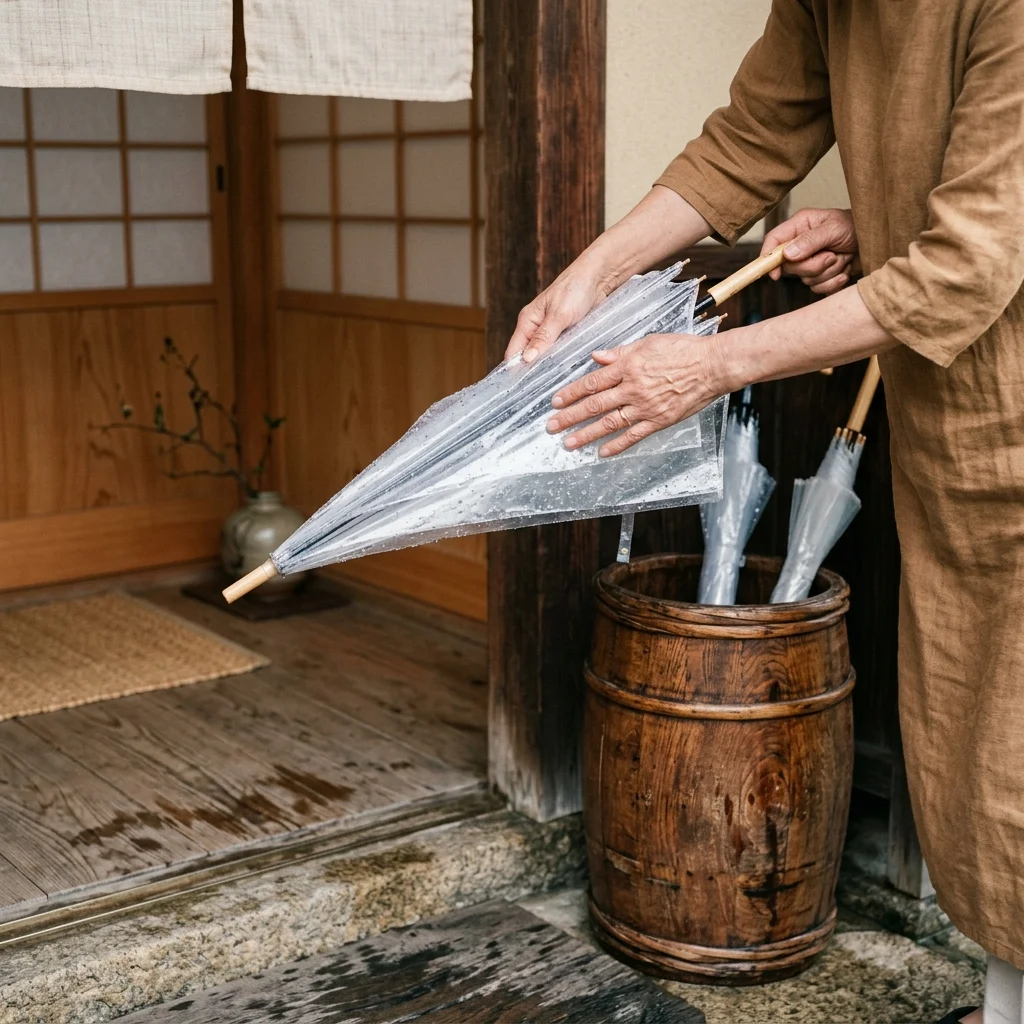
Hands gently brushing rain droplets off a translucent umbrella at the entrance of a traditional home.
Cultural Concept

OMOIYARI

思いやり / おもいやり

A quiet statement of Omoiyari: taking care to wipe and fold one's wet umbrella before entering, keeping the floor clean for the next visitor.

Linguistic Definition (TL;DR)

Omoiyari is the quintessential Japanese philosophical concept representing selfless, active, and non-verbal anticipatory empathy. Rooted in Shinto animism and Buddhist compassion, it encourages individuals to actively imagine another's feelings and proactively alter their own actions to ensure collective social harmony and mutual comfort.

Etymology & Linguistic Analysis

// 01

The word Omoiyari (思いやり) is a beautiful linguistic compound formed by the coupling of two distinct classical Japanese verbs: Omou (思う), meaning 'to think', 'to feel', or 'to harbor affection', and Yaru (やる), which is the casual, active form of 'to send', 'to dispatch', or 'to give'. Literally translated, the term represents 'sending one's thoughts and feelings to another' or 'sending your heart outward'.

Phonetically pronounced as /oh-moy-yah-ree/, the word carries a soft, gentle rhythm that mirrors the comfort and psychological safety it brings to social interactions. Unlike English terms like 'empathy' or 'sympathy' which are rooted in Greek concepts of shared suffering (pathos), Omoiyari is etymologically rooted in the act of giving. It is not merely a passive psychological state of understanding someone's pain; it is a physical, active dynamic where one's emotional energy is directed outward to improve another person's immediate physical or mental reality, defining a cultural worldview where relationships are sustained by continuous, subtle acts of emotional generosity.

Deep Philosophical Foundations

// 02

At its philosophical core, Omoiyari is a direct manifestation of Japan's dual spiritual heritage: **Shinto animism** and **Buddhist compassion (Karuna)**. It represents the belief that individual survival is completely dependent upon the health, order, and harmony of the collective group.

In the Shinto worldview, all human beings are interconnected threads in a cosmic tapestry of nature and spirit. Wreaking havoc on the social order or causing discomfort to another person is viewed as a direct spiritual failure—a form of impurity or *Kegare* (spiritual wither) that disrupts the clean flow of the community's energy. Practicing *Omoiyari* is therefore a form of active purification, a daily Shinto ritual of maintaining cleanliness, peace, and mutual safety. The well-being of the group is prioritized above individual desire, creating a society where public spaces are treated with sacred reverence.

Complementing this is the Buddhist concept of **Jihi (慈悲)**, representing infinite loving-kindness and compassion. In Zen Buddhism, the realization of non-self (*Anatta*) leads to the understanding that there is no absolute boundary between 'self' and 'other'. If another person is uncomfortable, hungry, or stressed, the Zen mind experiences that discomfort directly. *Omoiyari* is the active, everyday application of this realization: by quietly organizing a public space, speaking in hushed tones, or anticipating a coworker's fatigue, the individual nurtures the collective self. This philosophy is deeply linked to the concept of **Omoiyari as a Service (Omotenashi)**, where the host seeks to understand the guest's needs completely without prompting, establishing a deep spiritual connection of absolute trust.

Historical Evolution

// 03

The historical evolution of Omoiyari spans from the early poetic codes of the Heian period to the complex urban merchant structures of the Edo period.

During the Heian period (794–1185), the aristocratic court society developed a highly refined emotional aesthetic known as *Mono no Aware* (the beautiful sadness of impermanence). To be considered an cultured human, one had to possess *Nasake* (emotional sensitivity)—the ability to read the subtle, non-verbal cues of others, such as the tear on a sleeve or the pause in a wooden flute melody. This aesthetic requirement laid the foundation for *Omoiyari* as a social protocol, where direct, blunt speech was considered vulgar, and communication was conducted through the delicate, indirect medium of poetry and calligraphy.

By the Edo Period (1603–1867), under the extreme population density of Tokyo (Edo)—which grew into one of the largest wooden cities in the world with over one million residents packed into narrow wooden rowhouses (*Nagaya*)—*Omoiyari* became a vital practical survival skill. In these dense, fragile quarters, a single spark could destroy an entire neighborhood, and loud noises easily passed through the thin paper walls. To prevent community conflict, urban residents developed a highly sophisticated system of daily manners known as *Edo-Shigusa* (Edo gestures). These included *Shikatsu-yoke* (tilting one's umbrella outward to prevent rain from dripping onto passersby) and *Kobushi-yoke* (withdrawing one's fist or elbow on crowded walkways). Through these physical practices, *Omoiyari* was permanently codified as a silent, physical contract of mutual respect and spatial consideration that enabled peaceful urban coexistence.

Cultural Case Studies

// 04

The modern application of Omoiyari is deeply integrated into Japan's public infrastructure, municipal schools, and everyday retail systems, representing a highly successful scale of community logistics.

1. The Silent Trains of Tokyo: In many global metropolises, subway carriages are high-decibel spaces filled with loud conversations and video playbacks. In Tokyo, despite carrying millions of passengers daily, trains are spaces of absolute silent comfort. Passengers voluntarily mute their mobile phones (known as 'manner mode') and avoid phone calls entirely. This silence is a direct, collective practice of *Omoiyari*: commuters recognize that others are returning home exhausted after long workdays, and actively restrict their own vocal output to provide a quiet, stress-free space for the community.

2. Omoiyari Education in Primary Schools: In Japanese elementary schools, there are no professional janitors. Instead, children participate in a daily ritual called *O-soji* (mindful sweeping). The students clean their own classrooms, wipe down hallways, and serve lunch to their peers. This educational design is not about cutting costs; it is an active training in *Omoiyari*. By physically cleaning the school and serving others, children learn to value the physical environment, respect manual labor, and anticipate how their actions impact the physical comfort of their classmates.

3. The Visual Design of Japanese Public Washrooms: Modern Japanese toilets incorporate a design feature called *Otohime* (Sound Princess)—a device that plays a high-fidelity recording of rushing water or forest wind to mask any bodily sounds. The invention of *Otohime* is a brilliant mechanical application of *Omoiyari*. In traditional Japanese culture, causing others to hear one's intimate bodily sounds is seen as a source of extreme embarrassment and discomfort. By providing a mechanical sound barrier, the toilet design preserves the user's absolute dignity and shields others from unwanted acoustic input, blending high technology with deep psychological empathy.

Practical Guide for Foreigners

// 05

For international travelers and foreign residents in Japan, adopting the spirit of Omoiyari is the key to forming warm, meaningful connections and showing respect for the local community.

Public Transit Manners: When navigating the subway or Shinkansen trains, always place your phone on silent. Avoid talking in loud voices, even with your traveling companions. If you are carrying a large backpack, remove it and hold it in your lap or place it on the overhead luggage rack. This minor physical adjustments prevents you from blocking the narrow aisles, showing active consideration for others.

Navigating Umbrella Etiquette: On rainy days, carry your umbrella with the tip pointing straight down toward the ground. Never swing your umbrella horizontally behind you, as this can cause severe injury to children or shorter pedestrians. When entering local shops or department stores, always shake the excess water off your umbrella outside and slip it into the free plastic sleeves or wooden stands provided, keeping the indoor floors dry and preventing slipping hazards for others.

Restaurant Dining Etiquette: At local dining spots, clean up your table area slightly before leaving. Place your used wet towels (*Oshibori*) neatly back in their trays, and stack your plates and bowls gently to assist the server. If dining at a high-end counter, speak in soft, modulated tones that do not intrude upon the dining experience of adjacent guests, showing active respect for the shared sensory atmosphere.

Dialogue Scenarios

// 06

Review these bilingual dialogue scenarios to understand how Omoiyari is spoken and practiced in natural, everyday Japanese settings.

Scenario A: Coworkers Navigating a Shared Workspace (オフィスの共同スペースで)
A team member gently reminds another about managing their desk clutter to assist the next shift.

Coworker A: 田中さん、次のシフトの人が気持ちよく使えるように、デスクの上を一度綺麗にしてから帰るね。
(Tanaka-san, I'm going to wipe down and clear the desk before leaving so the next shift can use it comfortably.)
Coworker B: ありがとう!いつも先回りして準備してくれて助かるよ。まさに思いやりだね。
(Thank you! You always anticipate things and help me out. That is true omoiyari.)
Coworker A: いえいえ、自分が使う時も綺麗だと嬉しいから、お互い様だよ。
(No worries, I also appreciate it when the space is clean when I start, so it's mutual.)

Scenario B: A Local Resident Guiding a Traveler (雨の日の駅の出入口で)
A resident assists a traveler who is struggling to navigate a crowded subway exit with a wet umbrella.

Resident: すみません、その濡れた傘、こちらのビニール袋に入れてから入ると、床が濡れずに他の方が滑るのを防げますよ。
(Excuse me, if you place your wet umbrella in this sleeve before entering, the floor won't get wet and it prevents others from slipping.)
Traveler: Oh, I see! I didn't realize the dripping water was a hazard. Thank you for pointing it out.
Resident: いえいえ、みんなが安全に歩けるようにという「思いやり」の工夫なんですよ。お気をつけて!
(No problem, it's a minor detail of omoiyari to keep everyone walking safely. Have a safe trip!)

Modern Ecological & Social Relevance

// 07

In our modern globalized 21st-century society, Omoiyari has emerged as a critical design philosophy to combat the epidemics of social isolation, digital incivility, and community fragmentation.

In the digital age, our communication is increasingly mediated by screens, algorithms, and social media platforms designed to maximize outrage and attention. This has led to a dramatic rise in digital toxicity, cyberbullying, and polarization. The practice of *Omoiyari*—which requires us to slow down, actively imagine the mental and physical coordinates of the person behind the screen, and modify our words with self-restraint—stands as a powerful antidote to online hostility. By incorporating *Omoiyari* into digital product design (such as creating comment interfaces that prompt users to pause before posting high-conflict words), software engineers can design a more humane, empathetic digital commons.

Furthermore, in the realm of global architecture and urban planning, *Omoiyari* is driving a transition toward inclusive, universal design. Cities are increasingly built around the physical coordinates of the young and able-bodied. By applying *Omoiyari* to urban spaces—such as installing high-contrast tactile paving (*Tenji blocks*) for the visually impaired, constructing multi-generational public parks, and designing barrier-free community transport systems—we can build cities that physically support and respect our most vulnerable citizens, proving that a truly advanced civilization is defined by the quality of its empathy, compassion, and mutual care.

Practical Mastery

Actionable Cultural Skills

Integrate the philosophical wisdom of Omoiyari into your everyday lifestyle through these practical, hands-on Japanese technical disciplines.

Traditional Geta & Footwear Alignment

履物の脱ぎ揃え
初級 (Beginner)⏱️ 5 Minutes

Mastering the subtle entrance hall (genkan) ritual of turning and aligning your shoes outward, ensuring a smooth and respectful departure.

Traditional Geta or modern shoes
📋 Practical Steps
  1. 01.Step up onto the raised wooden floor (upahara) of the entrance, leaving your shoes pointing forward on the stone step below.
  2. 02.Turn around gracefully, step down partially or bend from the waist, and rotate the shoes by 180 degrees using your hands.
  3. 03.Align the shoes side-by-side neatly on the right-hand side of the step, pointing outward toward the door so they are ready to step into when leaving.

Anticipatory Public Space Care

公共空間の先回り配慮
中級 (Intermediate)⏱️ Daily

Practicing active social consideration in shared spaces, proactively reducing noise, visual clutter, and physical inconvenience for others.

Small personal trash bagTenugui hand towel
📋 Practical Steps
  1. 01.When boarding a public train, remove your backpack and hold it in front of your chest to maximize standing space for boarding passengers.
  2. 02.Wipe down any moisture from sinks or counters in public washrooms using your personal towel, leaving the station pristine for the next person.
  3. 03.Collect and pack all your personal garbage in a small bag to carry home, keeping the public street empty of refuse and showing community respect.

Bilingual Gift wrapping and Folding

真心折形と熨斗袋
上級 (Advanced)⏱️ 45 Minutes

Executing the precise, ancient origami art of formal envelope folding to encase financial gifts, communicating sincerity through paper tension.

Handmade Washi paper sheetsRed-and-white Mizuhiki paper cordsRefined calligraphy brush
📋 Practical Steps
  1. 01.Select a crisp sheet of pristine white washi paper, folding the margins inward using precise geometric coordinates that align with Shinto guidelines.
  2. 02.Thread a set of red-and-white Mizuhiki cords through the paper slots, tying a secure square knot (Mamasubi) that symbolizes eternal connection.
  3. 03.Brush the recipient's name on the front face using dilute black ink, adjusting the weight of the characters to balance the paper's empty space.