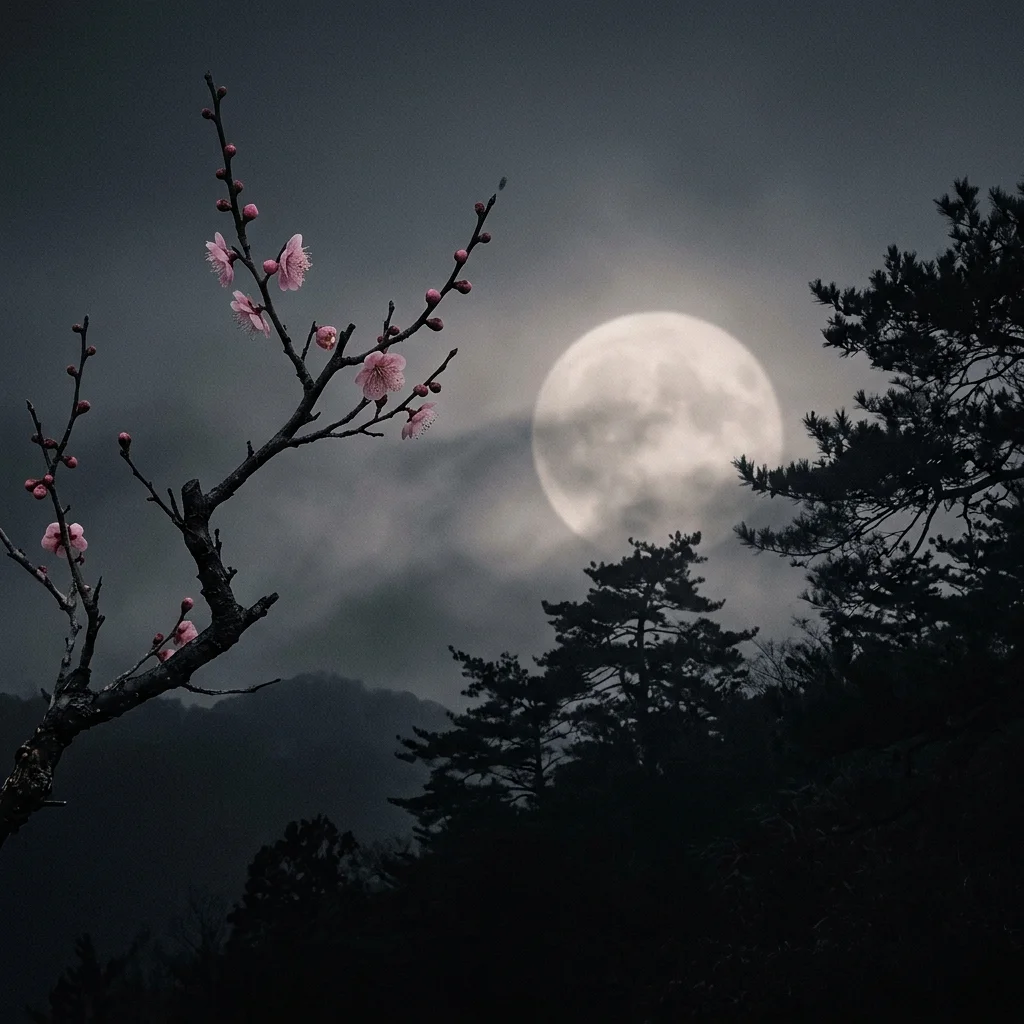
The beautiful and evocative four-character idiomatic phrase Kacho-Fugetsu (花鳥風月), known in Japanese linguistic terminology as a Yojijukugo, is a highly poetic synthesis of four distinct logographic characters representing the primary elements of the natural world. To truly grasp the aesthetic and philosophical depth of this phrase, we must analyze the etymological roots of each individual kanji character in detail.
The first character, Ka (花), represents flowers or blossoms, etymologically composed of the top radical for 'grass' (艸) joined with the lower character for 'change' or 'transformation' (化), symbolizing the beautiful, fleeting botanical cycle of life. The second character, Cho (鳥), historically depicted a bird with feathers and claws in ancient oracle bone pictographs, representing animal life and the freedom of the skies. The third character, Fu (風), represents wind, breeze, or atmospheric flow, etymologically composed of the radical for 'wind' containing 'insect', symbolizing the invisible, life-giving force that triggers natural movement across the earth. The final character, Getsu (月), represents the moon or the lunar cycle, historically depicted as a crescent moon in ancient scripts, representing the slow, relentless passage of time and celestial harmony. Together, Kacho-Fugetsu translates literally to 'flowers, birds, wind, and the moon'.
Spoken with a soft, melodic cadence—pronounced /kah-choh-foo-geh-tsoo/—the word carries a gentle, flowing rhythm, inviting the speaker to slow down, breathe, and notice the quiet, changing beauty of the natural world, turning a simple list of natural elements into a profound guide to refined living.