Back to Glossary
Concept Glossary

Yuimaru: The Circle of Mutual Aid - Traditional Community Cooperation and Solidarity

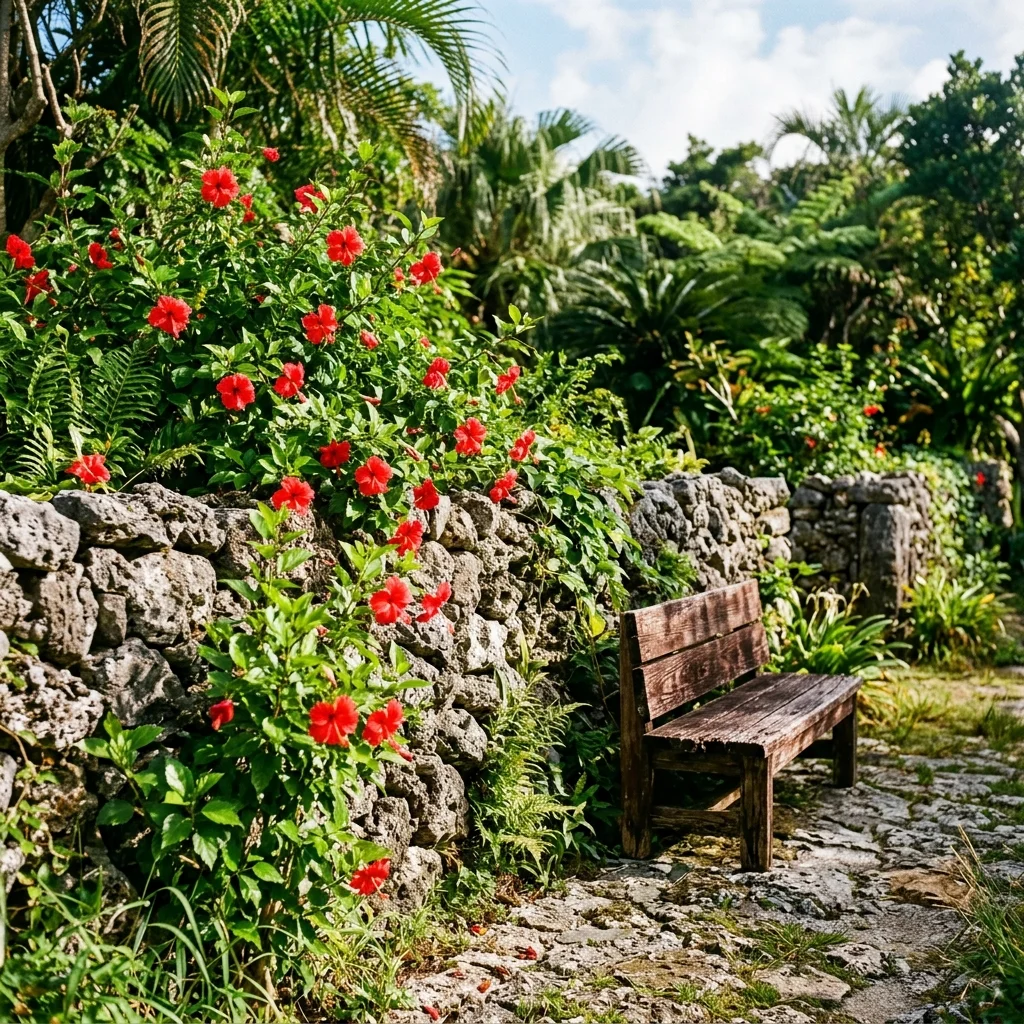
An Okinawan stone wall covered in bright red hibiscus flowers, next to a weathered wooden bench under a warm sun.
Cultural Concept

YUIMARU

ゆいまーる / ユイマール

A warm visual representation of Yuimaru: A traditional coral-stone wall in Okinawa blooming with tropical hibiscus, symbolizing the resilient, intertwined, and sun-warmed community bonds of the southern islands.

Linguistic Definition (TL;DR)

Yuimaru is the traditional Okinawan philosophy of absolute mutual aid, social interconnectedness, and community-driven cooperation. Rooted in ancient agricultural villages, this contract of rotating assistance encourages neighbors to unite and support each other's physical, financial, and emotional needs in turns, establishing a lifelong safety net of warm, shared longevity.

Etymology & Linguistic Analysis

// 01

The word Yuimaru (ゆいまーる) is a beautiful linguistic gem derived from the traditional Okinawan dialect (Uchinaaguchi), which possesses distinct phonetic and structural differences from standard mainland Japanese. To understand the communal warmth of the term, we must analyze its structural breakdown, as it represents a visual and auditory map of cooperation.

The compound is composed of two distinct parts: yui (結い) and maru (まーる). The first part, Yui, stems from the classical Japanese verb musubu, meaning 'to tie together, to bind, or to form a sacred knot'. In agricultural history, it refers to the practice of collective, cooperative labor where community members bind their efforts together. The second part, Maru, is a dialect adaptation of the standard Japanese word mawari (回り), meaning 'rotation, sequence, or circle'. Therefore, when combined as Yuimaru, the word literally translates to 'tying our efforts together in a rotating circle' or 'collaboration in turns'.

Phonetically pronounced as /yoo-ee-mah-roo/ with a long, flowing vowel sound at the end, the word carries a soft, melodic, and warm quality that reflects the tropical breeze and gentle pace of the southern Ryukyu islands. Unlike standard mainland terms for cooperation like Kyodo (共同) which sound formal, institutional, and bureaucratic, Yuimaru is spoken with a friendly, intimate, and domestic tone. It is a word heard not in government offices, but in sugar cane fields, village community halls, and neighborhood kitchens, representing a living contract of mutual love.

Deep Philosophical Foundations

// 02

At its deepest level, Yuimaru is not a superficial volunteer program or a simple charity policy; it is a profound philosophical worldview centered on the absolute **interconnectedness of human spirits**, **rotating mutual aid**, and the Shinto-animistic respect for **shared destiny**.

In standard Western social models, community relations are often governed by commercial transactions or strict contracts of direct, instant reciprocity. If I help you paint your house, I expect you to pay me, or at least return the favor immediately. Yuimaru completely rejects this transaction-based mindset. It operates on the philosophy of **delayed, circular reciprocity**. When a community member helps a neighbor, they do not keep a financial ledger or demand instant repayment. They give their labor unconditionally, knowing that when their own roof is damaged by a typhoon next year, the entire village will gather to rebuild it. The help rotates in a continuous circle. You do not repay the specific person who helped you; you pay it forward to the next person in the circle who needs it, establishing an invisible, indestructible safety net of social capital.

This philosophy is deeply connected to **Okinawan animism** and the worship of ancestral spirits. In Okinawan tradition, the village is viewed as a single, extended spiritual family protected by the *Uta-ki* (sacred natural groves) and ancestral deities. Wasting resources or ignoring a neighbor who is suffering is viewed as a direct spiritual offense that disrupts the harmony (*Churasa*) of the community. Humans are not viewed as isolated individuals competing against each other; they are seen as intertwined threads of a single woven fabric. To ignore your neighbor's struggle is to tear the fabric that protects your own family. This worldview directly feeds into **Omoiyari (思いやり)**—selfless empathy. It encourages a mental state where helping others is not viewed as a chore or an economic loss, but as a joyful, natural expression of your own existence, fostering a deep spiritual happiness.

Furthermore, Yuimaru is the psychological key to the legendary **longevity of Okinawa**, which is recognized globally as one of the premier 'Blue Zones' of the world. Longevity researchers have discovered that Okinawans do not survive to one hundred years old merely because of their diet of sweet potatoes and goya. The true secret is their social support networks, known as **Moai (模合)**, which are powered directly by the spirit of Yuimaru. A Moai is a group of five or six friends who bind themselves together for life, meeting regularly to pool financial resources, share meals, and offer emotional support. If a member faces financial ruin, illness, or the death of a spouse, the Moai steps in with immediate, unconditional physical and financial aid. This absolute social certainty eliminates the devastating chronic stress of isolation, proving that the ultimate shield of human health is a warm, shared community bond.

Historical Evolution

// 03

The historical evolution of Yuimaru spans from the cooperative agricultural villages of the ancient Ryukyu Kingdom to the devastating post-war reconstruction of Okinawa, and finally to modern global community initiatives.

For centuries, the Ryukyu Kingdom (which ruled Okinawa until its annexation by Japan in 1879) operated a highly organized, communal agricultural society. The subtropical climate of the southern islands brought immense natural blessings, but also extreme dangers—devastating seasonal typhoons, prolonged droughts, and thin, volcanic soils. In these harsh conditions, survival was physically impossible for an isolated family. When the torrential rains of a typhoon ripped the heavy cogon-grass thatch from a farmhouse roof, the family could not rebuild it alone before the rain ruined their mud walls. When the sugar cane fields reached maturity in the peak of summer, they had to be harvested, pressed, and boiled within days before the sugar fermented. The village developed the system of *yui* as a practical life necessity. Neighbors formed rotating work teams, moving from house to house, harvesting crops and building roofs together, transforming grueling physical labor into a joyful, communal event accompanied by the music of the *Sanshin* (Okinawan banjo).

In the 20th century, Okinawa faced the dark tragedy of the **Battle of Okinawa (1945)** during World War II, which destroyed over 90% of the island's buildings, wiped out ancient forest sanctuaries, and killed one-third of the civilian population. In the absolute devastation of the post-war years, under American military occupation, the survivors possessed completely nothing—no money, no building materials, no livestock, and no government support. It was during these darkest years that Yuimaru transformed from a rural farming custom into a national strategy of survival. Widows gathered to care for each other's orphaned children; men shared salvaged timber and rusty corrugated iron sheets to build simple shelters; local farming cooperatives pooled their few remaining seeds to replant the scorched earth. Through this extreme daily practice of mutual aid, the Okinawan people rebuilt their society from the ashes of war without commercial capital, cementing a cultural DNA of community-driven resilience that survived the subsequent rapid modernization of the late 20th century.

Cultural Case Studies

// 04

The practical manifestation of Yuimaru can be studied through three iconic Okinawan cultural case studies: the financial and social structure of the **Moai**, the agricultural harvest cooperatives of **Ogimi Village**, and the reconstruction of traditional **Shurijo Castle**.

Historical Case Study: The Ogimi Village Longevity Cooperatives

Located in the northern, mountainous region of Okinawa's main island (*Yanbaru*), the village of Ogimi is famous worldwide for having one of the highest percentages of centenarians in human history. The village operates entirely on the principles of Yuimaru. Rather than relying on commercial retirement homes or government-funded social workers, the elderly residents of Ogimi care for each other. The village is organized into small neighborhood wards (*Ku*). Every ward has a volunteer cooperative committee that coordinates daily visits to elderly residents who live alone. If an ninety-five-year-old grandmother does not open her shutters by 8:00 AM, a neighbor immediately knocks on her door to check her health. If an elderly grandfather's garden path is overgrown with wild weeds, local youth and healthy octogenarians gather to clear it. This continuous, self-organized network of community care allows Ogimi's seniors to live independently in their own homes with absolute safety, demonstrating that community-driven mutual aid is the most effective senior healthcare system in the world.

Artisan Experience: The Ryukyu Sanshin Circles

In traditional Okinawan life, music and labor are inseparable, serving as the emotional glue of Yuimaru. When agricultural work teams harvested sugar cane under the scorching sun, they did not work in silent misery. Instead, a village elder would sit under the shade of a banyan tree, playing the *Sanshin* (a traditional three-stringed lute covered in python skin) and singing rhythmic work songs known as *Yui-uta*. The workers would shout back in call-and-response choruses, syncopating their physical movements to the beat of the music. This acoustic synchronization transformed grueling, back-breaking labor into a collective, light-hearted performance, reducing physical fatigue and preventing individual resentment. Today, Sanshin circles meet weekly in community parks and local diners across Okinawa, welcoming young children and ninety-year-olds to play together, keeping this sonic community bond alive across generations.

Design Metaphor: The Reconstruction of Shurijo Castle

Shurijo Castle, the historic royal seat of the Ryukyu Kingdom in Naha, was tragically destroyed by a catastrophic fire in the autumn of 2019, burning its iconic red-lacquered wooden structures to ash. The loss was a devastating blow to Okinawa's cultural identity. However, the response of the Okinawan people was a magnificent modern demonstration of Yuimaru. Within hours of the fire, volunteer groups launched community fundraising drives, while local timber merchants, structural engineers, and traditional lacquer craftsmen offered their materials and expertise for free. Crucially, the reconstruction site was designed to be open to the public. The government built a massive glass-walled structure over the building site, allowing the public to watch the craftsmen carve the giant cedar pillars and paint the red lacquer in real time. This transparent, community-integrated reconstruction turned a private construction project into a collective, shared ritual of cultural rebirth, proving that the ultimate architecture of Ryukyu is built not of wood and stone, but of the intertwined hearts of its people.

Practical Guide for Foreigners

// 05

For international community organizers, travelers, and city dwellers, adopting the spirit of Yuimaru is a beautiful, life-saving way to combat the modern epidemic of loneliness, build resilient social networks, and foster sustainable local mutual aid.

Cultivating the Yuimaru Mind in Daily Life: To begin practicing yuimaru in a modern urban environment, you must actively reject the hyper-individualistic, commercial mindset that assumes every human need must be solved through money. When you need help, or when you see someone else struggling, look to your immediate community first:

  • neighborhood Mutual Aid: Instead of hiring commercial services for every minor task, form a simple, informal help pact with three close friends or neighbors. Take turns pet-sitting, watering gardens during vacations, or cooking meals during times of illness, creating a small circle of trust.
  • Moai Social Clubs: Assemble a small 'Moai' group of five or six trusted friends. Meet regularly once a month at a local home or diner. Pool a small, symbolic amount of money (e.g., $20 per member) to be given to one member in rotation to fund a personal project, but focus primarily on sharing a warm meal, discussing personal struggles, and offering absolute emotional support.
  • Offering Unconditional Labor: When a neighbor is moving houses, harvesting their home garden, or building a fence, show up with your work gloves and offer your bare hands for a few hours without asking for payment, celebrating the joy of shared physical effort.

Interacting with Okinawa Respectfully: If you travel to Okinawa, remember that you are entering a highly sensitive, community-oriented society that has suffered immense historical trauma. Show active respect for the local elderly residents—do not treat them as tourist attractions or take their photos without permission. When visiting local villages in Yanbaru, drive slowly, keep noise levels low, shop at local community markets (*Kyodo-ten*), and speak to local shop owners with a warm, humble tone. By showing respect for their peaceful, slow-living rhythm, you actively honor the spirit of Yuimaru.

Dialogue Scenarios

// 06

Review these bilingual dialogue scenarios to understand how community members, farmers, and modern city dwellers discuss and implement the spirit of Yuimaru in natural conversation.

Scenario A: Two Okinawan farmers coordinating a harvest after a storm (大宜味村のシークワーサー畑で)
An elderly farmer discusses how to harvest their citrus crops before an approaching typhoon hits the island.

Farmer A: 台風がまた近づいてきているね。うちのシークワーサー畑、まだ半分も収穫できていないんだ。私一人では風が強まるまでに全部採りきれないよ。今年は諦めるしかないかね。
(Another typhoon is approaching. We haven't even harvested half of our Shikuwasa orchard. I can't pick them all by myself before the wind gets strong. I guess I have to give up this year.)
Farmer B: バカなことを言わないでよ!諦める必要なんてないさ。明日の朝、隣の若者たちと私たちの模合(もあい)のメンバーを連れて、みんなで畑に入るよ。「ゆいまーる」で一気に片付けよう!
(Don't talk nonsense! There is completely no need to give up. Tomorrow morning, I will bring the local youth and the members of our Moai, and we will all enter your orchard together. Let's clear it all at once with 'yuimaru'!)
Farmer A: でも、みんなも自分の畑の台風対策で忙しいはずだよ。そんなに甘えていいかね?
(But everyone must be busy with their own typhoon preparations. Is it really okay for me to depend on them so much?)
Farmer B: 何言ってるの、お互い様さ!去年うちの牛舎の屋根が飛んだとき、真っ先にロープを持って走ってきてくれたのは誰だった?困ったときはお互い助け合う、それが「ゆいまーる」だよ。明日は Sanshin を持ってきて、楽しく収穫しようさ!
(What are you saying? We are in this together! When the roof of my cowshed flew off last year, who was the first to run over with a rope? Helping each other when in trouble, that is 'yuimaru'. Tomorrow, I'll bring the Sanshin and let's harvest with joy!)

Scenario B: Two apartment neighbors discussing a tool-sharing project (都内のマンションのロビーで)
An international resident proposes a simple tool-sharing pact to a local building resident.

Resident A: I need to build a wooden shelf this weekend, so I was thinking of buying a $100 power drill online. But it feels like a waste since I'll probably only use it once a year.
Resident B: それなら、私のドリルを使ってください!買うのはもったいないですよ。実は、このマンションの数人で、あまり使わない道具を共有する「ゆいまーる」のようなサークルを作ろうと話していたんです。
(Then, please use my drill! Buying one is a waste. Actually, a few of us in this building were talking about starting a circle like 'yuimaru' to share tools we rarely use.)
Resident A: A Yuimaru circle? What does that mean?
Resident B: 沖縄の言葉で「相互扶助の輪」という意味です。私がドリルを貸す代わりに、あなたが旅行に行くときは私の観葉植物に水をやってもらう。お金を介さずに、お互いのスキルや道具を順番に助け合う関係を作るんです。孤独な都会の暮らしが、ちょっと温かくなりますよ。
(It is an Okinawan word meaning 'circle of mutual assistance'. Instead of using money, we build relationships where we take turns helping each other with our skills and tools—I lend you the drill, and in return you water my house plants when I travel. It makes lonely city life a little warmer.)

Modern Ecological & Social Relevance

// 07

In our hyper-individualistic, commercialized 21st-century global society, the traditional Okinawan philosophy of Yuimaru has evolved from a regional agricultural custom into a critical, revolutionary framework for global ecological sustainability, community resilience, and healthcare.

Modern industrial civilization has organized human society around the **dogma of commercial hyper-individualism**. Individuals are encouraged to survive as isolated economic units, solving every life need—childcare, eldercare, home maintenance, emotional support—through commercial purchase and financial transaction. This absolute commercialization has dismantled local social safety nets, leading to a devastating global epidemic of **loneliness, social isolation, and mental illness** that increases mortality rates as much as smoking fifteen cigarettes a day. Yuimaru offers a radical, life-saving alternative. By championing **rotating mutual aid**, Yuimaru rebuilds the organic social tissue of our communities. It asserts that human beings are neurologically and spiritually wired for social cooperation, and that true health and long life can only be secured when we bind our lives together in warm, supportive circles of mutual trust, eliminating the chronic stress of isolation.

In the parallel realm of global environmental sustainability and climate resilience, Yuimaru serves as a vital ecological strategy. The modern consumption model assumes that every single household must own its own complete set of lawnmowers, power tools, vehicles, and electronic appliances, driving massive mineral extraction, industrial manufacturing energy, and carbon emissions. The Yuimaru mind offers a elegant, community-driven path of **collaborative consumption**. By organizing neighborhood tool-sharing libraries, community gardens, and skill-sharing cooperatives, local populations directly reduce their consumerist footprints, cutting domestic waste and carbon emissions. Furthermore, as climate change increases the frequency and severity of extreme weather events—devastating floods, heatwaves, and storms—government disaster response systems are often overwhelmed. In these critical moments, the survival of local populations depends entirely on **first-response community resilience**. Communities that practice Yuimaru possess the high social trust and coordinated relationships required to organize immediate search, rescue, and mutual aid efforts on the ground, proving that a warm, cohesive community is the ultimate shield against planetary instability.

By shifting our relationship with our neighbors from passive commercial separation to active, appreciative mutual commitment, Yuimaru stands as a timeless, tropical gift of Okinawan wisdom, showing that the ultimate secrets to health, longevity, and ecological balance do not reside in complex technology or endless financial growth, but in the humble, daily embrace of the warm circle of mutual assistance.

Practical Mastery

Actionable Cultural Skills

Integrate the philosophical wisdom of Yuimaru into your everyday lifestyle through these practical, hands-on Japanese technical disciplines.

Setting Up a Neighborhood Tool-Sharing Circle

地域ゆいまーるの輪
中級 (Intermediate)⏱️ 2 Hours

Applying the yuimaru spirit to your urban neighborhood, building a shared utility pool to reduce waste and strengthen local bonds.

A shared digital spreadsheet or a physical bulletin boardAn inventory list of rarely used household utility toolsThree local neighbors committed to community trust
📋 Practical Steps
  1. 01.Convene a brief meeting with three local neighbors, explaining the concept of a rotating tool-sharing circle to reduce consumption.
  2. 02.Catalog all large, expensive, or rarely used household tools owned by each household (e.g., tall ladders, power drills, car jacks).
  3. 03.Create a shared digital register or physical ledger listing the location of each tool and the name of its owner.
  4. 04.Establish an agreement that any member can borrow these tools in turns for free, committing to return them clean and functional, building mutual trust.

Brewing Sanpin-Turmeric Tea for Community Dialogue

さんぴん鬱金茶の淹れ方
初級 (Beginner)⏱️ 20 Minutes

Brewing a comforting, healthy southern island tea to serve warm to neighbors, creating a slow space for community dialogue.

Traditional Okinawan Sanpin-cha leaves (jasmine green tea) (5g)A fresh, thin slice of organic turmeric root (Ukon)Clean mineral water (500ml)Small ceramic cups to share with visitors
📋 Practical Steps
  1. 01.Wipe the fresh turmeric root clean and slice a paper-thin piece, exposing its bright golden interior.
  2. 02.Bring the mineral water to a gentle simmer (about 90°C) in a kettle.
  3. 03.Place the Sanpin-cha leaves and the turmeric slice in a pre-warmed teapot, pouring the hot water slowly over them.
  4. 04.Steep silently for 3 minutes to extract the bright amber liquid, pour into small cups, and serve warm to visiting neighbors while sharing news.