Etymology & Linguistic Analysis
// 01The word Ikigai (生き甲斐) is a highly revered Japanese term that has captured global attention for its deep philosophical approach to life, longevity, and personal fulfillment. To understand its true cultural weight, we must analyze its linguistic components, which trace back to the Heian period court terminology.
Linguistically, the word is a compound of two distinct Japanese concepts:
- Iki (生き): Derived from the verb ikiru, which represents 'to live', 'life', or the biological state of being alive. It is the active, physical force of existence—the daily act of breathing, moving, and experiencing the world.
- Gai (甲斐): The suffix gai (which becomes voiced as gai when joined) is historically derived from the noun kai. In its Heian period origins, kai represented the physical value of shells (which were used as precious currency). Over centuries, the word evolved to mean 'value', 'worth', 'fruitfulness', or the beneficial result of an action. When joined to a verb, it describes the worth or reward that comes from performing that action.
Therefore, when combined as Ikigai, the word literally translates to 'the worth of living', 'the value of life', or 'a reason to wake up in the morning'. Phonetically pronounced as /ee-key-guy/, the word carries a bright, active cadence, reflecting the positive, life-affirming energy of identifying one's true personal calling.
Deep Philosophical Foundations
// 02At its core, Ikigai is not a modern commercial career-planning model or a generic self-help Venn diagram; it is a direct extension of Japan's deep spiritual heritage: **Shinto appreciation of life**, **Zen focus on the present**, and the concept of **Yarai (野良 - slow daily labor)**.
In Shinto philosophy, life is considered a sacred gift from the natural gods (Kami), and human beings are born clean, pure, and connected to the universe. There is no concept of original sin; instead, the purpose of life is to nurture this pure state by doing honest work, showing gratitude for daily blessings, and maintaining active, clean connections with the local community. Through this lens, the pursuit of one's purpose is not a selfish, individualistic career search, but a sacred, moral responsibility to contribute one's unique skills to the well-being of the world. It is finding divine value in the smallest daily rituals.
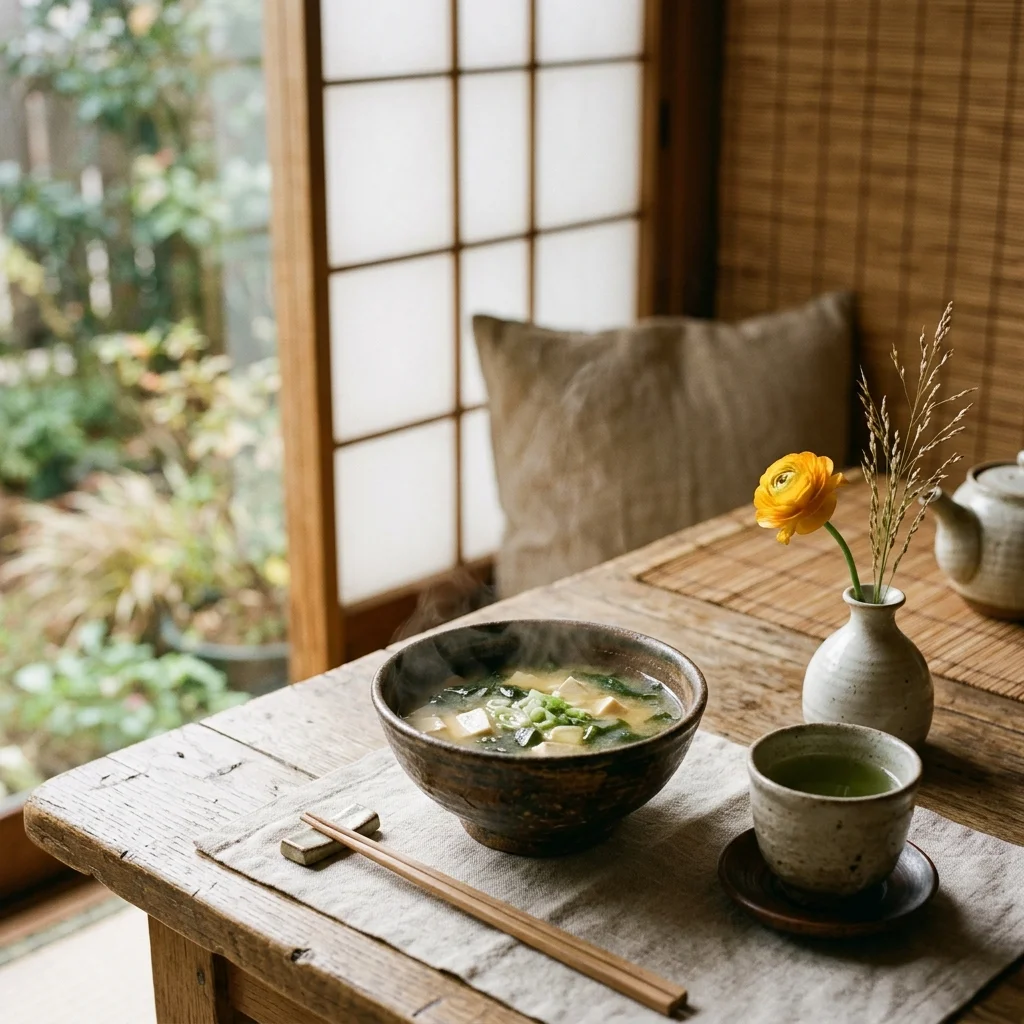
Complementing this is the Zen Buddhist concept of **Mindful Focus (Nensho)** and finding joy in the immediate present. Zen teaches that the future is an illusion and the past is gone; the only true reality is the present moment. Many people suffer because they tie their happiness to grand, distant future goals—such as wealth, fame, or retirement—ignoring the simple beauty of their daily life. Ikigai encourages a shift in focus. It teaches us to find profound meaning in small, everyday actions: watering a garden, sweeping a courtyard, or brewing a warm cup of green tea. This realization is linked to the Buddhist concept of Chisoku (finding contentment in what is sufficient), helping the practitioner build deep, lasting resilience by discovering joy in the micro-moments of everyday life.
Historical Evolution
// 03The historical evolution of Ikigai is a fascinating story of Heian court terminology transforming into a highly respected cultural framework for longevity and community resilience during the peaceful Edo period, leading to modern global studies.
During the Heian period (794–1185), the suffix kai was used by aristocrats to express the worth or benefit of highly refined, poetic actions—such as traveling long distances to view cherry blossoms in full bloom. Over centuries of social changes, as power shifted to the samurai and merchant classes, the word became democratized. During the peaceful Edo period, as trade guilds stabilized and agricultural communities developed specialized methods, local farmers and craftsmen used the term to describe the pride, value, and satisfaction of their slow, daily labor, building a strong cultural connection between personal purpose and community service.
In the post-war era, Ikigai underwent a massive clinical and sociological reinterpretation. In the 1960s, Japanese clinical psychologists and sociologists, led by **Mieko Kamiya**, conducted pioneering research. Kamiya published her classic book *On the Meaning of Life (Ikigai ni Tsuite)*, analyzing how individuals facing severe illnesses or life changes rebuilt their sense of purpose. She proved that Ikigai was not a single, grand career goal, but a complex, internal mental state that allowed humans to maintain emotional vitality under the most difficult conditions, establishing the philosophy as a cornerstone of modern Japanese mental wellness.
In the 21st century, the concept gained massive global fame through **longevity research**. National Geographic writer Dan Buettner introduced the concept to the world during his studies of global 'Blue Zones'—regions where populations show extraordinarily high rates of longevity and healthy aging. Okinawa emerged as a primary focus, and researchers realized that the presence of Ikigai was the ultimate secret behind the physical health, longevity, and emotional resilience of these vibrant elder communities.
Cultural Case Studies
// 04The physical manifestation of Ikigai can be observed in three unique Japanese domains: the longevity of **Okinawan communities**, the traditional system of **Moai (community support)**, and the daily devotion of **centenarian artisans**.
1. Okinawan Longevity (Ōgimi Village): Nestled in the northern mountains of Okinawa, the small village of Ōgimi is famous for having some of the highest centenarian populations in the human world. Sociologists visiting the village discovered that the word 'retirement' does not exist in the local dialect. Elderly residents remain active daily—tending their organic vegetable gardens, walking through the mountains to gather wild herbs, and practicing traditional weaving (Bashofu). When asked why they wake up in the morning, these centenarians do not cite wealth or fame; they cite their gardens, their grandchildren, or their daily weaving craft, showing that micro-purpose is the ultimate path to physical longevity.
2. Moai (Social Support Systems): In Okinawa, Ikigai is supported by a powerful social structure known as **Moai**. This is a small group of five to ten friends who commit to each other for a lifetime, meeting weekly or monthly to talk, share food, pool financial resources, and support each other in times of illness or family loss. This close, reliable social network ensures that no individual is ever isolated. Knowing that you are an essential, valued member of a lifelong community provides an immense sense of security and purpose, illustrating that personal fulfillment requires a deep connection to others.
3. Centenarian Artisans (Shokunin): Across Japan, aged master craftsmen demonstrate the ultimate commitment to Ikigai. Indigo dyers in Kyoto, carbon-steel blacksmiths in Sakai, and traditional potters in Bizen remain in their workshops well into their nineties or hundreds. They do not work out of financial necessity; they work because their craft is their direct reason for being. The slow, daily process of refining their skills, touching the natural materials, and creating beautiful objects provides them with an absolute mental focus and systemic physical energy that sustains their physical health and keeps their minds incredibly sharp and vital.
Practical Guide for Foreigners
// 05For international visitors and busy urban workers, adopting the spirit of Ikigai is a powerful way to heal your nervous system, clarify your life goals, and bring daily joy into your lifestyle.
Adopting the True Philosophy: To practice Ikigai effectively, let go of the commercial Western interpretation that demands you find a perfect, high-paying job that satisfies every area of your life. In authentic Japanese culture, Ikigai is much more gentle, humble, and accessible. It is not about your career; it is about your connection to the present moment. You can have multiple Ikigai at the same time: tending your plants in the morning, enjoying a hot cup of tea, spending quality time with your children, or volunteering in your local neighborhood. Let go of the search for a single grand purpose, and look closely at the small daily rituals that bring you joy.
Building Your Daily Rituals: Start integrating small, mindful habits into your daily routine:
- **Cultivate a Morning Ritual:** Wake up thirty minutes earlier and dedicate this time to a slow, offline activity—such as stretching facing the morning sun, grinding fresh coffee beans, or writing in a physical journal.
- **Nurture Small Actions:** Plant a small herb garden on your balcony, or care for a single indoor plant, taking time daily to observe its growth and water it mindfully.
- **Foster Community Connections:** Volunteer for local environmental cleanup groups, or make a conscious effort to greet and talk with shop owners in your neighborhood, building a warm social network.
Embracing Lifelong Learning: You can practice Ikigai by choosing one simple physical skill and committing to mastering it slowly over years without rushing. Whether it is cooking Japanese dashi, learning calligraphy, or practicing wood carving, focus entirely on the slow process of learning and refining your skills, finding deep satisfaction in your own growth and development.
Modern Ecological & Social Relevance
// 07In our modern globalized society, the philosophy of Ikigai has emerged as a critical element in environmental sustainability, global mental health, and social conservation.
As the world faces the severe ecological pressures of climate change and mass consumerism, modern industrial economies are driven by a constant cycle of endless work, high stress, and material consumption to fill an internal sense of emptiness. This search for satisfaction in material wealth drives carbon emissions and resource depletion. Adopting an Ikigai philosophy offers a direct path toward a sustainable, low-carbon future. By encouraging us to find deep fulfillment in non-material daily rituals—such as relationships, natural crafts, gardening, and community service—Ikigai helps break the cycle of endless consumption, showing that a wealthy, satisfying life is achieved through simplicity and mindful presence.
In the parallel realm of mental health and advanced social wellness, Ikigai is playing an increasingly vital role. Modern life is saturated with virtual networks and digital platforms that isolate individuals, leading to a global epidemic of loneliness, burnout, and depression. Psychologists and wellness centers around the world are integrating these principles into therapy—helping patients identify their small daily callings, build local support networks, and connect with nature. By showing that human health is nurtured through slow daily labor and deep community ties, Ikigai stands as a timeless gift of Japanese wisdom, proving that a long, vital life is built on a foundation of love, presence, and respect for our shared planet.