Back to Glossary
Concept Glossary

Wakei-Seijaku: The Four Pillars of Tea Wisdom - Harmony, Respect, Purity, and Tranquility

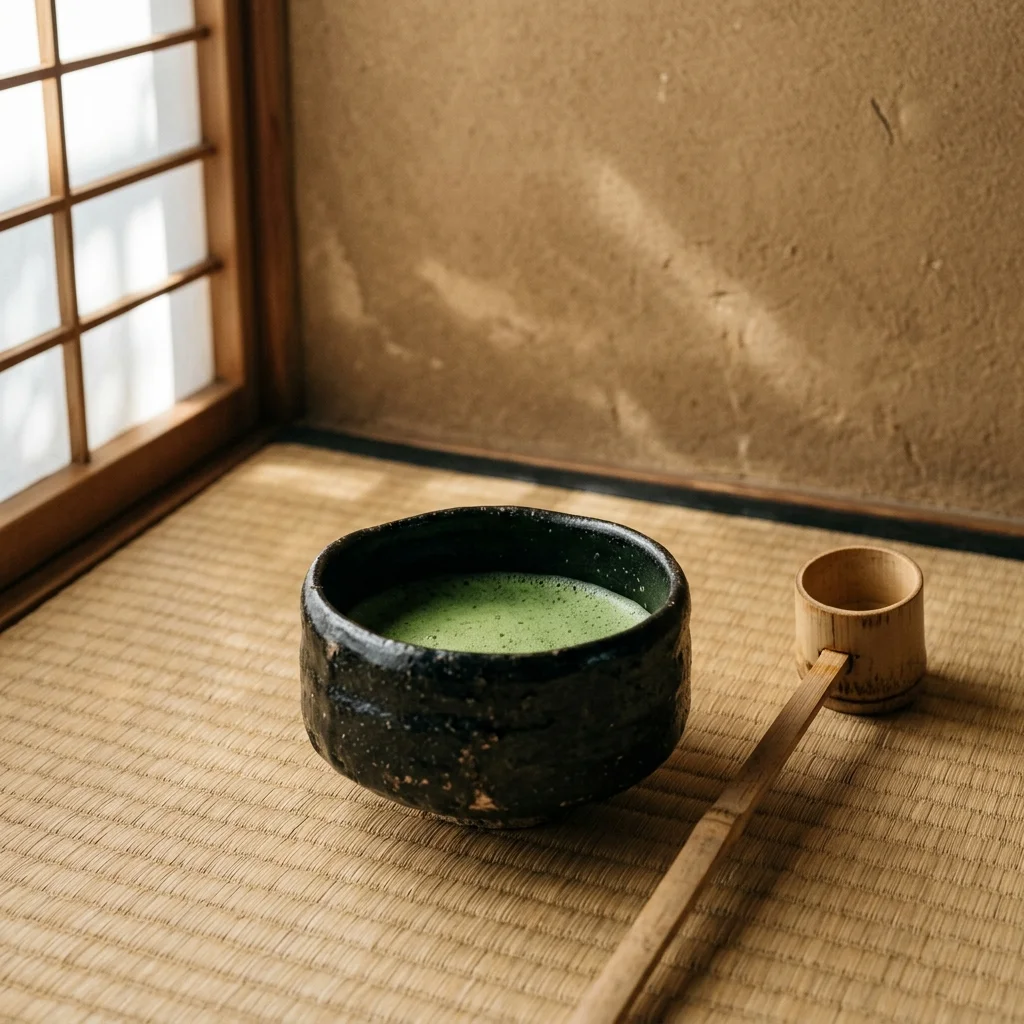
A rustic dark clay tea bowl filled with frothy green matcha tea, resting on tatami next to a simple bamboo water ladle inside a tea room.
Cultural Concept

WAKEI-SEIJAKU

和敬清寂 / わけいせいじゃく

A frothy bowl of matcha tea resting adjacent to a split-bamboo ladle on tatami, reflecting the four pillars of harmony, respect, purity, and tranquility in Wakei-Seijaku.

Linguistic Definition (TL;DR)

Wakei-Seijaku represents the four core Zen Buddhist pillars of the traditional Japanese tea ceremony: Harmony, Respect, Purity, and Tranquility. Guiding both host and guest within the minimal tea room, this ethical system fosters deep social integration, spiritual cleansing, and absolute quietude by celebrating simple everyday rituals.

Etymology & Linguistic Analysis

// 01

The profound and four-character Zen Buddhist phrase Wakei-Seijaku (和敬清寂), known in Japanese linguistic terminology as a Yojijukugo, is a beautiful synthesis of Chinese characters that describes the four core pillars of the traditional Japanese tea ceremony. To truly comprehend the ethical and spiritual weight of this phrase, we must analyze the etymological roots of each individual kanji character in detail.

The first character, Wa (和), represents harmony, peace, or balance. Etymologically composed of the radical for 'grain' (禾) joined with 'mouth' (口), it historically symbolized the beautiful, peaceful state of sharing food and speaking together in harmony. The second character, Kei (敬), represents respect, reverence, or social honor. It is etymologically composed of 'to speak carefully' containing the radical for 'task' or 'hand', representing the conscious act of showing active respect to others through careful words and gestures. The third character, Sei (清), represents purity, cleanliness, or spiritual clarity. It is etymologically composed of the water radical (氵) containing 'blue' or 'clear' (青), representing the physical and spiritual acts of washing away impurities (*Kegare*) from the mind and body. The final character, Jaku (寂), represents tranquility, absolute silence, or Zen stillness. It is etymologically composed of the radical for 'house' containing 'silence' or 'peace', representing the quiet, immovable peace that arises when the self is forgotten.

Spoken together, Wakei-Seijaku translates literally to 'Harmony, Respect, Purity, and Tranquility'. Pronounced with a slow, resonant cadence—pronounced /wah-keh-ee-seh-ee-jah-koo/—the word carries a deep, meditative rhythm, inviting the listener to slow down, breathe, and notice the quiet, integrated beauty of the natural world, turning a simple list of Zen pillars into a profound guide to human relationships.

Deep Philosophical Foundations

// 02

At its deepest philosophical core, Wakei-Seijaku is not a set of formal etiquette guidelines or social rules; it is the primary ethical framework of the traditional Japanese tea ceremony (**Chado**), balancing the social ethics of **Zen Buddhism** against the spiritual purity of **Shinto animism**.

In the Zen Buddhist tradition, the primary source of human suffering and conflict is the illusion of a separate self. Modern humans tend to construct rigid social barriers based on power, wealth, and status, separating themselves from others, which leads to chronic isolation, competition, and violence. Wakei-Seijaku represents the physical and mental dissolution of these barriers. The first pillar, *Wa* (Harmony), represents the dissolution of the ego, aligning host, guest, and the surrounding tools in a single, flowing dance. The second pillar, *Kei* (Respect), represents the realization that all humans—regardless of their social status—possess the same inherent Buddha-nature. In the tea chamber, there are no masters or servants; all are treated with the exact same respect. The third pillar, *Sei* (Purity), represents the active, ongoing purification of the mind and body by washing away the dust of the everyday world. The final pillar, *Jaku* (Tranquility), is the natural, quiet peace that arises when the first three pillars are fully realized, helping the practitioner find profound peace in the natural flow of life.

Complementing this Zen worldview is the Shinto animistic belief in the sacred purity of physical actions. Shinto teaches that the natural landscape is a sacred sanctuary inhabited by the Kami, and that human tools—the wooden ladle, the ceramic bowl, the paper screens—are living parts of this sacred universe. Wakei-Seijaku is the design manifestation of this respect. It suggests that the tea chamber is a sacred, purified space where all tools must be handled with absolute care and gratitude. Wasting water, rushing the preparation, or treating a bowl carelessly is seen as a direct spiritual failure. By maintaining absolute purity (*Sei*) and respect (*Kei*) for both human participants and raw materials, the practitioners maintain a sacred, physical connection to the cosmos, protecting the harmony of the wider community.

Historical Evolution

// 03

The historical journey of Wakei-Seijaku is deeply woven into the growth of Japan's tea culture and the revolutionary Zen tea masters during the long, violent Sengoku period (1467–1603).

Prior to the Muromachi period, tea was utilized primarily by the samurai class as a lavish, political game of power. Shoguns would construct massive, gold-plated rooms, collecting expensive Chinese porcelain to show off their wealth and political status. However, during the chaotic, violent wars of the Sengoku period, tea masters began to question this material obsession, advocating for a simpler, domestic approach. They realized that the constant chase for political power and wealth was the primary driver of national violence. They sought to transform the tea ceremony from a display of power into a quiet, egalitarian retreat where warriors could lay down their swords and find inner peace.

This aesthetic and spiritual revolution was completed by the legendary tea master **Sen no Rikyu (1522–1591)**. Rikyu designed a radical new tea room called *Tai-an*, measuring only two tatami mats. He built its walls out of rough mud mixed with straw, used crooked cedar pillars, and installed simple paper screens that filtered natural light beautifully. He formulated the four pillars of *Wakei-Seijaku* as the official code of the tea chamber. Crucially, Rikyu installed a tiny, low entrance gate (known as Nijiriguchi), measuring only three feet high. This design forced every single guest—including the most powerful samurai and shoguns—to kneel, crawl, and leave their swords outside before entering, physically forcing them to practice absolute equality (*Kei*) and harmony (*Wa*). Rikyu’s revolution shifted the tea ceremony from a display of political wealth into a profound, egalitarian Zen spiritual retreat, cementing Wakei-Seijaku as the baseline of Japanese high culture and design that survived the rapid changes of the modern era.

Cultural Case Studies

// 04

To observe how the philosophy of Wakei-Seijaku manifests in the physical world, we can examine two extraordinary Japanese models: the sacred design of the traditional **Tsukubai (Stone Water Basin)** and the highly detailed, winter ritual of **Sumitemae (Charcoal Arrangement)**.

1. The Sacred Purification of the Tsukubai (Stone Water Basin): In traditional Zen tea gardens (*Roji*), the Tsukubai is a low, stone basin placed near the entrance of the tea house. Crucially, the stone is designed to sit very low to the ground, forcing the guest to physically kneel and bend down to scoop the water. This physical gesture is highly intentional—it forces the guest to practice absolute humility, lowering their body before the natural elements. The guest uses a bamboo water ladle to rinse their hands and mouth, washing away the dust and spiritual impurities (*Kegare*) of the urban world before entering the sacred tea chamber. The water flows down the handle, cleansing it for the next guest. By bowing before the stone basin and purifying their body, the guest practices absolute purity (*Sei*) and harmony (*Wa*), preparing their mind for the Zen tranquility (*Jaku*) that awaits inside.

2. The Precision of Sumitemae (Charcoal Arrangement): Sumitemae is the highly detailed, multi-stage ritual of arranging oak charcoal inside the tea hearth (*Ro*). A master host does not simply place charcoal inside the fireplace; they spend years mastering the exact visual balance and thermodynamic efficiency of the layout. The hearth is lined with a bed of fine white ash, shaped to look like rolling mountain peaks. The host uses iron tongs to place three base charcoals (*Waribashi*) in a secure triangular pattern, ensuring their unburnt ends face inward to maximize draft. They manually position selected oak branch charcoals in expanding layers, creating an aesthetic layout that burns slowly and evenly. By dedicating their heart to the meticulous arrangement of the fire, the host practices absolute respect (*Kei*) for the elements, providing a warm, comforting hearth that heats the tea water slowly and naturally, illustrating the perfect integration of beauty and function.

Practical Guide for Foreigners

// 05

For international visitors to Japan and modern home designers, adopting the spirit of Wakei-Seijaku is a powerful way to bring tranquility, mindfulness, and respectful collaboration into your everyday life.

**How to Experience the Tea Ceremony:** When attending a traditional tea ceremony in Japan, pay close attention to the host's focused movements. Receive the tea bowl with a deep bow, placing it carefully on the tatami mat in front of your knees, keeping your elbows low. Lift the bowl gently with both hands, keeping it low to the mat to prevent damage if dropped, and rotate it clockwise to examine the glaze variations. Turn the bowl upside down to admire the raw clay foot, wipe the rim gently with your silk cloth, and place it back on the mat, offering a sincere compliment to the host. These simple gestures are the physical expression of absolute respect (*Kei*) and harmony (*Wa*), showing deep gratitude for the host's hospitality.

**Designing a Harmonious Home:** You can practice Wakei-Seijaku in your own living space by choosing one simple, everyday area and committing to executing its layout with absolute care and respect. Replace mass-produced, synthetic plastic items with high-quality, handcrafted goods made from natural, organic materials. Arrange a single seasonal flower or branch in a simple clay vase, placing it near a window where it can catch the shifting shadows of the afternoon sun. This simple practice helps break the modern loop of distraction, quieten your thoughts, and nurture deep, resilient peace in your daily life, transforming simple tasks into paths of Zen mindfulness.

Dialogue Scenarios

// 06

To understand how the subtle codes of Wakei-Seijaku are spoken and navigated in traditional tea chambers, review this bilingual dialogue scenario between a tea master and a guest.

Scenario A: Gathering in the Tea Chamber (茶室の冬の朝茶会で)
A tea master, Rikyu, welcomes a guest, Kagekatsu, to a winter morning gathering, discussing the meaning of harmony in a simple room.

Guest: Master Rikyu, this tea room is incredibly simple, almost bare! There are no gold-plated screens, and the clay walls are so rough. Why do you choose such a humble space to welcome guests of high status?
Tea Master: 景勝殿、高価な道具や金の壁は、茶室の外の権力を表すものに過ぎません。この二畳の茶室では、武士も商人も、すべての人が平等の存在なのです。これこそが「敬」の心であり、対等な関係を築くための基本です。
(Lord Kagekatsu, expensive tools and gold walls are merely things that represent power outside the tea room. In this two-tatami chamber, both samurai and merchants, all people exist in absolute equality. This is the heart of Respect (Kei), and the baseline of building harmonious relationships.)
Guest: I see. So the simple walls and the low entrance are designed to strip away our social status? It does feel incredibly intimate. I felt a deep sense of humility when I had to crawl through the small gate.
Tea Master: その通りです。刀を外し、体をかがめて入る。その物理的な動作こそが、心の傲慢さを洗い流す「清」の修行なのです。そして、この狭い空間で一杯のお茶を分かち合う。そこに生まれる静寂こそが「寂」であり、私たちの真の調和なのです。
(Exactly. Removing your sword and bending your body to enter. That physical action itself is the practice of Purity (Sei) that washes away the arrogance of the mind. And sharing a single bowl of tea in this narrow space. The silence born there is Tranquility (Jaku), and our true harmony.)
Guest: That is a profound realization. It makes me feel warm and satisfied instantly, without feeling heavy at all.

Modern Ecological & Social Relevance

// 07

In our modern globalized society, the ancient ethical pillars of Wakei-Seijaku have emerged as critical elements in environmental sustainability, global diplomacy, and advanced corporate management.

As the world faces the severe ecological pressures of climate change and resource depletion, our modern industrial economies rely on a highly destructive cycle of rapid production and careless consumption, resulting in massive global waste. Adopting a Wakei-Seijaku philosophy offers a direct path toward a sustainable, circular economy. By requiring us to treat the entire life cycle of a product with absolute respect (*Kei*) and purity (*Sei*), returning materials to the cycle of creation, Wakei-Seijaku breaks the cycle of mindless consumption, helping us develop high-quality, durable, and handcrafted goods that are built to last for generations, protecting the earth's limited resources.

In the parallel realm of corporate management and global diplomacy, Wakei-Seijaku is playing an increasingly vital role. Modern professional life is saturated with digital platforms that project rapid, highly competitive streams of information, putting constant pressure on individuals to achieve short-term metrics. This extreme pressure often leads to global burnout, a loss of trust, and chronic team conflicts. Wakei-Seijaku acts as a soothing, compassionate refuge. It reminds us that true professional collaboration and lasting peace are built not by force, but by establishing safe, collaborative, and tranquil human spaces where all team members are treated with absolute respect and equality, nurturing the deep resilience needed to secure a peaceful future for our planet.

Practical Mastery

Actionable Cultural Skills

Integrate the philosophical wisdom of Wakei-seijaku into your everyday lifestyle through these practical, hands-on Japanese technical disciplines.

Tsukubai Basin Purification Ritual

蹲踞の浄化作法
初級 (Beginner)⏱️ 15 Minutes

Mastering the physical steps of washing hands and rinsing the mouth before entering a sacred tea chamber or Shinto shrine.

Traditional stone water basin (Tsukubai)Bamboo water ladle (Hishaku)
📋 Practical Steps
  1. 01.Approach the stone basin slowly, kneeling down on the designated kneeling stone (representing humility), and pick up the bamboo ladle with your right hand.
  2. 02.Scoop a full ladle of fresh mineral water, pour a small stream over your left fingers to cleanse them, then switch hands and wash your right fingers.
  3. 03.Pour a small amount of water into your left palm and use it to rinse your mouth silently, then tilt the ladle vertically so the remaining water flows down the handle, cleansing it for the next guest.

Minimalist Charcoal Arrangement & Fire Control

茶室の炭手前技術
上級 (Advanced)⏱️ 1 Hour

Arranging oak charcoal inside the tea hearth with perfect visual balance and thermodynamic efficiency to heat tea water slowly.

Hand-cut sakura oak charcoal (Binchotan)Metal fire tongs (Hibashi)Ash bed inside the tea hearth
📋 Practical Steps
  1. 01.Sift and level the fine white ash inside the hearth, shaping a circular, sloping ash bed that represents the rolling mountain peaks.
  2. 02.Place three base charcoals (known as *Waribashi*) in a secure triangular pattern using your tongs, ensuring their unburnt ends face inward to maximize draft.
  3. 03.Manually position selected oak branch charcoals in expanding symmetrical layers outward, creating an aesthetic layout that burns slowly and evenly without generating ash smoke.

Tea Bowl Visual and Tactile Appreciation

茶碗の拝見作法
初級 (Beginner)⏱️ 20 Minutes

Practicing the formal etiquette of examining a master tea bowl, showing respect for the artisan's work and the host's hospitality.

Handmade ceramic tea bowl (Raku-chawan)Silk wiping cloth (Fukusa)
📋 Practical Steps
  1. 01.Receive the tea bowl from the host with a deep bow, placing it carefully on the tatami mat in front of your knees, keeping your elbows low.
  2. 02.Lift the bowl gently with both hands, keeping it low to the mat (to prevent damage if dropped), and rotate it clockwise to examine the glaze variations and tool marks.
  3. 03.Turn the bowl upside down to admire the raw clay foot (*Kodai*), wipe the rim gently with your silk cloth, and place it back on the mat, offering a sincere compliment to the host.