Back to Glossary
Concept Glossary

Nemawashi: Laying the Groundwork - Consensual Harmony and Group Decision-Making

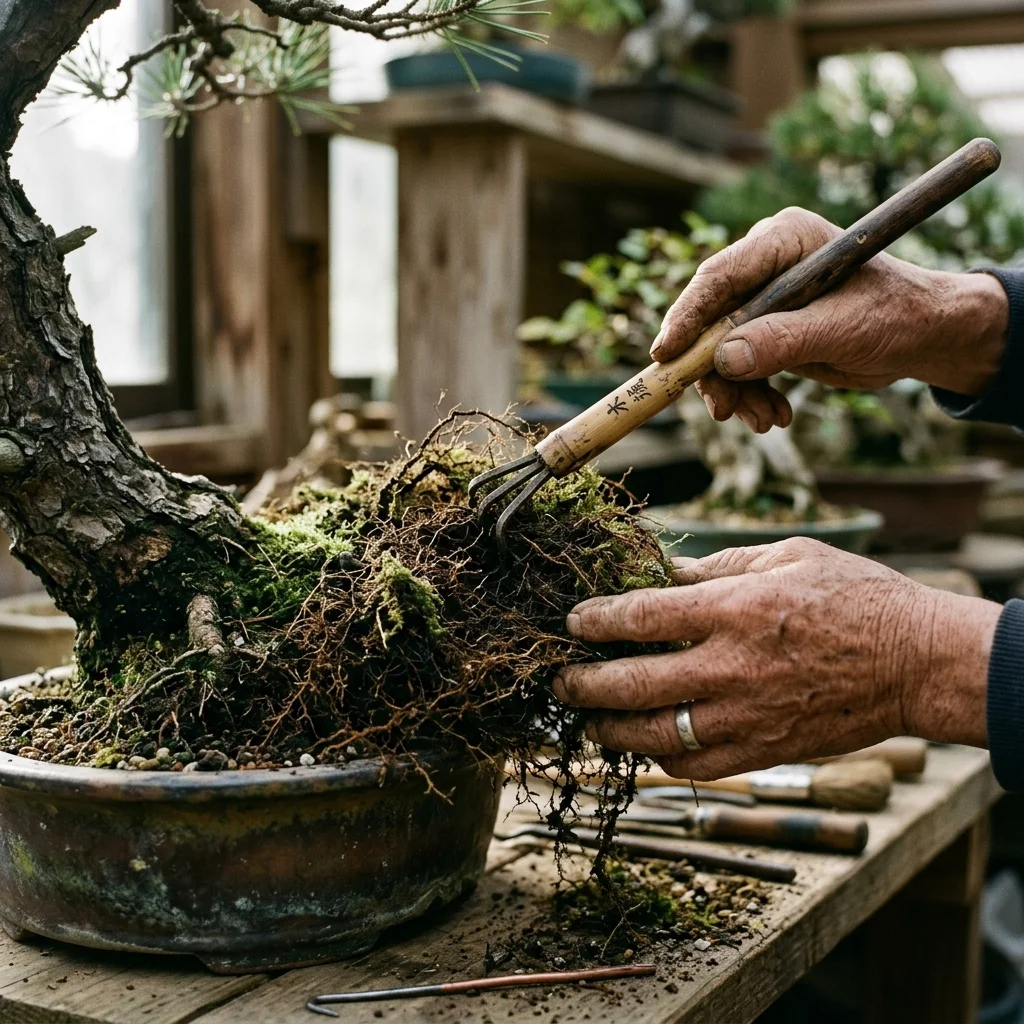
A gardener's hands gently preparing the fine mossy roots of an antique Japanese Bonsai pine tree for transplanting.
Cultural Concept

NEMAWASHI

根回し / ねまわし

The botanical origin of Nemawashi: An artisan gently combing, untangling, and pruning the delicate root ball of an ancient Bonsai pine tree to ensure absolute success during transplantation.

Linguistic Definition (TL;DR)

Nemawashi is the traditional Japanese practice of quiet, pre-proposal consensus building. Originating from gardening techniques of preparing bonsai roots before transplanting, this professional art involves holding informal, individual discussions with key stakeholders to address concerns and secure alignment before a formal decision or meeting takes place.

Etymology & Linguistic Analysis

// 01

The word Nemawashi (根回し) is a classical Japanese compound composed of two distinct kanji characters: Ne (根) and Mawashi (回し). To grasp the elegant, organic, and highly strategic nature of this concept, we must analyze its structural breakdown, as it represents a direct linguistic bridge between botanical craft and human social dynamics.

The first character, 根 (Ne), means root, foundation, origin, or source. Its structural visual features the radical for wood or tree (*Ki*) on the left, and a symbol representing an eye looking backward on the right, suggesting a deep, unseen foundation that supports what grows above. The second character, 回 (Mawashi), is a noun derived from the verb mawasu, meaning 'to turn, rotate, circle around, or prepare'. Structurally, the kanji features a small box nested inside a larger box, representing a circular, rotating movement. Therefore, when combined as 根回し, the word literally translates to 'circling around the roots' or 'root preparation'.

Phonetically pronounced as /neh-mah-wah-shee/ with a soft, sliding cadence, the word carries a quiet, confidential, and highly protective tone. In written Japanese, it is important to note that the term began strictly as a horticultural technical term. When a master gardener prepared to transplant a massive, ancient tree, they did not simply dig it up overnight. They engaged in *nemawashi*—digging a circular trench around the roots months in advance, pruning the thick taproots, and encouraging the growth of fine, fibrous feeder roots so the tree would easily survive the shock of transplantation. When business leaders in the Showa era sought a term to describe the quiet, pre-proposal consensus building required to transition a massive company, they borrowed this horticultural term, showing that a successful human organization is built on the exact same organic laws as a healthy tree.

Deep Philosophical Foundations

// 02

At its deepest level, Nemawashi is not a manipulative corporate trick, political plotting, or a method of backroom arm-twisting; it is a profound philosophical extension of **Wa (和 - social harmony)**, **Omoiyari (思いやり - empathetic consideration)**, and the Shinto-animistic respect for **collective organic health**.

In standard Western corporate aesthetics, decision-making is often viewed as a battlefield or a competitive sport. A leader drafts a proposal in isolation, presents it at a formal meeting, and debates it aggressively, relying on a raw majority vote to force the decision through. While this system is fast, it frequently generates massive friction, leaving the losing minority feeling ignored and resentful. Nemawashi completely rejects this aggressive, friction-filled model. It asserts that a formal meeting is not a place for debate; it is a place for **formal validation of a shared agreement**. The true work of decision-making must happen before the meeting begins, through quiet, informal, and individual dialogues where the concerns of every single stakeholder are heard, respected, and integrated into the proposal, preserving *Wa* (social harmony) at all costs.

This philosophy is deeply connected to **Omoiyari (empathetic consideration)**. During a one-on-one nemawashi chat, the proposer does not simply pitch their idea; they practice deep, active listening. They seek to understand the stakeholder's personal worries, structural constraints, and emotional state. If a stakeholder expresses concern about a project's impact on their department, the proposer immediately adjusts the proposal to protect them. The stakeholder is not forced to compromise or defend their position in a public meeting, which would cause them to 'lose face' (*Mentsu*). Instead, they are treated with absolute respect in a private, safe space. The proposal is transformed from a single individual's ambition into a collective, shared organic entity that protects the entire community, reflecting a Shinto-like reverence for the health of the entire social forest.

Furthermore, Nemawashi respects the Zen concept of **frictionless movement**. In Zen monastic life, monks are trained to move and cooperate without generating noise or conflict. If a system is tight and rigid, it breaks under stress. Nemawashi provides the essential, flexible 'play' or leeway (*Ma*) that allows a system to shift smoothly. By preparing the root system of a decision silently, the eventual public launch or transplantation happens with incredible speed and absolute zero resistance. The tree does not wither; it thrives immediately in its new soil because its roots were already prepared to absorb the new nutrients, demonstrating the profound spiritual power of quiet preparation.

Historical Evolution

// 03

The historical evolution of Nemawashi spans from the centuries-old horticultural traditions of Edo-period gardeners to the rapid industrial rise of Japan's corporate giants in the post-war Showa era, and finally to modern global diplomacy.

During the Edo period (1603–1867), under the peaceful rule of the Tokugawa shogunate, the city of Tokyo (then Edo) became a global center for horticultural art. The ruling elite built massive, complex walk-through gardens (*Kaiyushiki-teien*), requiring the continuous transplantation of giant, ancient pine and maple trees from distant mountains to the city's estates. Gardeners realized that if they simply dug up a massive tree and moved it immediately, the shock would kill it within weeks. They formulated the technical practice of *Nemawashi* as a long-term, organic discipline. Six months to a year before the move, the gardeners dug a trench around the tree, pruning the primary taproots while keeping the fine root ball intact. They filled the trench with mineral-rich soil, encouraging the tree to grow a dense cushion of fine feeder roots close to the trunk. When the move day finally arrived, the tree was lifted easily with its compact, healthy root ball, and transplanted without any shock, surviving for centuries in its new home.

In the mid-20th century, during the rapid economic miracle of the Showa era, Japan transitioned from a ruined post-war country into a global industrial powerhouse. Massive, highly complex corporate structures—known as *Keiretsu*—arose across Tokyo and Nagoya. Unlike Western corporations which were governed by individualistic, top-down CEOs, Japanese companies operated on a unique system of **collective responsibility and bottom-up decision-making (Ringisho)**. In this system, a proposal was drafted by a middle manager (*Kacho*) and had to be circulated horizontally and vertically through dozens of departments, receiving the physical stamp (*Hanko*) of every single manager before receiving the CEO's final approval.

To navigate this incredibly complex, bureaucratic web without generating gridlock or department wars, middle managers adapted the horticultural practice of *Nemawashi*. They realized that if they simply sent a cold, written proposal to another department, it would be rejected immediately out of defensive pride. They began to hold quiet, informal pre-proposal meetings—often over lunch, after-work drinks (*Nomikai*), or simple tea chats in the hallway. They explained the idea, gathered feedback, and adjusted the proposal *before* circulating the official document. Through this continuous, silent consensus building, the official *Ringisho* process was transformed from a bureaucratic barrier into a smooth, frictionless validation loop. When the formal board meeting finally took place, the proposal was approved within minutes with 100% unanimous support, establishing Nemawashi as the supreme operational art of Japanese corporate governance and high-speed execution.

Cultural Case Studies

// 04

The practical application of Nemawashi can be studied through three iconic case studies: the corporate decision-making model of **Toyota**, the diplomatic coordination of **International environmental treaties**, and the architectural preservation of **historic Japanese farmhouses**.

Historical Case Study: Toyota's Ringi System and Pre-Approval Loops

At the Toyota Motor Corporation, Nemawashi is formally integrated into the corporate culture as one of the twin pillars of the **Toyota Way** (alongside Kaizen). When Toyota engineers plan to introduce a new manufacturing tool or adjust a car's component layout, they do not present a completed blueprint to the board. Instead, the project leader embarks on a formal 'Nemawashi Loop'. They visit the factory floor, discuss the change with the assembly line workers, meet with the purchasing department, and consult the quality control managers. They ask: *'How will this change affect your daily work? What are your concerns?'* If the factory workers complain that the tool is too heavy, or if purchasing warns that the material is too expensive, the project leader immediately modifies the design. This loop is repeated multiple times until every single department is completely aligned. When the formal executive board meeting takes place, there is no debate, no shouting, and no disagreement; the project is approved immediately, and the execution is carried out with absolute, world-record speed because the 'roots' were already perfectly aligned.

Diplomatic Experience: The Silent Consensus of the Kyoto Protocol

In the realm of global diplomacy and international relations, Nemawashi is recognized by foreign ambassadors as the essential secret to negotiating complex treaties. During the negotiations for the **Kyoto Protocol (1997)**—the historic international treaty to commit state parties to reduce greenhouse gas emissions—Japanese diplomats faced an incredibly complex, high-stakes standoff between the United States, the European Union, and rapidly developing nations. A formal, public debate in the grand assembly hall would have led immediately to defensive grandstanding, media leaks, and absolute gridlock. Japanese negotiators utilized their cultural DNA of Nemawashi. They organized a series of quiet, informal, and private one-on-one dinners in Tokyo and Kyoto, cut off from the media. They met individually with key foreign delegates, listened to their specific economic constraints, and drafted compromises in silence. By the time the formal delegates gathered in the grand assembly hall for the final vote, the core compromises had already been secured privately, demonstrating the profound power of nemawashi to secure global agreements that would be impossible under high-pressure public debates.

Design Metaphor: The Preservation of Shirakawa-go Farmhouses

Located in the mountainous Gifu Prefecture, the historic village of Shirakawa-go is famous for its traditional thatched-roof farmhouses, built in the *Gassho-zukuri* (hands-in-prayer) style, which have survived for over three hundred years. Rebuilding these massive, steep cogon-grass roofs is an incredibly complex, high-risk physical challenge. Every thirty years, the roof must be completely replaced within a single day before rain ruins the exposed timber structure. This is accomplished through a traditional community mutual aid network known as **Yui (結い)**, powered by intense Nemawashi. Months before the build day, the village elders hold quiet, informal discussions with every household, coordinating the labor duties (who will cut the grass, who will climb the rafters, who will cook the communal meals) and pooling the materials. Every single detail is coordinated in silence. When the build day finally arrives, over two hundred villagers assemble at dawn and replace the entire roof in a single, silent, and highly coordinated day without a single argument or safety error, showing that structural stability is built on the silent foundation of pre-proposal consensus.
Practical Guide for Foreigners

// 05

For international professionals, project managers, and diplomats working within Japanese organizations or cross-functional teams, mastering the art of Nemawashi is the key to securing project approval, mitigating risks, and building frictionless professional relationships.

Executing a Professional Nemawashi Loop: When preparing to launch a new proposal, software update, or organizational change, never present it at a formal meeting cold. Apply these four practical steps to secure consensus silently:

  • #1: Identify Key Gatekeepers: Map out the decision-makers. Look beyond formal titles; identify the informal influencers—the veteran managers or senior engineers whose opinions carry immense weight.
  • #2: Hold One-on-One Chats: Schedule informal, casual 15-minute tea chats or lunch meetings with each gatekeeper individually. Keep the tone warm and unhurried. Say: *'I am thinking of proposing this idea, and I highly value your expert advice. How would this affect your department? What are your concerns?'*
  • #3: Practice Active Listening: Do not aggressively sell your idea. Listen to their worries with absolute empathy. If they point out a flaw, thank them, and adjust your proposal immediately to integrate their feedback.
  • #4: Secure Pre-Approval: Once you have modified the proposal, share the updated draft with them privately, asking: *'I have integrated your excellent advice. Is this draft acceptable to you?'* Once they agree, the 'roots' are aligned.

Avoiding the Backroom Bias: For foreigners, Nemawashi can sometimes feel uncomfortable, appearing like a secretive, non-transparent method of backroom decision-making that bypasses public debate. You must actively shift your mindset. Nemawashi is not designed to hide information or force decisions in secret; it is designed to protect **Wa** (social harmony) and prevent public conflict. In Japanese culture, arguing or disagreeing with a colleague in a public meeting is a severe social offense that causes deep embarrassment and damages relationships. Nemawashi provides a safe, polite, and respectful channel to resolve disagreements privately, ensuring that everyone can enter the formal meeting as a unified, harmonious team.

Dialogue Scenarios

// 06

Review these bilingual dialogue scenarios to understand how managers, engineers, and designers discuss and execute Nemawashi in natural, professional environments.

Scenario A: Middle manager advising a foreign colleague before a presentation (オフィスの廊下で)
A senior Japanese manager gives critical advice to an international colleague who is about to present a proposal.

Colleague: I have prepared an amazing presentation slide deck for tomorrow's board meeting to launch our new software update. I'm going to pitch it directly to the directors. I expect a heated, exciting debate!
Manager: それは絶対にやめた方がいいです。日本の取締役会でプレゼンをぶっつけ本番でやってはいけません。会議の前に、まず技術部長の佐藤さんと財務部長の田中さんに個別で相談しましたか?
(You should absolutely stop that. You must never present a proposal cold at a Japanese board meeting. Before the meeting, did you first consult individually with Mr. Sato of Engineering and Mr. Tanaka of Finance?)
Colleague: Consult them individually? No, why should I? The board meeting is the place to debate the idea and get everyone's opinion together!
Manager: いいえ、日本の会議は「議論する場所」ではなく、「最終合意を承認する場所」です。事前に佐藤さんと田中さんに個別のランチで相談し、彼らの懸念点(エンジニアの稼働、予算の枠)を事前に解決しておく必要があります。この「根回し(Nemawashi)」をしておかないと、明日の会議で彼らは防御的になり、プロジェクトは保留になってしまいますよ。
(No, a Japanese meeting is not a 'place to debate', but a 'place to approve the final agreement'. You must consult Sato and Tanaka over individual lunches beforehand, resolving their specific concerns—developer bandwidth and budget caps—in advance. If you don't do this 'Nemawashi', they will become defensive in tomorrow's meeting, and the project will be put on hold.)

Scenario B: Two developers planning a system migration (オフィスのリフレッシュスペースで)
Two senior engineers discuss how to align their team before upgrading a database server.

Developer A: 来週のデータベースサーバーの移行計画、そろそろ正式な移行プロセスをドキュメントにしてチーム全員にメールしようと思っているんだけど、どうかな?
(For next week's database server migration plan, I'm thinking of documenting the official migration process and emailing it to the entire team soon. What do you think?)
Developer B: メールをいきなり送る前に、まずはインフラチームのリーダーである鈴木さんと、フロントエンドの佐藤さんに個別のチャットで「移行のテスト計画についてアドバイスをください」と連絡した方がいいよ。
(Before suddenly sending the email, it's better to contact Mr. Suzuki, the Infrastructure team leader, and Mr. Sato of Frontend via individual chats, saying 'please give me advice on the migration test plan'.)
Developer A: なるほど、事前に彼らの意見を聞いて、ドキュメントに反映させておくわけだね。そうすれば、正式なメールを送ったときに「自分たちの意見が最初から入っている」と感じて、すぐに協力してもらえるね。
(I see, so we gather their opinions in advance and reflect them in the document. That way, when we send the official email, they will feel 'our opinions are included from the start' and will cooperate immediately.)
Developer B: その通り。メールの前にしっかり「根回し」をしておけば、移行当日のトラブルや誤解もゼロになるよ。急がば回れ、だね。
(Exactly. If we do solid 'Nemawashi' before the email, troubles and misunderstandings on the migration day will be zero. Haste makes waste, right?)

Modern Ecological & Social Relevance

// 07

In our modern, hyper-complex 21st-century global society, the traditional Japanese philosophy of Nemawashi has transitioned from a regional corporate custom into a critical, revolutionary strategy for global environmental sustainability, climate negotiations, and mental health.

The global climate crisis is currently locked in a devastating state of political and diplomatic **friction and gridlock**. International environmental conferences (such as the COP summits) frequently descend into public arguments, defensive finger-pointing, and sudden collapses of negotiations, because nations present aggressive proposals cold, forcing others to defend their domestic interests in front of global media. This high-pressure, confrontational approach wastes years of precious time while planetary ecosystems decay. Nemawashi offers a powerful, elegant alternative. By championing **collaborative consensus building**, Nemawashi asserts that the most resilient international treaties are built through quiet, private, and individual dialogues where the unique economic, social, and geographical constraints of every nation are respected and integrated in silence. By aligning the 'roots' of the treaty privately, the eventual public launch happens with absolute unity, securing swift, global-scale ecological action that would be impossible under confrontational debates.

In the parallel realm of mental healthcare and workplace psychology, Nemawashi serves as a vital shield against the global epidemic of professional anxiety, toxic competition, and employee burnout. Modern corporate environments often promote an aggressive culture of individualistic dominance—expecting employees to publicly fight for their ideas, defend their actions, and engage in high-stress debates to secure promotions. This confrontational environment keeps our sympathetic nervous systems in a continuous state of stress, leading to deep relationship fractures, team isolation, and mental decline. The practice of Nemawashi offers a path of quiet release. By shifting our professional dynamics from aggressive debates to **empathetic one-on-one dialogues**, we rebuild the organic trust of our organizations. We restore a healthy sense of safety, cultivate high-focus collaboration, and protect our human dignity, showing that professional success is not built on the destruction of our opponents, but on the silent, harmonious preparation of our shared roots.

By transforming our decision-making models from competitive battles to respectful, organic consensus loops, Nemawashi stands as a timeless gift of Japanese design and organizational wisdom, showing that true progress, international agreements, and workplace happiness do not require high-pressure conflicts, but rather the humble, quiet alignment of our collective foundations.

Practical Mastery

Actionable Cultural Skills

Integrate the philosophical wisdom of Nemawashi into your everyday lifestyle through these practical, hands-on Japanese technical disciplines.

Pre-Meeting Stakeholder Alignment Mapping

根回しマップ作成
中級 (Intermediate)⏱️ 45 Minutes

Mapping out decision-makers for a pending proposal to identify individual interests, concerns, and alignment pathways before a formal vote.

A blank sheet of heavy textured paperThree colored fine-tip pens (Red, Yellow, Green)A quiet, focused meeting room
📋 Practical Steps
  1. 01.Draw a circle in the center of the paper representing your proposed project or core decision.
  2. 02.Map out the names of all key stakeholders around the center circle, drawing lines to show their relationships.
  3. 03.Use the colored pens to color-code their current alignment: Green for active supporters, Yellow for neutral/skeptical, and Red for potential oppositions.
  4. 04.Design specific, informal, one-on-one tea chats with the Yellow and Red stakeholders to address their individual concerns silently.

Bonsai Root Pruning & Preparation

根回し園芸技術
上級 (Advanced)⏱️ 1 Hour

Executing the physical, botanical art of Nemawashi—preparing a delicate root system for successful pot transplantation.

A healthy potted bonsai tree ready for repottingA traditional wooden or bamboo root rake (Kumade)Sharp, sanitized root pruning shearsFresh mineral-rich bonsai soil mix (Akadama, Pumice)
📋 Practical Steps
  1. 01.Gently extract the bonsai tree from its existing pot, taking care not to damage the soft outer bark or foliage.
  2. 02.Use the wooden root rake to gently comb out the dense clay soil, untangling the root ball from the center outward.
  3. 03.Locate the thick, heavy primary taproots and prune them back carefully with your shears, leaving the fine, fibrous feeder roots intact.
  4. 04.Repot the tree in fresh, well-aerated soil, watering thoroughly, allowing the fine roots to immediately absorb moisture and secure the tree's health.