Back to Glossary
Concept Glossary

Mingei: The People's Art - Finding Timeless Functional Beauty in Everyday Craft

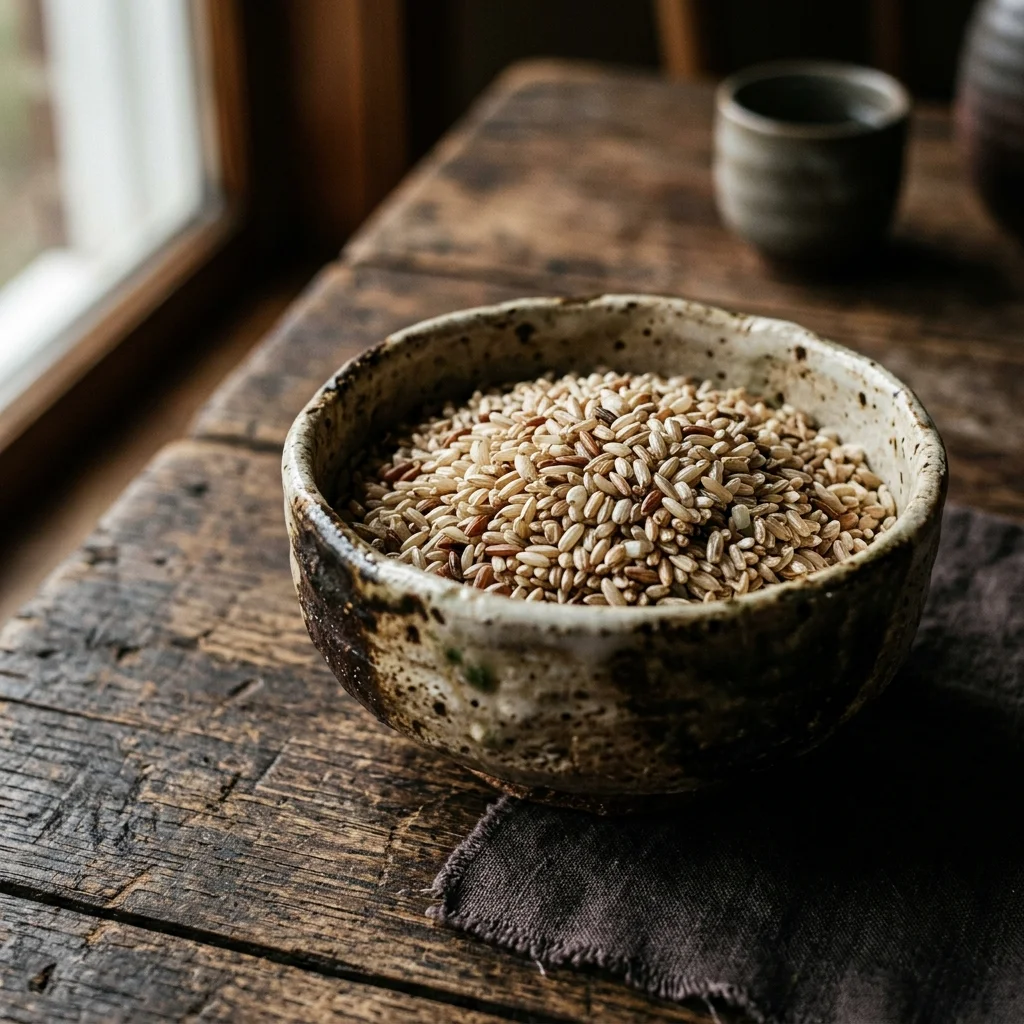
A simple, heavy, hand-painted Mashiko stoneware bowl filled with raw brown rice on a rough-sawn oak table.
Cultural Concept

MINGEI

民芸 / みんげい

A classic physical manifestation of Mingei: A heavy, hand-glazed Mashiko stoneware rice bowl featuring raw cobalt and iron brush strokes, built for decades of daily domestic dining.

Linguistic Definition (TL;DR)

Mingei is the Japanese folk-craft movement celebrating the beauty of ordinary, anonymous, and utilitarian everyday objects. Founded by Yanagi Soetsu, this philosophy asserts that true aesthetic excellence resides not in expensive luxury arts, but in durable, honest, and accessible handmade items designed for daily domestic use by common people.

Etymology & Linguistic Analysis

// 01

The word Mingei (民芸) is a brilliant linguistic portmanteau coined in the winter of 1925 by the Japanese art philosopher **Yanagi Soetsu**, along with his close ceramicist companions Hamada Shoji and Kawai Kanjiro. To understand the revolutionary nature of the term, we must analyze its structural breakdown, as it did not exist in the Japanese language prior to the early Taisho era.

The term is composed of two distinct parts: Minshu (民衆), meaning 'the masses, the common people, or ordinary citizens', and Kogei (工芸), meaning 'crafts, technical arts, or manufacturing'. By combining the first kanji of each word—民 (Min - people) and 芸 (Gei - craft/art)—Yanagi created a brand-new concept that literally translates to 'people's crafts' or 'folk crafts'.

Phonetically pronounced as /meen-gay/, the word carries a simple, earthy, and unpretentious sound. In classical Japanese art history, high-end art was classified under words like Bijutsu (美術), which represented elite, fine arts created by famous masters for wealthy aristocrats to display in museums. By placing 民 (people) at the forefront of the new word, Yanagi mounted a direct linguistic challenge to elite art circles. He declared that the simple, unnamed crafts created by ordinary people for their daily survival possessed a higher, more honest aesthetic value than the self-conscious, expensive creations of individual artistic egos.

Deep Philosophical Foundations

// 02

At its core, Mingei is not a decorative interior design style; it is a profound philosophical and spiritual manifesto centered on the concept of **Yo no Bi (用の美)**, which translates to 'the beauty of utility'.

In traditional Western aesthetics and high-end Japanese tea ceremony circles, beauty was often associated with rarity, intellectual complexity, and pristine, delicate forms. Yanagi Soetsu completely inverted this view. He asserted that true, healthy beauty resides in objects that are designed to be used in everyday, ordinary life. An object's beauty is not separate from its function; rather, its beauty is born directly from its practical utility. A heavy stoneware bowl, a cast-iron kettle, a woven straw mat—these items are beautiful precisely because they perform their physical duties flawlessly, day after day, without asking for individual attention or praise. If an object is too delicate to be used, or if its decoration interferes with its practical utility, it loses its honest beauty and becomes a self-conscious commodity.

This philosophy is deeply connected to **Zen Buddhist animism** and the concept of **selflessness (Mushin)**. In the Mingei worldview, the finest crafts are created by artisans who do not sign their work, do not seek individual fame, and do not possess overbearing artistic egos. The artisan works in a state of quiet, repetitive rhythm, using local natural clay, local mountain timber, and traditional hand tools. This repetition allows the artisan to bypass the self-conscious mind, entering a state of absolute focus where the material (clay or wood) guides the hand. The object is not 'made' by the artisan; rather, it is allowed to 'happen' naturally through the cooperative flow of nature and human labor. This selflessness is linked directly to **Chisoku (知足)**, or finding absolute contentment in what is simple and sufficient, encouraging a lifestyle of elegant domestic moderation over consumerist greed.

Furthermore, Mingei champions the beauty of **the ordinary and the plural**. A true Mingei object is cheap, accessible, and made in large quantities. It is designed to be owned and loved by ordinary working-class families, not hoarded in wealthy private vaults. The slight variations between items—the subtle run of a natural wood-ash glaze, the asymmetrical curve of a hand-thrown bowl—are not errors, but the natural, healthy breath of organic hand-craftsmanship, celebrating a rustic, wabi-sabi simplicity that honors the earth.

Historical Evolution

// 03

The historical journey of the Mingei movement began during the rapid modernization of the Taisho period (1912–1926) and served as a powerful cultural buffer against the onset of Western-style industrial capitalism.

Following the Meiji Restoration of 1868, Japan embarked on a massive, state-sponsored drive to Westernize its society, economy, and military. Ancient hand-craft guilds were dismantled, local kilns were closed, and massive steam-powered factories rose across Osaka and Tokyo, churning out cheap, uniform, mass-produced plastic, glass, and metal goods. While the political elite celebrated this rapid industrialization, a small group of visionary thinkers saw that it was destroying the spiritual and aesthetic fabric of the country. They realized that the unique local craft heritages of Japan's prefectures—pottery, weaving, woodwork, lacquerware—which had been refined over a thousand years, were disappearing within a single generation.

In the autumn of 1925, philosopher and religious scholar **Yanagi Soetsu** traveled through the rural mountains of Tohoku and Kyushu, accompanied by young potters **Hamada Shoji** and **Kawai Kanjiro**. As they visited humble farmhouse kitchens and local village markets, they were deeply moved by the rustic beauty of the everyday utensils they found: heavy stoneware jars for pickling plums, indigo-dyed cotton farm coats patched over generations, and hand-carved wooden ladles. They realized that these unnamed, inexpensive items possessed a healthy, robust, and absolute beauty that was completely missing in modern factory-made goods. In 1926, they formally published the *Manifesto of the Mingei Movement*, establishing a domestic design crusade to rescue, document, and revitalize traditional folk crafts.

In 1936, after years of intense fundraising and collection, Yanagi established the **Nihon Mingeikan (Japan Folk Crafts Museum)** in Komaba, Tokyo. Built using traditional stone walls and dark chestnut timbers from dismantled farmhouses, the museum was designed to be a living home for the anonymous crafts of the world. Rather than organizing exhibitions by famous artists or chronological eras, Yanagi displayed anonymous pottery, textiles, and woodcarvings side-by-side, showcasing their shared, silent beauty. During the dark years of World War II and the subsequent American occupation, the Mingei movement served as a crucial cultural repository, preserving the authentic, peaceful, and craft-driven soul of Japan from complete visual destruction and Americanized commercialization.

Cultural Case Studies

// 04

The practical application of Mingei philosophy can be studied through three iconic design case studies: the pottery village of **Mashiko**, the woodblock print revolution of **Munakata Shiko**, and the traditional cast-iron **Nanbu Tekki** kettles of Iwate Prefecture.

Historical Case Study: Hamada Shoji and the Kilns of Mashiko

Nestled in the hills of Tochigi Prefecture, the quiet town of Mashiko is the spiritual home of Mingei ceramic art. Prior to the 1920s, Mashiko was a simple, utilitarian kiln site producing cheap, heavy, and coarse kitchen jars for Tokyo's merchant class. In 1924, potter **Hamada Shoji** decided to settle in Mashiko. He rejected the refined, complex, and expensive ceramic styles of Kyoto, choosing to live as a local farmer-potter. Hamada used only local Mashiko clay, mixed his own glazes from local oak ash and iron-rich stones (like *Kakitani-ishi*), and built a traditional multi-chamber climbing kiln (*Noborigama*) fired entirely with local red pine wood. He worked without a measuring gauge, throwing thousands of simple rice bowls, tea cups, and plates with incredible speed and natural rhythm. Hamada's work became the global template for the studio pottery movement, showing that by embracing local raw materials and anonymous, functional design, a simple kitchen utensil could achieve the highest levels of global aesthetic respect.

Artisan Experience: The Raw Woodcuts of Munakata Shiko

Munakata Shiko, one of the most famous woodblock print artists of the 20th century, was deeply championed by Yanagi Soetsu. Munakata was nearly blind, forcing him to lean down until his eyes almost touched the wooden block as he carved. Instead of seeking delicate, fine lines or realistic, Western-style shadows, Munakata carved with incredible speed, driving his iron chisels deep into the raw cherry wood block with explosive energy. He did not seek to control the wood; rather, he allowed the natural grain, knots, and resistance of the timber to guide his hand. When the block was inked and pressed onto thin handmade paper, it produced bold, raw, black-and-white images filled with animistic spiritual power. Munakata declared that he did not create the prints; he merely released the spirit that was already sleeping inside the block of wood, embodying the absolute selflessness and material respect of the Mingei mind.

Design Metaphor: The Nanbu Tekki Cast Iron Kettle

Crafted in the cities of Morioka and Oshu in Iwate Prefecture for over four hundred years, the traditional *Nanbu Tekki* cast iron kettle is the ultimate example of 'Yo no Bi'. Designed to boil water over a charcoal hearth, the kettle is incredibly heavy, robust, and built to survive for multiple generations. Its outer surface is finished with a dense, textured pattern known as *Arare* (hailstone), which increases the surface area of the iron, ensuring faster heat absorption and greater durability. The inside of the kettle is left unglazed and untreated with chemical enamels. When water is boiled in the raw iron chamber, it absorbs natural ferrous iron ions, creating a sweet, incredibly mellow, and soft mineral water that elevates the flavor of green tea. The kettle's rough, dark-gray tactile texture and its functional, life-enhancing utility represent the ultimate marriage of ergonomics, metallurgy, and silent, unpretentious beauty.
Practical Guide for Foreigners

// 05

For international home cooks, travelers, and design lovers, adopting the spirit of Mingei is a beautiful way to bring functional honesty, sustainable craftsmanship, and warm Japandi aesthetics into your daily home life.

Identifying Genuine Mingei Objects: When shopping at local craft markets, temple antique fairs (such as Ogo-san in Kyoto or Togo Shrine in Tokyo), or specialty design shops, look for objects that exhibit these four classic Mingei design signatures:

  • Tactile Weight: The object should feel solid, heavy, and robust in your hands. Avoid overly thin, delicate ceramics that feel fragile; a Mingei plate wants to be used every day without fear of chipping.
  • Local Materials: Look for natural, earthy textures—rough stoneware clay containing visible sand grains, hand-carved local chestnut wood showing tool marks, or organic hand-spun linen.
  • Anonymous Integrity: Banish the obsession with famous brand names or artist signatures. The finest Mingei items are anonymous, carrying no stamp other than their own functional excellence.
  • Simple Decoration: Avoid showy, intricate gold leaf or hyper-detailed paintings. Mingei decorations are simple, swift, and organic—a quick stroke of an iron brush, a natural run of wood ash glaze, or a simple hand-carved grid.

Integrating Mingei into Modern Living: You do not need to live in a traditional Japanese farmhouse to practice Mingei. You can easily integrate folk crafts into a modern urban kitchen:

  • The Daily Rice Bowl: Buy a handmade, thick-rimmed Mashiko or Shigaraki stoneware rice bowl. Use it for your morning oatmeal, soups, or rice, enjoying its warm, solid weight in your hands.
  • The Cast Iron Kettle: Replace your modern plastic electric kettle with a traditional Nanbu Tekki cast iron kettle. Use it to boil water for your daily tea or coffee, enjoying the incredibly soft, sweet flavor it imparts to the water.
  • Woven Bamboo Organizers: Use traditional hand-woven bamboo baskets (Take-kago) to store fresh fruits in the kitchen or hold letters on your desk, allowing the natural wood fibers to breathe.

Manners and Taboos in Craft Care: Traditional folk crafts are living objects that age and change over time. Never put handmade stoneware ceramics or wooden baskets into a modern automatic dishwasher or microwave oven; the high heat, chemical detergents, and rapid dry cycles will crack the clay and dry out the wood fibers. Wash your crafts gently by hand using warm water, a soft sponge, and mild organic soap. Dry them thoroughly in a well-ventilated shade before storing them in your cabinets to prevent mold growth, showing active respect for the anonymous hands that crafted them.

Dialogue Scenarios

// 06

Review these bilingual dialogue scenarios to understand how craftspeople, collectors, and everyday diners discuss the philosophy of Mingei and the beauty of utility in natural conversation.

Scenario A: Antique dealer and foreign collector at a Kyoto market (弘法さんの骨董市で)
An international traveler picks up an unnamed, slightly uneven ceramic jar at a temple flea market.

Collector: This jar is incredibly heavy and the glaze is so thick, almost like dripping brown sugar. But I don't see any signature or stamp on the bottom. Is it a valuable piece?
Dealer: それは明治時代に瀬戸地方で作られた、日常使いの「石皿(いしざら)」や「油壺(あぶらつぼ)」ですね。作家のサインはありません。名もなき職人が、毎日何百個も作った雑器です。
(That is a Seto 'Ishizara' plate or oil jar made for daily use during the Meiji period. It has no artist signature. It is a common utility ware made by the hundreds every day by anonymous craftsmen.)
Collector: It has no signature? But the visual balance and the tactile weight of the clay feel so much more alive than the signed pieces in the modern gallery!
Dealer: そうなんです。それこそが「民芸」の美しさですよ。作者のプライドや自己主張がないからこそ、道具としての形が純粋で、健康的で、美しいのです。飾るためではなく、毎日の食卓で使うために買っていってください。
(Exactly. That is the very beauty of 'Mingei'. Because there is no artist's pride or self-assertion, its form as a tool is pure, healthy, and beautiful. Please buy it to use on your everyday dining table, not just to display it.)

Scenario B: Two potters discussing a production run (益子の陶房で)
A young apprentice potter complains to his master about the difficulty of throwing identical plates without a gauge.

Apprentice: 親方、ゲージを使わずに同じ大きさの皿を何十枚も引くのは本当に難しいです。どうしても一枚一枚、わずかに歪みや厚みの差が出てしまいます。
(Master, throwing dozens of plates of the exact same size without a measuring gauge is incredibly difficult. No matter what, a slight distortion or difference in thickness appears on each plate.)
Master: それでいいんだよ。お前はロボットじゃない。工業製品のような完璧さを求めるなら、工場でプラスチックの皿を作ればいい。土の歪みや釉薬のムラは、土と炎が自然に息をした証拠だ。
(That is perfectly fine. You are not a robot. If you seek industrial perfection, go to a factory and make plastic plates. The distortion of the clay and the unevenness of the glaze are proof that the earth and fire breathed naturally.)
Apprentice: 完璧でなくても、道具として使いやすく、健康的な美しさがあれば、それが本物の「用の美」なのですね。
(Even if it is not perfect, as long as it is easy to use as a tool and possesses a healthy beauty, that is genuine 'Yo no Bi'.)
Master: その通りだ。考えすぎるのをやめて、手が自然に動くままに引き続けなさい。手が土と一体になったとき、素晴らしい「民芸」が生まれるんだ。
(That's it. Stop thinking too much, and just keep throwing as your hands move naturally. When your hands become one with the clay, excellent 'Mingei' is born.)

Modern Ecological & Social Relevance

// 07

In our modern 21st-century global society, the philosophy of Mingei has evolved from a historical Japanese preservation movement into a critical, revolutionary design strategy for global environmental sustainability, carbon footprint reduction, and mental health.

Modern global capitalism has locked human consumption into an incredibly destructive cycle of **cheap, hyper-disposable commodity culture**. Incinerators and oceans are choked with low-quality plastic furniture, cheap synthetic housewares, and unstable electronics that are designed to break within years, forcing continuous repurchase. This linear cycle consumes massive volumes of raw minerals, petroleum, and water, driving global carbon emissions and planetary degradation. Mingei offers a radical, elegant alternative. By championing **long-lived functional utility**, Mingei asserts that a single hand-carved wooden bowl, a heavy stoneware mug, or a cast iron pot is built to survive for multiple decades. Buying a single, honest, high-quality handmade item directly replaces the extraction, packaging, and shipping energy of dozens of disposable plastic items over a lifetime, establishing a visual aesthetic of sustainable stewardship.

In the parallel realm of mental health and social well-being, Mingei serves as a vital anchor of cognitive relief. We live in an era dominated by hyper-designed, glossy digital screens and high-status, self-conscious consumerism, where people continuously seek happiness through the display of expensive, luxury brand names. This drives a chronic state of social competition, anxiety, and visual exhaustion. The Mingei mind offers a path of quiet release. By surrounding our homes with anonymous, quiet, and honest objects, we construct a living space that does not demand attention, does not trigger status anxiety, and provides a soothing, tactile connection to the earth. The rough texture of stoneware, the organic smell of cedar wood, and the weight of cast iron ground our senses, bringing a quiet wabi-sabi peace to our daily domestic routines.

By shifting our relationship with everyday household goods from passive commercial consumption to active, appreciative stewardship, Mingei stands as a timeless gift of Japanese design wisdom, showing that true luxury and domestic happiness do not require the endless accumulation of expensive, showy objects, but rather the humble, daily embrace of the selfless beauty of utility.

Practical Mastery

Actionable Cultural Skills

Integrate the philosophical wisdom of Mingei into your everyday lifestyle through these practical, hands-on Japanese technical disciplines.

Conducting a Domestic Mingei Design Audit

用の美の監査
初級 (Beginner)⏱️ 1 Hour

Auditing your household tableware to identify objects that possess honest functional beauty and anonymous craft integrity.

Household tableware (plates, cups, bowls)A solid wooden table or workspaceNatural window lightBare hands and concentrated focus
📋 Practical Steps
  1. 01.Gather five items of daily-use tableware from your kitchen cabinets and place them in a neat row on a wooden table.
  2. 02.Hold the first object in your hands, closing your eyes to evaluate its physical weight and balance without visual distraction.
  3. 03.Feel the thickness of the rim, the texture of the base, and notice if the handle fits naturally to your fingers.
  4. 04.Open your eyes under natural light to inspect the glaze for honest, non-factory imperfections, evaluating if it serves its physical purpose without showy pretense.

Caring for a Traditional Woven Bamboo Basket

竹籠の古色手入れ
初級 (Beginner)⏱️ 20 Minutes

Maintaining traditional woven bamboo crafts to preserve their organic elasticity and develop a warm, dark caramel patina over decades.

A woven bamboo flower or kitchen basketA soft, dry goat-hair or horsehair brushPure cold-pressed walnut oil or linseed oil (1 teaspoon)A dry, lint-free cotton cloth
📋 Practical Steps
  1. 01.Use the soft dry brush to gently sweep away dust from the bamboo weave, brushing in the direction of the bamboo strips.
  2. 02.Place a tiny drop of pure walnut oil onto the cotton cloth, rubbing the cloth together to spread the oil thinly across the fibers.
  3. 03.Wipe the outer split-bamboo strips gently with the cloth, taking care not to snag the delicate woven edges or corners.
  4. 04.Place the basket in a cool, well-ventilated space away from direct sunlight to dry completely, allowing the bamboo to slowly absorb the oil.