Back to Glossary
Concept Glossary

Monozukuri: The Art of Making Things - Craftsmanship & Japanese Engineering

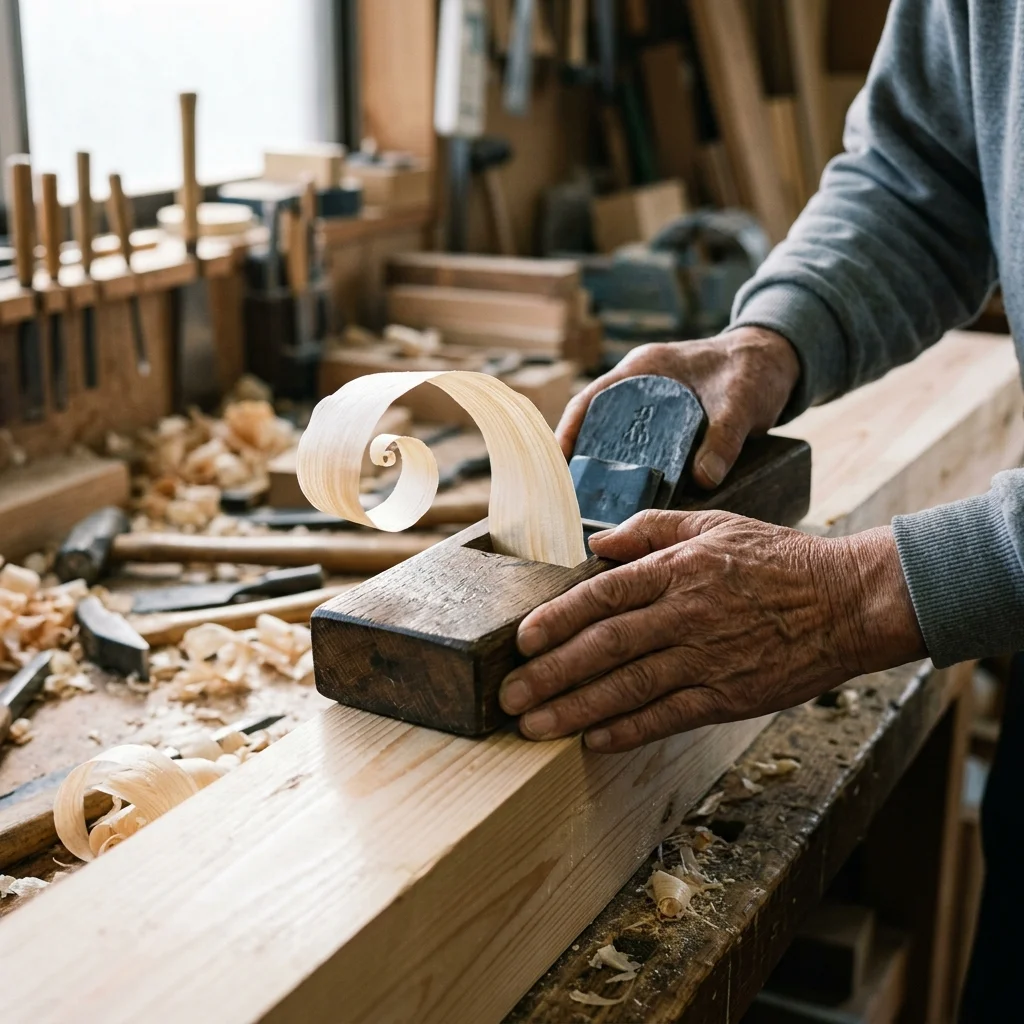
A close-up of a master woodworker's hands drawing a traditional wooden hand plane (kanna) along a spruce timber, peeling a continuous, paper-thin wood ribbon.
Cultural Concept

MONOZUKURI

ものづくり / 物作り

Monozukuri in its purest somatic form: a master carpenter drawing a Kanna hand-plane, feeling the raw wood grain with absolute sensory focus.

Linguistic Definition (TL;DR)

Monozukuri is the traditional Japanese philosophy representing the spiritual science and engineering of craftsmanship. Rooted in Shinto and manual guilds, it combines absolute technical quality with deep respect for raw organic materials, ensuring the maker’s soul is physically integrated into every creation.

Etymology & Linguistic Analysis

// 01

The word Monozukuri (ものづくり) is composed of two distinct Japanese terms: Mono (もの / 物), meaning 'thing', 'material', or 'physical entity', and Zukuri (づくり / 作り), which is the voiced form of Tsukuri, meaning 'making', 'crafting', or 'constructing'. While it literally translates to 'thing-making', the word carries a far deeper, almost sacred meaning that transcends simple manufacturing or commercial assembly.

Phonetically pronounced as /moh-noh-zoo-koo-ree/, the word has a rhythmic, grounding sound. In written Japanese, it is highly significant that the term is typically written in hiragana as ものづくり rather than using the strict kanji 物作り. This choice is highly intentional: writing mono in hiragana expands its meaning beyond dead, inanimate objects () to include living materials, natural forces, and the spiritual essence of the objects being crafted, cementing a cultural worldview where the act of creation is a deeply spiritual partnership between the artisan and the physical world.

Deep Philosophical Foundations

// 02

At its philosophical core, Monozukuri represents a complete, unified integration of mind, hand, and material. Unlike Western industrial manufacturing, which historically viewed nature as a raw resource to be mastered, reshaped, and exploited for commercial gain, Monozukuri is built upon a Shinto animistic foundation of deep reverence for the natural world.

The craftsman believes that raw materials—wood, clay, metal, water, and fibers—are not inert, dead resources. They carry their own spirit (Kami), their own unique character, and their own organic will. The duty of the artisan is not to force the material into an arbitrary shape, but to listen to the material's voice, understanding its unique grain, its moisture content, its tensile strength, and its natural imperfections. The maker aligns their own mind and physical movements with the organic truth of the material. This acts as a form of active, somatic meditation (Samu), where the boundary between the craftsman and the object disappears. To create a high-quality object is to infuse a piece of the maker's own soul (Tamashii) into the material, transforming a simple commercial tool into a living monument of functional art.

Historical Evolution

// 03

The historical lineage of Monozukuri is rooted in the highly organized artisan guilds (Shokunin) of the Kamakura (1185–1333) and Edo (1603–1867) periods. During these eras, master builders (Miyadaiku), sword smiths (Katana-kaji), and lacquer artisans (Urushi-shi) operated under strict apprenticeship systems (徒弟制度), where a young apprentice spent years performing simple cleaning and material preparation tasks purely to cultivate the muscle memory, patience, and absolute focus required for the craft.

In the Edo period, under the isolationist policy of Sakoku, these guilds had to achieve extreme resource efficiency, leading to a profound fusion of high-precision engineering and aesthetic refinement. Master carpenters developed complex, glueless interlocking joints (Kanawatsugi) that allowed massive timber temples to expand and contract under earthquakes, remaining stable for a thousand years. This relentless pursuit of perfection, material respect, and zero-defect quality control became the cultural DNA of Japanese industry. When Japan rapidly modernized during the Meiji Restoration and the post-war economic miracle of the 1960s, this ancient craftsmanship spirit was seamlessly integrated with modern high-precision factory logistics, giving birth to global standards like the Toyota Production System (Kaizen), proving that traditional hand-craft values could be scaled to drive modern global industrial design.

Cultural Case Studies

// 04

The functional application of Monozukuri can be observed in three legendary Japanese manufacturing sectors: **Miyadaiku (Temple Carpentry)**, **Toishi (Waterstone Honing)**, and modern **Toyota Kaizen Quality Control**.

1. Miyadaiku Interlocking Timber Engineering: Master temple carpenters build massive wooden pagodas that stand for over a thousand years without a single metal nail or bolt. They rely on high-precision interlocking joints called Kigumi. The carpenter must select and cut each timber beam based on the direction the tree originally grew on the mountain slope—using trees from southern slopes for the south side of the pagoda, as the wood naturally resists southern winds, demonstrating an extraordinary, ancestral level of material synchronization.

2. Japanese Knife Honing and Metallurgy: Traditional kitchen knives (Wahocho) are hand-forged by joining hard, brittle high-carbon steel (for the cutting edge) with tough, soft iron (for shock absorption), a process requiring extreme temperature control. To maintain this blade, the chef must use specialized natural waterstones (Toishi), honing the edge at a precise, consistent 15-degree angle. This manual sharpening aligns the steel molecules at the microscopic level, yielding a blade that can slice fish cells cleanly without tearing them, preserving the raw ingredient's texture and flavor.

3. Toyota Kaizen (Continuous Improvement): In high-tech automobile factories, Monozukuri is applied as a philosophy of active worker engagement. Every single assembly line worker has the authority to pull the Andon cord, stopping the entire factory line instantly if they detect a microscopic defect. This system empowers the individual worker to act as a master craftsman, prioritizing absolute quality and collective pride over simple commercial speed.

Practical Guide for Foreigners

// 05

For modern designers, makers, and consumers, adopting the spirit of Monozukuri is a powerful path to elevate your professional work, cultivate deep focus, and practice mindful purchasing.

1. Adopting the Maker's Mind (Kodawari): When undertaking any creative project—whether writing a line of software code, designing a graphic layout, or building a wooden shelf—commit to the absolute pursuit of unseen quality. Do not rush to finish; instead, focus on the details that are hidden from immediate view, such as clean formatting, structural integrity, and ergonomic flow, aligning your physical effort with your internal standards.

2. Honoring and Maintaining Your Tools: A master craftsman is defined by how they treat their tools. Spend time cleaning, organizing, and maintaining the instruments of your trade. If you are an office professional, organize your digital workspace and clean your keyboard; if you cook, sharpen your knives regularly on a waterstone. By treating your tools with active gratitude, you reduce friction and elevate the quality of your work.

3. Supporting Authenticity Over Disposability: When purchasing consumer goods, resist the urge to buy cheap, mass-produced items that are built with planned obsolescence. Instead, seek out hand-crafted, authentic items made by local artisans or manufacturers who practice material honesty. By paying a premium for a high-quality ceramic bowl, a solid timber table, or a hand-forged knife, you support the preservation of historic craft guilds and build a meaningful relationship with your physical environment.

Dialogue Scenarios

// 06

Review these bilingual dialogue scenarios to understand how apprentices learn from masters under the code of Monozukuri.

Scenario A: A Master Carpenter Inspecting an Apprentice's Work (神社仏閣の再建現場で)
A veteran master builder (Miyadaiku) evaluates a hand-planed joint crafted by a young apprentice.

Apprentice: Master, I have finished planing this cedar column. The surface looks perfectly flat and smooth to the eye. May I assemble the joint now?
Master: (Running his bare hand slowly down the wood) Fool! Your eyes are easily deceived by the sun, but your hand cannot lie. Feel this spot here. The grain is slightly raised because you pulled the plane against the timber's natural growth direction.
Apprentice: (Feeling the surface) You're right... there is a tiny roughness that I completely missed.
Master: Wood is not a dead plastic block. It is a living tree that has grown for a century. You must sense the wood's growth direction with your palms before you touch it with the iron blade. Go back, adjust your stance, and plane it in harmony with the grain until it feels like silk.

Scenario B: A Business Executive Explaining Kaizen (役員室での戦略会議で)
An executive explains to a foreign investor why they prioritize worker training over automation.

Investor: We can cut costs significantly and increase assembly speed by replacing twenty percent of our manual inspectors with automated AI cameras. Why resist this?
Executive: Because automation without human soul is not Monozukuri. Our workers are not simple biological robots; they are master craftsmen who continuously analyze the line to find improvements (Kaizen).
Investor: But isn't speed more profitable in the short term?
Executive: Speed without absolute quality is waste (Muda). When our workers take collective pride in their handiwork, they prevent massive recall disasters and build products that last for decades, ensuring long-term trust and mutual respect with our customers.

Modern Ecological & Social Relevance

// 07

In our rapid, automated 21st-century digital economy, Monozukuri has become a crucial design philosophy to combat the alienation of labor, improve manufacturing sustainability, and preserve global intangible cultural heritage.

The primary social value of Monozukuri is its power to reconnect the human worker with the fruits of their labor. In our modern service and gig economies, labor is often highly fragmented and digitalized, leading to a deep sense of alienation, depression, and disconnect. The somatic, mindful practice of Monozukuri—engaging both the hand and the mind in the creation of a physical, tangible object—provides a profound sense of self-actualization, agency, and pride.

Furthermore, Monozukuri offers a highly sustainable blueprint for modern manufacturing. By prioritizing the absolute longevity of products, designing items to be easily disassembled and repaired, and utilizing organic, locally sourced materials, this craftsmanship spirit directly supports the circular economy. By transforming our relationship with physical goods—from mindless consumption to mindful stewardship—we can build a high-performance society that operates in absolute harmony with the natural boundaries of our planet, proving that the future of advanced technology depends on the preservation of our ancient human soul.

Practical Mastery

Actionable Cultural Skills

Integrate the philosophical wisdom of Monozukuri into your everyday lifestyle through these practical, hands-on Japanese technical disciplines.

Nokogiri Hand-Saw Tension Stroke

和鋸の引き切り
初級 (Beginner)⏱️ 30 Minutes

Mastering the mechanical difference of the Japanese pull-saw, utilizing body weight and tension to make clean, effortless cuts along raw timber.

Traditional Double-edged Japanese Saw (Ryoba)Softwood timber blockMarking gauge
📋 Practical Steps
  1. 01.Mark a straight cut line across your timber block using a pencil and gauge, and secure the wood firmly on a low sawing horse.
  2. 02.Place the heel of the Ryoba blade on the marked line, tilting the saw at a 30-degree angle, and gently pull the saw backward to create a starting notch.
  3. 03.Stand with your feet shoulder-width apart, keep your elbow in a straight line with the blade, and push forward with zero pressure, then apply gentle downward force only during the backward pull stroke.

Toishi Kitchen Knife Sharpening

砥石による包丁研ぎ
中級 (Intermediate)⏱️ 1 Hour

Honing a high-performance steel blade on waterstones at a precise 15-degree angle, aligning molecules for paper-slicing sharpness.

Japanese Kitchen Knife (Gyuto or Santoku)Dual-sided Waterstone (#1000/#6000)Stone flattening plate
📋 Practical Steps
  1. 01.Submerge the waterstone in mineral water for 15 minutes until air bubbles stop rising, and secure it on a non-slip rubber base.
  2. 02.Hold the knife handle firmly, place the blade on the rough #1000 grit side at a precise 15-degree angle (about the thickness of two coins), and stroke back and forth smoothly.
  3. 03.Maintain consistent angle pressure along the entire edge until a fine metal burr forms on the reverse side, then flip the knife and repeat on the #6000 finishing side to polish.

Kigumi Wood-Joinery Assembly

木組の接合組み立
上級 (Advanced)⏱️ 3 Hours

Assembling traditional interlocking wooden joints utilizing friction and growth-direction synchronization, without nails or metal adhesives.

Interlocking Kigumi wood piecesWooden Mallet (Kizuchi)Fine polishing chisel
📋 Practical Steps
  1. 01.Inspect the pre-cut Kigumi interlocking wood joints, identifying the grain growth direction of both the mortise and tenon pieces.
  2. 02.Use a fine chisel to trim any micro-imperfections on the joints, ensuring a structural fit with a dimensional tolerance of less than 0.1 millimeters.
  3. 03.Align the two pieces, slide them together along their interlocking grooves, and tap them gently into place using a wooden mallet until the joint locks securely.