Back to Glossary
Concept Glossary

Kohdo: The Way of Incense - Traditional Olfactory Sensory Appreciation

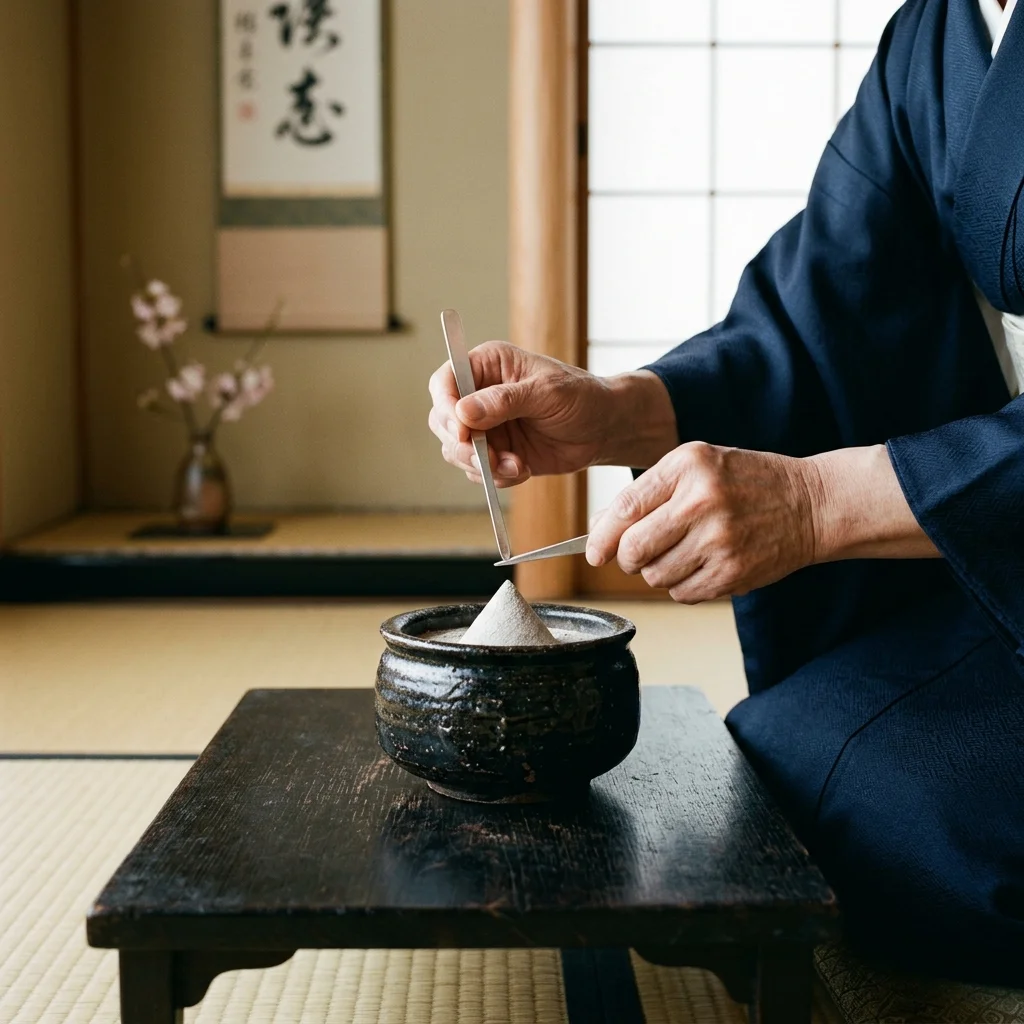
A close-up of a master's hands using delicate flat silver tools to shape a tiny, perfect ash pyramid inside a dark ceramic burner.
Cultural Concept

KOHDO

香道 / こうどう

The quiet focus of Kohdo: a master shaping the incense ash into a perfect cone, an active Zen meditation requiring absolute physical precision.

Linguistic Definition (TL;DR)

Kohdo is the traditional Japanese 'Way of Incense', a highly refined sensory art and mindfulness discipline. Rooted in Zen Buddhism, it teaches participants to 'listen' (monoko) to the complex aromatic profiles of rare agarwood, cultivating absolute presence, mental clarity, and deep sensory awareness.

Etymology & Linguistic Analysis

// 01

The word Kohdo (香道) is composed of two highly descriptive Japanese kanji characters: Koh (香), meaning 'incense', 'fragrance', or 'aroma', and Do (道), meaning 'way', 'path', or 'spiritual discipline'. Literally translated, it means 'the Way of Incense'.

Phonetically pronounced as /koh-doh/, the word has a deep, resonant quality that reflects the quiet, meditative nature of the ceremony. In the vocabulary of Kohdo, the key linguistic distinction is the verb used to describe the perception of aroma. Participants do not 'smell' the incense (written as *kagu*); instead, they are strictly instructed to **'listen' to the fragrance** (written as **聞香 — Monoko** or **Kiku**). This choice of vocabulary is highly intentional: 'listening' requires a state of active, quiet, and respectful presence, where the mind is opened to receive the subtle, non-verbal message of the ancient wood, transforming a passive sensory input into a deep spiritual dialogue.

Deep Philosophical Foundations

// 02

At its philosophical core, Kohdo is a direct material extension of **Zen Buddhism** and **Shinto nature worship**. It represents the pursuit of absolute presence, mental clarity, and the cultivation of refined aesthetic sensitivity.

In the Zen tradition, the primary source of human suffering is *Samsara*—the chaotic, distracted state of the mind caught in endless desires and thoughts. Kohdo serves as a powerful physical tool to break this distraction. The incense ceremony requires absolute silence; even the rustle of silk clothing is considered a disruption. By focusing the entire mind on the subtle, fleeting aroma of a tiny piece of heated wood, the participant enters a state of deep concentration (*Samadhi*). The aroma is not an additive perfume, but the raw, organic truth of the wood itself, reflecting the Zen aesthetic of simplicity and material honesty.

This philosophy is beautifully codified in the **Ten Virtues of Koh (香の十徳 — Koh-no-Juttoku)**, a classical list attributed to Zen priests of the Muromachi period:

  1. It brings communication with the transcendent (感格鬼神).
  2. It purifies the mind and body (清浄心身).
  3. It removes impurities and negative energy (能除汚穢).
  4. It keeps the mind alert and awake (能覚睡眠).
  5. It serves as a companion in solitude (静中成友).
  6. It brings peace and calm amidst busy schedules (塵裏偷閑).
  7. It is pleasing even in abundance (多而不厭).
  8. It is satisfying even in small amounts (寡而足用).
  9. It remains stable and potent over decades (極古不朽).
  10. It is useful and safe for daily practice (常用無障).

Historical Evolution

// 03

The historical lineage of Kohdo spans from the early introduction of Buddhism in the 6th century to the highly structured court competitions of the Edo period.

The historical journey began in 595 CE, during the reign of Empress Suiko, when a massive log of dark, heavy wood drifted ashore on Awaji Island. Local residents, unaware of its value, burned a piece of the wood for fuel. They were immediately amazed by the extraordinarily sweet, deep aroma that filled the island. Recognizing its sacred value, they presented the remaining wood to the imperial court. The wood was identified as **Jinko (沉香 — Agarwood)**, and its introduction marked the birth of Japanese incense culture. For centuries, incense was utilized primarily as a sacred offering in Shinto and Buddhist temples to purify the air and welcome deities.

By the Muromachi Period (1336–1573), under the artistic patron of Shogun Ashikaga Yoshimasa, Kohdo evolved into a highly structured secular art form alongside the tea ceremony (*Chado*) and floral arrangement (*Kado*). A master class of incense experts, led by the court noble **Sanjonishi Sanetaka** and the merchant **Shino Soshin**, codified the rules of the ceremony. They established the **Rikkyoku-Gomi (六国五味 — Six Countries, Five Tastes)** system, classifying rare agarwood based on its geographical origin and five basic taste profiles: sweet (*Kan*), sour (*San*), salty (*Kan*), bitter (*Ku*), and hot (*Shin*). During the Edo period, Kohdo became a mandatory social grace for samurai, court nobles, and wealthy merchants, who engaged in complex incense-matching games (*Kumiko*) to demonstrate their refined sensory education.

Cultural Case Studies

// 04

The technical practice of Kohdo is built around the chemistry of rare, resinous woods, the mechanical design of the **Monoko Burner**, and the highly competitive structure of **Kumiko Incense Games**.

1. The Chemistry of Agarwood (Jinko & Kyara): True incense wood is not simply aromatic; it is the result of an organic botanical defense mechanism. When an ancient *Aquilaria* tree in the rainforests of Southeast Asia is wounded by storms or infected by mold, it defends itself by producing a dark, dense, and highly aromatic resin within its heartwood. Over decades or centuries, this resin-saturated wood cures on the forest floor, becoming so dense that it sinks in water—hence its name *Jinko* (sink-wood). The most precious, highly prized grade of *Jinko* is **Kyara** (meaning 'precious'), which has a sweet, complex aroma that cannot be synthesized chemically, valued at up to ten times the price of gold.

2. The Monoko Burner Design: In the Kohdo ceremony, the wood is never burned directly with fire, as this would produce harsh smoke that ruins the delicate aroma. Instead, the wood is heated indirectly using the Monoko Burner system: a glowing charcoal is buried under a perfect pyramid of loose white ash. A tiny, circular mica plate (*Gin-yau*) is placed on top of the ash pyramid, and a paper-thin sliver of wood (no larger than a grain of rice) is placed on the plate. The heat from the buried charcoal is transferred slowly through the ash and the mica, heating the wood resin to its precise vaporization point (about 120°C), releasing pure, smoke-free aroma.

3. Kumiko Incense Games (Genji-ko): The most famous, highly structured Kohdo game is *Genji-ko*, named after the chapters of *The Tale of Genji*. The host prepares five packages of five different incense woods, choosing five packages at random to heat. The guests listen to the five aromas sequentially, identifying which ones are identical and which are unique. The guests record their answers using beautiful, five-line geometric calligraphic patterns called *Genji-mon*, blending olfactory science, mathematical probability, and classical literature into a highly sophisticated social game.
Practical Guide for Foreigners

// 05

For international visitors and wellness practitioners, participating in an authentic Kohdo ceremony in Japan offers a rare, highly meditative sensory experience.

Attending a Ceremony (Koh-kai): If you are invited to attend a Kohdo ceremony, pay close attention to personal grooming. Never wear perfume, cologne, or highly scented hand creams, as these will completely ruin the delicate aromatic environment for the other guests. Wear clean, simple clothing (preferably a kimono or long trousers that allow you to sit comfortably in the *Seiza* kneeling posture for at least an hour).

The Posture of Listening: When the burner is passed to you, receive it with your right hand and place it gently in your left palm. Cradle the rim of the burner with your right hand, creating a small chimney with your fingers. Raise the burner slowly to your nose, tilt your head slightly, and take three deep, slow inhalations, focusing your entire mind on the aroma. Turn your head away to exhale so you do not blow cold air or moisture onto the hot ash pyramid.

Appreciating Natural Incense at Home: You can practice olfactory mindfulness in your own home by using natural, high-quality Japanese incense sticks. Look for brands that use pure, natural ingredients like powdered sandalwood (*Byakudan*) or agarwood (*Jinko*) bound with natural *Tabu-no-ki* bark powder, avoiding cheap synthetic incense sticks that contain toxic artificial binders and petroleum perfumes.

Dialogue Scenarios

// 06

Review these bilingual dialogue scenarios to understand how masters guide guests to open their senses and 'listen' to the fragrance.

Scenario A: An Incense Master and a Novice Guest (京都の香道道場で)
The master corrects a guest who is sniffing the burner aggressively.

Master: 違います、鼻で強く息を吸い込んではいけません。香りを「嗅ぐ」のではなく、心で「聴く」のです。五感を静めて、木の声を受け入れてください。
(No, you must not inhale the breath strongly with your nose. Do not 'smell' the aroma; 'listen' to it with your heart. Quiet your senses and receive the voice of the wood.)
Guest: Listening to the wood... I see. When I take a slow, gentle breath, I can perceive a subtle, warm sweetness that I completely missed when I sniffed it.
Master: そうです。それが木が何百年もかけて蓄積してきた命の響きです。その響きを心の中に静かに迎え入れなさい。
(Yes. That is the resonance of life that the wood has accumulated over centuries. Welcome that resonance quietly into your heart.)

Scenario B: Two Friends Discussing Olfactory Mindfulness (オフィスの休憩室で)
A team member explains why they burn a high-quality sandalwood stick before work.

Friend A: You always look so calm and focused before our morning meetings. What is your secret?
Friend B: 毎朝、仕事に入る前に上質な「白檀」のお香を一本焚いて、静かにその香りを「聴く」時間を作っているんだ。頭の中の雑音が消えて、集中力が高まるよ。
(Every morning before starting work, I light a single stick of premium sandalwood incense and take time to quietly 'listen' to the aroma. The noise in my head disappears, and my focus improves.)
Friend A: Really? I just drink three cups of coffee, which makes me feel anxious. I should try olfactory mindfulness instead.
Friend B: ぜひ試してみて。コーヒーのように興奮させるのではなく、心を深く落ち着かせてくれるよ。
(Definitely try it. Instead of exciting you like coffee, it calms your mind deeply.)

Modern Ecological & Social Relevance

// 07

In our modern 21st-century society, Kohdo has emerged as a critical design philosophy for global mental health, cognitive rehabilitation, and biodiversity conservation.

In the digital age, our sensory experience is heavily dominated by screens, creating a state of visual and auditory overload while completely ignoring our sense of smell. Yet, olfactory science has proven that our sense of smell is the only sense directly wired to the **limbic system**—the ancient brain structure that governs memory, emotion, and the autonomic nervous system. The practice of olfactory mindfulness (*Monoko*) stimulates these deep neural pathways, reducing cortisol levels, improving sleep quality, and aiding in the cognitive rehabilitation of patients who have suffered sensory loss after viral infections, providing a powerful, natural path to neurological healing.

Furthermore, the high global demand for rare agarwood has put severe ecological pressure on the rainforests of Southeast Asia, leading to illegal logging and endangerment of wild *Aquilaria* trees. In response, modern Kohdo associations and agro-foresters are launching sustainable cultivation programs, inoculating sustainably grown plantation trees with organic molds to produce ethical *Jinko* without damaging wild ecosystems. By aligning the spiritual values of natural incense with active conservation science, Kohdo proves that true sensory luxury must operate in absolute harmony with the ecological limits of our planet, nurturing both human wellness and the survival of the rainforests.

Practical Mastery

Actionable Cultural Skills

Integrate the philosophical wisdom of Kohdo into your everyday lifestyle through these practical, hands-on Japanese technical disciplines.

Zen Incense Cone Sculpting

練香の成形
初級 (Beginner)⏱️ 45 Minutes

Mastering the basic hands-on craft of blending raw aromatic wood powders and natural binders to sculpt clean, slow-burning incense cones.

Premium sandalwood powder (Byakudan)Natural honey binderWooden mixing spatula
📋 Practical Steps
  1. 01.Mix 10 grams of sandalwood powder with a small drop of warm, raw honey inside a small ceramic bowl, kneading until a smooth clay forms.
  2. 02.Pinch off a small portion of the clay and roll it between your palms, then press the base flat onto a wooden board to shape a neat cone.
  3. 03.Allow the incense cones to cure in a dry, well-ventilated dark room for 7 days, letting the moisture evaporate slowly to ensure a clean burn.

Listening to Wood Fragrance (Monoko)

聞香の体験作法
中級 (Intermediate)⏱️ 1 Hour

Practicing the core mindfulness posture of 'listening' to incense, focusing your sensory pathways to perceive complex retro-nasal aromas.

Prepared incense burnerA small sliver of aromatic Kyara or Sandalwood woodAgate burnishing tool
📋 Practical Steps
  1. 01.Hold the warm ceramic burner gently in your left palm, supporting the base, and cradle the rim with your right hand.
  2. 02.Raise the burner slowly to your face, tilt your head at a 45-degree angle, and inhale the warm aroma deeply through your nose.
  3. 03.Hold the breath for 3 seconds to let the aromatic molecules bind to your olfactory receptors, then turn your head away to exhale slowly.

Traditional Incense Ash Pyramid Molding

聞香炉の灰作り
上級 (Advanced)⏱️ 2 Hours

Molding a perfect, symmetrical pyramid of loose ash over a hidden glowing charcoal, ensuring clean heat convection without direct contact.

Clean, sifted white rice straw ash (Hai)A dark ceramic burner (Koro)Flat silver ash press (Haisae)Feather brush (Haba)
📋 Practical Steps
  1. 01.Bury a single piece of glowing, organic hardwood charcoal deep within the loose white ash inside the ceramic burner.
  2. 02.Use the flat silver press to gently mold the ash over the charcoal, shaping a perfect, symmetrical 50-degree pyramid cone.
  3. 03.Draw five precise, vertical lines along the sides of the ash cone to channel heat convection, and use a feather brush to clean any stray dust.