Back to Glossary
Concept Glossary

Bento: The Boxed Meal - Aesthetic Portioning, Portability, and Culinary Care

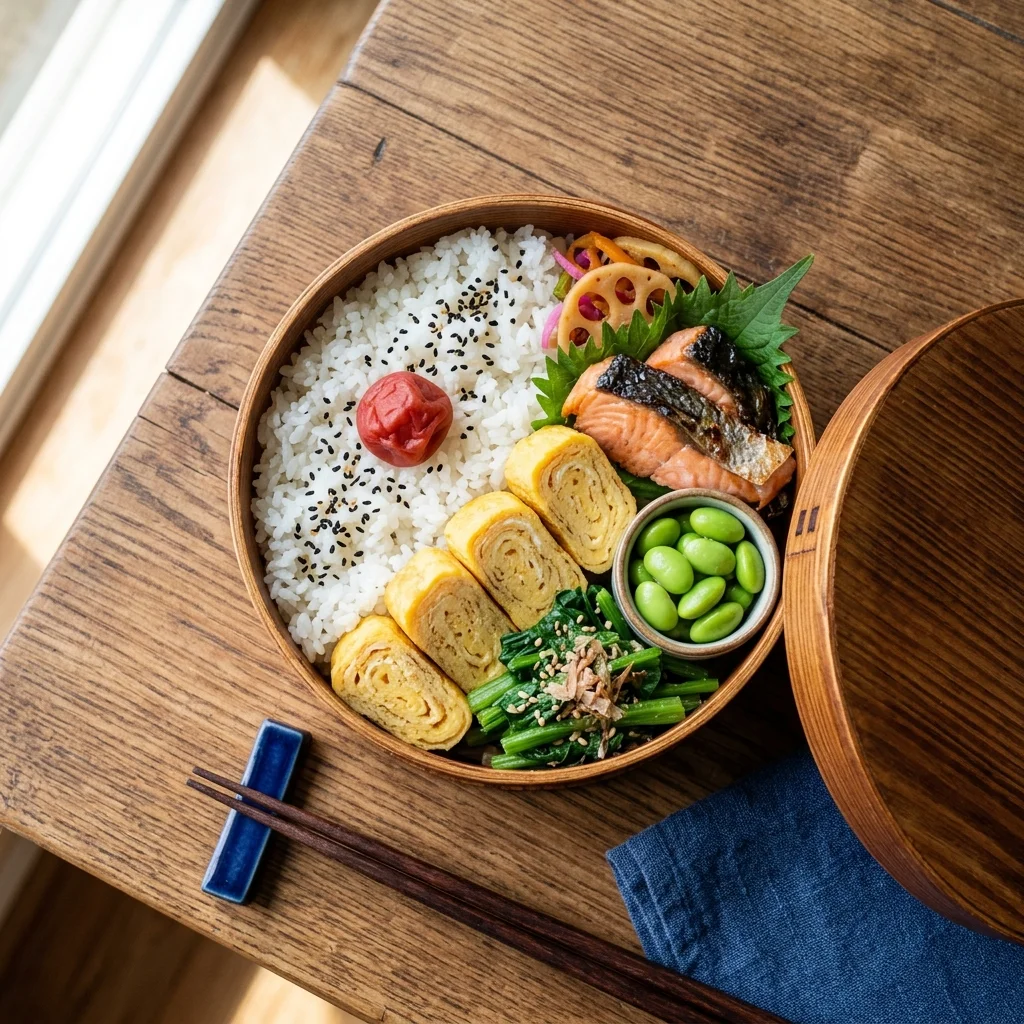
A traditional cedar Magewappa bento box filled with a beautifully arranged, colorful lunch of rice, red pickled plum, vegetables, and tamagoyaki.
Cultural Concept

BENTO

弁当 / べんとう

The ultimate visual expression of Bento: A traditional cedar Magewappa box holding a nutritionally balanced, colorful lunch designed with absolute geometric harmony.

Linguistic Definition (TL;DR)

Bento represents the highly refined Japanese art of the single-portion boxed meal. Deeply rooted in historical travel customs, this culinary tradition combines balanced nutrition, aesthetic color harmony, and strict spatial layout rules, converting everyday nutrition into a mindful, self-contained box of sensory and visual delight.

Etymology & Linguistic Analysis

// 01

The word Bento (弁当) is a classical Japanese noun composed of two distinct kanji characters: Ben (弁) and To (当). To grasp the highly organized, functional, and life-enhancing nature of this culinary concept, we must trace how its characters traveled through historical Chinese linguistics to become the supreme Japanese word for portable dining harmony.

Historically, the term did not begin as a culinary word. It is believed to have originated during the Southern Song Dynasty in China, derived from the slang word *Biandang (便当)*, which literally meant 'convenient', 'handy', or 'efficient'. When the word was imported to Japan during the Kamakura period (1185–1333), the Japanese phonetically adapted it using the characters 弁 (Ben - meaning to manage, arrange, or divide) and 当 (To - meaning to hit, apply, or suit). Therefore, the refined Japanese kanji translation of 弁当 is 'an arranged suite', 'a divided suitability', or 'a box of convenient management'.

Phonetically pronounced as /ben-toh/ with a crisp, closed initial consonant and a long, rounded final vowel, the word carries a solid, self-contained, and highly structured sound. In written Japanese, it is common to attach the honorific prefix *O* (お弁当 - Obento) when discussing the meal in domestic or maternal contexts. This prefix elevates the word from a simple nouns representing food into a cultural object of deep emotional care, social pride, and maternal connection, representing the silent love packed inside the box.

Deep Philosophical Foundations

// 02

At its deepest philosophical level, Bento is not a simple lunch container, a meal prepping method, or a cheap travel ration; it is a profound extension of **spatial geometry (Ma)**, **balanced containment (Chisoku)**, and the Shinto-animistic respect for **sensory harmony**.

In standard Western culinary traditions, food is typically served on wide, open ceramic plates, where ingredients spread out, touch, and merge their juices. A plate has no physical boundaries. Bento completely rejects this open, chaotic model. It operates on the philosophy of **harmonious constraint**. The bento box is a miniature, micro-architectural frame that imposes strict order on nature. Within this small wooden or lacquer frame, the chef must organize a complete, nutritionally balanced, and visually stunning map of the seasons. There is no empty, wasted space; every millimeter is utilized with absolute intent. This constraint is tied directly to the Zen concept of **Chisoku (知足 - finding contentment in what is sufficient)**. By confining your meal to a single, small box, you establish a healthy, mindful limit on consumption, practicing portion control and celebrating sufficiency over greedy excess.

This philosophy directly feeds into the aesthetic concept of **the five colors (Goshiki - 五色)**. Traditional Japanese culinary design dictates that a healthy, balanced meal must feature five distinct colors: **White** (steamed rice), **Black/Dark** (nori seaweed, shiitake), **Red** (umeboshi, tomatoes), **Yellow** (tamagoyaki, pumpkin), and **Green** (spinach, edamame). This is not a superficial design rule; it is a highly sophisticated organic feedback loop. Food scientists have discovered that when a meal contains these five distinct colors, it naturally contains a balanced ratio of essential vitamins, minerals, proteins, and carbohydrates. The visual harmony is the physical manifestation of nutritional health, directly connecting the eye, the tongue, and the body in a silent loop of gratitude.

Furthermore, Bento is an act of **deep social empathy and silent communication (Omoiyari)**. When a mother packs an *Obento* for her child or spouse, she does not simply pack food; she packs her own physical presence. The box is packed so tightly that the ingredients cannot slide or lose their beautiful geometry during transit. When the lid is opened hours later in a school classroom or an office cubicle, the visual layout is pristine—it looks exactly as it did when it left the kitchen. This perfect preservation of form is a silent message of care, reassuring the eater that they are loved, protected, and connected to the home, establishing an invisible, emotional thread of warmth across the city.

Historical Evolution

// 03

The historical evolution of Bento spans from the portable dried rice rations of Kamakura-period warriors to the elegant lacquer picnic boxes of the Momoyama elite, the theatrical lunches of the Edo period, and finally to the high-speed rail culture of modern Japan.

The earliest origins of Bento date back to the Kamakura period, when travelers and samurai carried **Hoshi-ii (糒 - dried rice)** in small fabric bags. This was simply cooked rice that had been dried in the sun; when the traveler grew hungry, they would submerge the dry grains in hot or cold water to rehydrate them, or eat them dry on the horse. By the Azuchi-Momoyama period (1568–1600), under the peaceful rise of warlords like Toyotomi Hideyoshi, the elite began to hold grand outdoor events—cherry blossom viewing (*Hanami*), autumn maple viewing, and outdoor tea ceremonies. To serve food in these remote nature spots, lacquer craftsmen designed **Ko-bento (portable lacquer boxes)**. These boxes featured multiple nested drawers, sake flasks, and beautiful gold-painted patterns, transforming the simple travel ration into a high-end, mobile feast of artistic luxury.

During the Edo period (1603–1867), as urban merchant culture boomed under the Tokugawa peace, Bento leaked into everyday city life and entertainment. A famous genre arose known as **Makunouchi Bento (幕の内弁当 - between-the-acts bento)**. When ordinary citizens attended day-long Kabuki or Noh theater performances, they purchased these specialized boxed meals to eat during the short intermission when the stage curtain (*Maku*) was closed. The lunch featured small, bite-sized cylinders of rice sprinkled with black sesame seeds, accompanied by sweet tamagoyaki, grilled fish, and pickled plums—ingredients that could be eaten quickly with chopsticks without dripping sauce onto fine kimono silks. At the same time, travelers on the grand Tokaido highway purchased **Ekiben (駅弁 - station bento)** at packaging halts, wrapped in simple oak or bamboo leaves, establishing a nationwide culture of regional, travel-driven boxed cuisine.

In the Meiji (1868–1912) and Taisho (1912–1926) periods, the introduction of aluminum bento boxes and the rapid rise of the national railway network transformed Bento into a symbol of modern convenience and domestic pride. In 1890, the first official *Ekiben* featuring local sea bream and rice was sold at Utsunomiya Station, launching a massive travel-food industry that continues to thrive today on the Shinkansen platforms. Following the bubble economy of the late 20th century, the global rise of the Japanese anime and gaming movements exported the aesthetic of **Kyaraben (キャラ弁 - character bento)**—where parents sculpt rice, seaweed, and vegetables into highly detailed cartoon characters—transforming the simple school lunchbox into a global canvas of creative expression, culinary design, and maternal dedication.

Cultural Case Studies

// 04

The practical application of Bento can be studied through three iconic design case studies: the manufacturing precision of **Odate Magewappa** cedar boxes, the culinary design of the **Makunouchi Bento**, and the local travel economics of **Shinkansen Ekiben**.

Historical Case Study: Odate Magewappa and Bentwood Engineering

In the cold, mountainous Akita Prefecture, woodcraft artisans have been crafting traditional **Odate Magewappa (大館曲げわっぱ)** bentwood bento boxes for over four hundred years. Crafted from the tight, straight-grained wood of ancient Akita cedar (*Akita Sugi*), the box is a masterpiece of organic engineering. The artisan shaves the cedar timber into paper-thin strips, boils them in hot water to make them elastic, and bends them around a circular wooden form, securing the seam with delicate strips of wild cherry bark. The inside of the wood is left completely unlacquered and untreated. This raw cedar chamber possesses a highly advanced organic property: it acts as a **natural humidity regulator**. When hot steamed rice is placed in the box, the dry cedar absorbs the excess steam, preventing the rice from becoming soggy. As the rice cools, the wood slowly releases this moisture back into the chamber, keeping the grains incredibly plump, sweet, and soft for hours. Furthermore, the natural antiseptic compounds inside the cedar sap prevent bacterial growth, ensuring the food remains perfectly fresh on hot summer days, showing that traditional organic design is far superior to modern plastic tupperware.

Artisan Experience: The Strict Geometry of Makunouchi Bento

The Makunouchi Bento is the most famous, historically standardized bento design in Japan. It is built on a strict, mathematical layout that balances colors, textures, and tastes:

  • 俵型ご飯 (Tawara-gata Rice): The rice is not packed loosely. It is pressed into exactly eight small, cylinder-shaped portions resembling traditional straw rice bales (*Tawara*), representing prosperity and gratitude.
  • The Triad of Sides: The protein section must feature the three primary sides—grilled fish (usually salmon or sea bream), Japanese omelet (*Tamagoyaki*), and a fish cake (*Kamaboko*). This triad balances sweet, savory, and umami tastes.
  • Umeboshi Center: A single, bright red pickled plum (*Umeboshi*) is placed in the center of the white rice, representing the Japanese flag (*Hinomaru*) and serving as a natural preservative.
Every single ingredient is cut to bite-sized proportions, ensuring that the diner can eat the entire box cleanly with chopsticks without ever needing a knife, embodying an exquisite standard of ergonomic and visual packaging design.

Design Metaphor: Shinkansen Ekiben and Regional Economics

Ekiben, the specialized bento boxes sold at railway stations across Japan, are the ultimate celebration of regional identity (*Meibutsu*). An Ekiben sold at a station in Hokkaido might feature fresh sea urchin and salmon roe on rice; a box sold in Hyogo Prefecture features high-end Tajima Wagyu beef; a box sold in Shizuoka features fresh coastal eel. These lunches are packed in unique, highly creative containers shaped like bullet trains, ceramic pots, or wooden leaves. For Japanese travelers, purchasing an Ekiben is a vital, mandatory ritual of travel. It is not cheap convenience food; it is a high-end, region-specific culinary souvenir that supports local agricultural cooperatives and connects the high-speed traveler directly to the geography, history, and seasonal yields of the prefecture they are passing through, demonstrating the profound economic power of localized design.

Practical Guide for Foreigners

// 05

For international home cooks, travelers, and busy professionals, adopting the spirit of Bento is a beautiful, highly effective way to practice sustainable portion control, minimize food waste, and bring mindful, visually stunning pacing to your daily meals.

Assembling Your First Authentic Bento: To build a beautiful, structurally stable, and nutritionally balanced bento box at home, apply the foundational **Bento Design Formula (3:2:1 Ratio)**:

  • 3 Parts Carbohydrate: Fill half of the box with high-quality steamed short-grain rice (or grains like quinoa). Pack the rice firmly to form a solid, flat bed.
  • 2 Parts Protein: Fill a quarter of the box with clean protein—tamagoyaki, grilled salmon, chicken yakitori, or marinated tofu. Place them flat against the rice wall.
  • 1 Part Vegetable: Pack the remaining quarter tightly with vibrant, colorful vegetables—spinach sesame salad, edamame, cherry tomatoes, and pickled lotus root.

Tactile Packing and Structural Stability: When packing your box, think like a structural engineer. The greatest mistake is leaving empty air pockets inside the box. If there is empty space, the food will slide, mix its juices, and lose its beautiful geometry during your morning commute. Use **edible dividers**—crisp green shiso leaves, silicon cups, or dry lettuce leaves—to separate wet ingredients from dry rice. Pack every item tightly until the box is completely full. When you close the lid, the food should be held in place by the gentle pressure of the cover, ensuring it opens like a pristine visual painting at lunch.

Manners and Etiquette in Bento Dining: In Japan, eating your bento with proper manners is a sign of respect for the person who spent time packing it. Always begin your meal by saying *'Itadakimasu'* (I humbly receive this food). Keep the bento box resting on the table; never lift the entire box to your mouth. Use your chopsticks to pick up single, bite-sized portions, returning them to the box between bites. Never mix all the ingredients together into a single mash; eat each component individually, appreciating its unique flavor and texture. When you are finished, return the lid to the box and wrap it in your furoshiki cloth, showing active gratitude for the meal.

Dialogue Scenarios

// 06

Review these bilingual dialogue scenarios to understand how mothers, partners, and colleagues discuss the preparation, design, and emotional connection of Bento in daily conversation.

Scenario A: Two coworkers discussing a handmade bento box at an office lounge (オフィスのリフレッシュスペースで)
An international colleague notices a beautiful wooden bento box packed by a Japanese coworker.

Colleague: That is a stunning lunchbox. The wood has a beautiful, warm grain, and it smells like a fresh cedar forest. Did you make the box yourself?
Coworker: いいえ、これは秋田県の伝統工芸品の「曲げわっぱ」というお弁当箱です。天然の杉で作られているんですよ。ほら、ご飯が全然ベチャベチャしていないでしょう?杉が余分な水分を吸ってくれるんです。
(No, this is a traditional Akita Prefecture craft called 'Magewappa'. It's made from natural cedar. Look, the rice isn't soggy at all, is it? The cedar absorbs the excess moisture.)
Colleague: That is amazing! And the visual layout is so perfect, almost like a miniature painting. The colors—yellow egg, pink salmon, bright green broccoli—are so vibrant. It must take hours to prepare.
Coworker: 慣れれば十五分くらいで詰められますよ。日本のお弁当は「五色(白・黒・赤・黄・緑)」を意識して詰めるのが基本なんです。アシンメトリーに隙間なくきっちり詰めることで、持ち運んでも中身が崩れないんですよ。これは美味しいだけじゃなくて、午後もしっかり働くための「エネルギーの箱」なんです。
(Once you get used to it, you can pack it in about fifteen minutes. Japanese bento is basically packed with the 'five colors' in mind. By packing everything tightly and asymmetrically with zero gaps, the contents don't collapse when carried. It's not just delicious, but a 'box of energy' to work hard in the afternoon.)

Scenario B: A mother correcting her teenager about caring for his bento box (家庭の台所で)
A mother reminds her teenage son about the proper way to wash and dry his wooden bento box.

Mother: ちょっと!そのお弁当箱、シンクの中に水を入れたまま放置しちゃダメでしょ!すぐに洗って!
(Hey! You must never leave that bento box sitting in the sink filled with water! Wash it immediately!)
Son: えー、後で洗おうと思って。ちょっと水につけておくだけだよ。
(Eh, I was planning to wash it later. I'm just letting it soak in the water for a bit.)
Mother: 天然の無塗装の杉だから、水に浸けたまま放置すると木が水を吸いすぎて黒ずんだり、カビが生えちゃうの。中身を食べたらすぐにお湯とスポンジで優しく手洗いして、水分を拭き取って風通しの良い日陰で乾かさなきゃダメ。手入れを怠ると、せっかくの美しい曲げわっぱが台無しになっちゃうんだから。道具を大切にする、これも「お弁当」の作法だよ。
(Because it is natural, unvarnished cedar, if you leave it soaking in water, the wood will absorb too much water, turn black, or grow mold. Once you finish eating, you must gently hand-wash it immediately with hot water and a sponge, wipe off the moisture, and dry it in a well-ventilated shade. If you neglect the care, the beautiful magewappa you love will be ruined. Caring for your tools, this is also a protocol of 'Bento'.)

Modern Ecological & Social Relevance

// 07

In our hyper-connected, high-consumption 21st-century global society, the traditional Japanese philosophy of Bento has transitioned from a localized culinary custom into a critical, revolutionary strategy for global environmental sustainability, plastic waste reduction, and healthcare.

The modern global food industry relies on a highly destructive model of **disposable convenience culture**. Every single day, millions of tons of single-use plastic takeout containers, polystyrene boxes, plastic forks, and paper bags are discarded into landfills and oceans, driving global petroleum extraction and carbon emissions. Furthermore, commercial fast-food meals are heavily processed, high in sodium, and served in massive, unhealthy portions, driving the global epidemics of obesity, cardiovascular disease, and diabetes. Bento offers a radical, elegant alternative. By championing **durable, reusable containment (Yo no Bi)**, a single cedar or aluminum bento box is built to survive for decades, directly bypassing the single-use packaging loop. Furthermore, by confining daily meals to a structured, portion-controlled frame using the golden 3:2:1 nutritional ratio, Bento directly promotes cardiovascular health, encourages home cooking with fresh seasonal ingredients, and reduces daily food waste (*Mottainai*) by packing yesterday's leftovers into today's beautiful lunch canvas.

In the parallel realm of mental health and social well-being, Bento serves as a vital anchor of cognitive relief and emotional connection. We live in an era dominated by high-speed corporate schedules, where professionals frequently eat their lunches in haste, staring at digital screens, or swallowing fast food in their cars. This absolute lack of pacing drains our emotional reserves, leading to digestive illness, chronic stress, and a sense of isolation. The practice of Bento offers a path of quiet release. By protecting a dedicated lunch hour, wrapping our box in a beautiful furoshiki cloth, and opening a self-contained, colorful work of culinary art, we transform a simple feeding process into a **mindful ritual of self-care**. We reconnect our senses to the seasonal colors of the earth, restore our cognitive focus, and reclaim our human dignity, proving that a healthy life is not sustained by massive, rushed consumption, but by the humble, daily embrace of the quiet harmony of the box.

By shifting our relationship with daily nutrition from passive commercial consumption to active, creative stewardship, Bento stands as a timeless gift of Japanese culinary and aesthetic wisdom, showing that true health, domestic happiness, and environmental balance do not require expensive status symbols, but rather the humble, daily packing of our own self-contained box of love.

Practical Mastery

Actionable Cultural Skills

Integrate the philosophical wisdom of Bento into your everyday lifestyle through these practical, hands-on Japanese technical disciplines.

Assembling a Balanced Traditional Bento

お弁当の詰合
初級 (Beginner)⏱️ 45 Minutes

Mastering the golden spatial packing ratios of traditional Bento assembly to ensure nutritional balance and absolute visual harmony.

A sectioned bento box (or a Magewappa box)Long wooden cooking chopsticks (Saibashi)Cooked short-grain rice (150g)One primary protein (e.g., grilled salmon or tamagoyaki)Colorful seasonal vegetables (red tomatoes, yellow bell peppers, green spinach)
📋 Practical Steps
  1. 01.Cool all cooked ingredients completely to room temperature before packing to prevent steam condensation and bacterial growth.
  2. 02.Fill exactly 50% of the box with steamed short-grain rice, packing it firmly to form a solid, neat foundation.
  3. 03.Fill 25% of the box with your primary protein (e.g., sliced tamagoyaki and grilled salmon), placing them adjacent to the rice barrier.
  4. 04.Pack the remaining 25% tightly with vibrant vegetables, using edible dividers (like shiso leaves) to keep colors separate and prevent sliding.

Caring for a Traditional Magewappa Bento Box

曲げわっぱの手入れ
中級 (Intermediate)⏱️ 15 Minutes

Caring for traditional bent-wood cedar bento boxes to preserve the wood's antibacterial properties and natural forest fragrance for decades.

An unlacquered cedar Magewappa bento boxWarm running mineral water (no soap)A soft tawashi fiber brush or soft spongeA clean, dry cotton towel
📋 Practical Steps
  1. 01.Soak the dry wooden box in warm water for five minutes immediately after dining to soften any dried rice grains.
  2. 02.Brush the inner wood surface gently with your tawashi brush along the natural wood grain, avoiding any harsh chemical detergents.
  3. 03.Rinse the box thoroughly with clean warm water, and wipe off all excess moisture immediately with your cotton towel.
  4. 04.Place the box face-up in a shaded, well-ventilated space to dry completely for twenty-four hours before using again.