Back to Rituals
Practical Guide

The Mindful Soak: The Sacred Wash & Water Protocols of Sento and Onsen

Prerequisites / Mental Preparation

Approach the Japanese bathhouse or hot spring with a mind completely focused on physical and spiritual purification. Dress in clean, easily removable clothing or a simple yukata provided by the inn. Before stepping into the communal washing area, commit to absolute physical nudity—all clothing, underwear, and large metal jewelry must be removed in the locker room. Tie up long hair securely above the shoulders, and prepare to wash away not only the physical dust of travel, but the mental stagnation of the modern world. Take a deep breath to align your mind with the ancient Shinto lineage of water purification, entering the bath as a silent sanctuary of communal rest. Commit to leaving the washing area cleaner than you found it, keeping the communal waters completely pure and unblemished. Avoid generating loud noises and ensure you respect the quietude of the space. Slow your breathing, step softly inside the changing zones, and align your soul with the silent lineage of physical and mental rest, ensuring your somatic actions show complete respect.

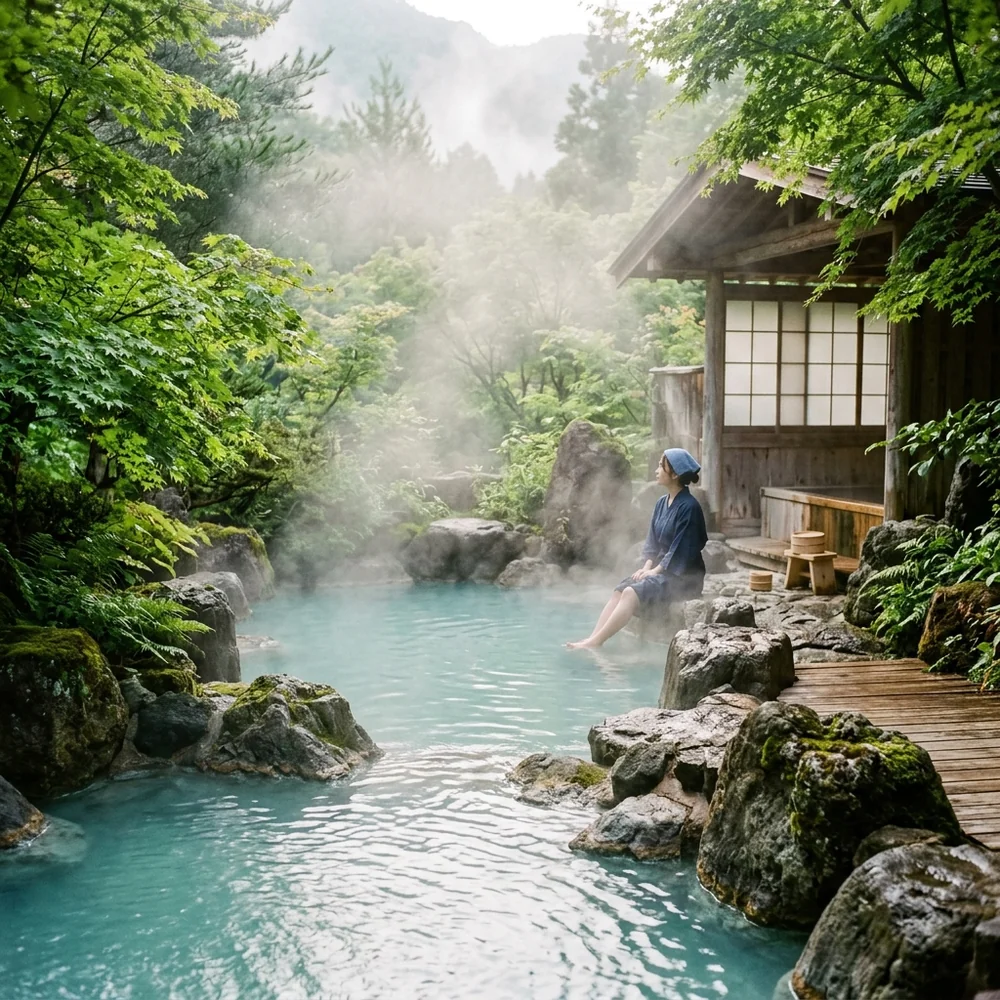
A steaming open-air hot spring with natural volcanic rocks and autumn maple branches reflecting on turquoise water.

A serene, steaming open-air Onsen (Rotenburo) nestled among volcanic rocks, serving as a pristine sanctuary of physical restoration and spiritual purification (Misogi).

The Pre-Soak Purification (Kakeyu): Priming the Body & Respecting the Water

// 01

Stepping into a Japanese public bathhouse (Sento - 銭湯) or a natural hot spring (Onsen - 温泉) is a transition into a communal sanctuary of absolute sensory restoration and physical equality. In Japan, these spaces are not treated as casual swimming pools or simple amusement parks; they are sacred domains of healing and purification that trace their lineage directly back to ancient Shinto purification rituals (Misogi) and Buddhist temple bathhouses designed to cleanse the sick. Because the water in the communal tubs is completely shared and recirculated, the most fundamental rule of the bath is absolute cleanliness. **You must never, under any circumstances, step into the hot tub before thoroughly washing your body**.

To begin this purification, locate the low washing stations lining the walls of the bathhouse. Sit down on the small plastic or wooden stool provided; washing your body while standing up is a major taboo, as it splashes soapy water and dirt onto other bathers nearby. Before using soap, you must perform the traditional rinsing ritual known as **Kakeyu (かけ湯)**. Grasp a wooden or plastic washbasin (Oke - 桶), scoop hot water from the central stone basin or your individual faucet, and pour it over your body. You must perform this pour in a specific, systematic sequence: start by pouring the hot water over your feet, then your ankles, shins, thighs, hands, arms, and finally over your shoulders and chest. This sequence is not merely polite; it gently primes your cardiovascular system for the high temperature of the mineral bath, preventing sudden drops in blood pressure.

Once the *Kakeyu* is complete, perform a thorough, physical wash of your entire body using soap, a nylon scrub cloth, and fresh water. Scrub your skin diligently, ensuring no soap residue remains. Rinse your stool and washbasin thoroughly with fresh water, and place them back exactly as you found them, leaving the washing stall pristine for the next guest. By ensuring your skin is completely clean and soap-free before approaching the tubs, you show the ultimate form of respect (Omoiyari) for the shared sanctuary of the communal water.

To achieve the highest standard of physical cleansing, the bather should understand the physical benefits of *Kakeyu*. The temperature of natural hot spring waters can often exceed 42 degrees Celsius, which can cause mild thermal shock if entered abruptly. By systematically pouring the warm water over the extremities (feet and hands) first, you trigger a gentle vasodilation, allowing your blood vessels to expand gradually. This protective mechanism stabilizes your heart rate, preventing dizziness and ensuring a completely safe, relaxing transition into the deep pools.

Furthermore, this initial wash acts as an active psychological threshold. As you physically scrub away the sweat and grit of the road, you consciously visualize washing away your mental anxieties, office stresses, and digital distractions. The cool tile floor beneath your feet, the sound of rushing water, and the rising steam create a powerful sensory boundary, inviting your mind to enter a state of complete, meditative presence before you ever touch the warm mineral spring. Each pour must be deliberate, slow, and focused, honoring the ancient water lineage of Japan. Wipe away any stray splashes and ensure the wooden stool is clean before standing. To ensure maximum respect, always rinse your body completely using fresh water from the shower after you finish scrubbing, checking that no trace of soap remains on your skin. This completely prevents contaminating the hot tubs.

Historically, public bathhouses (Sento) served as central social hubs (Hadaka no Tsukiai - naked relationship) where neighborhood news was exchanged and class systems were temporarily dissolved. By seating yourself on the wooden stool, scrubbing your skin to pristine cleanliness, and leaving the washing station completely flawless, you pay homage to this ancient, egalitarian social structure, showing that you are fully integrated into the community of water.
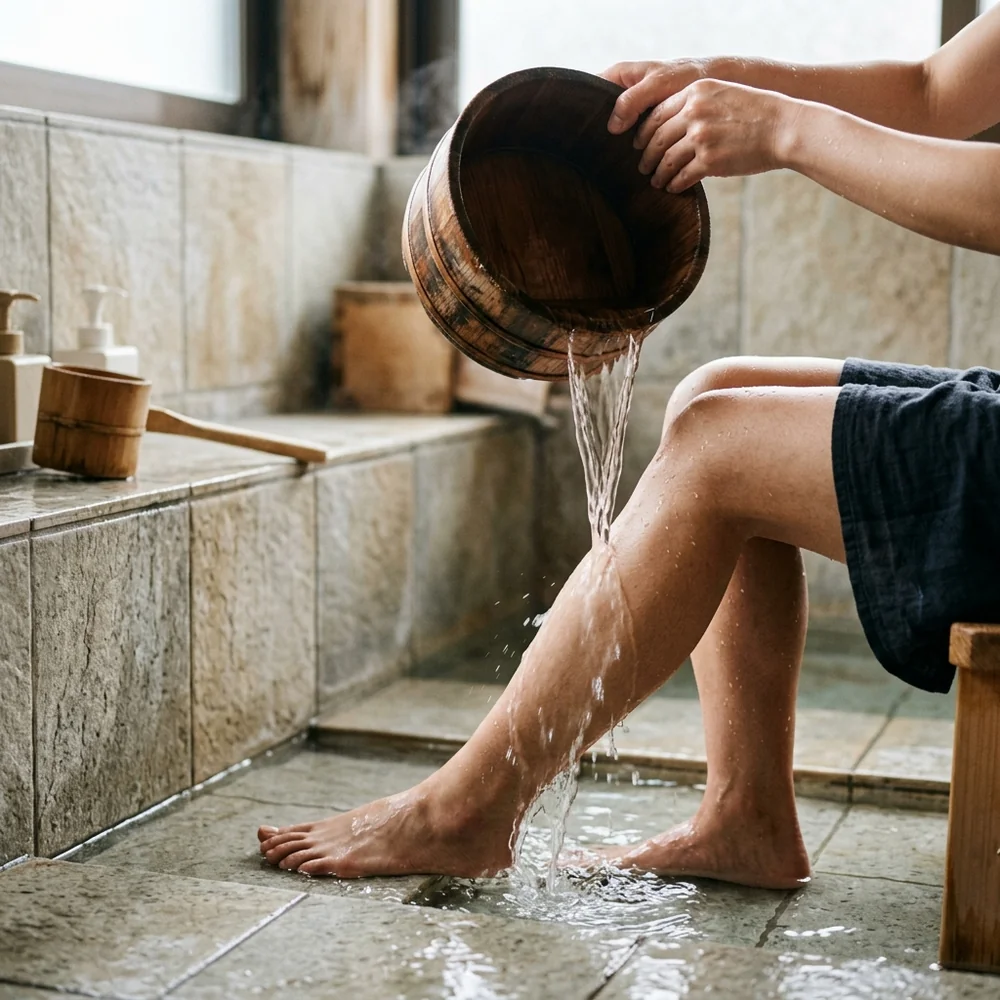
A bather seated on a low wooden stool pouring hot water from a cedar bucket over their shoulders in a systematic Kakeyu sequence.
Performing the protective Kakeyu rinsing sequence over the extremities and body before sitting down to scrub thoroughly.

Entering the Sanctuary Tubs: Silent Immersion & Thermal Balance

// 02

With a completely purified body, you are now ready to enter the mineral-rich, steaming waters of the hot spring tubs. The water inside these pools is often highly charged with natural sulfur, iron, silica, or sodium chloride, designed to heal joints, soothe skin, and restore raw energy. The atmosphere inside the bathhouse is characterized by a deep, meditative silence: soft steam rising, water cascading from stone spouts, and the low, hushed whispers of bathers. To comfortably integrate into this silent sanctuary, you must execute a graceful, low-impact entry.

Approach the edge of the tub slowly, observing the depth and temperature. Do not dive, jump, or splash into the water; these aggressive movements are severe breaches of manners that disrupt the serene, wabi-sabi atmosphere and risk slipping on the wet stone tiles. Instead, slide one foot slowly into the pool, testing the heat. Gradually lower your body into the water step-by-step, letting your limbs adjust to the high temperature (typically between 40 and 44 degrees Celsius). Once your hips are submerged, sit quietly on the stone ledge built into the tub, allowing the water to rise to your chest or shoulders. Keep your spine aligned, your shoulders relaxed, and close your eyes, focusing entirely on your breathing.

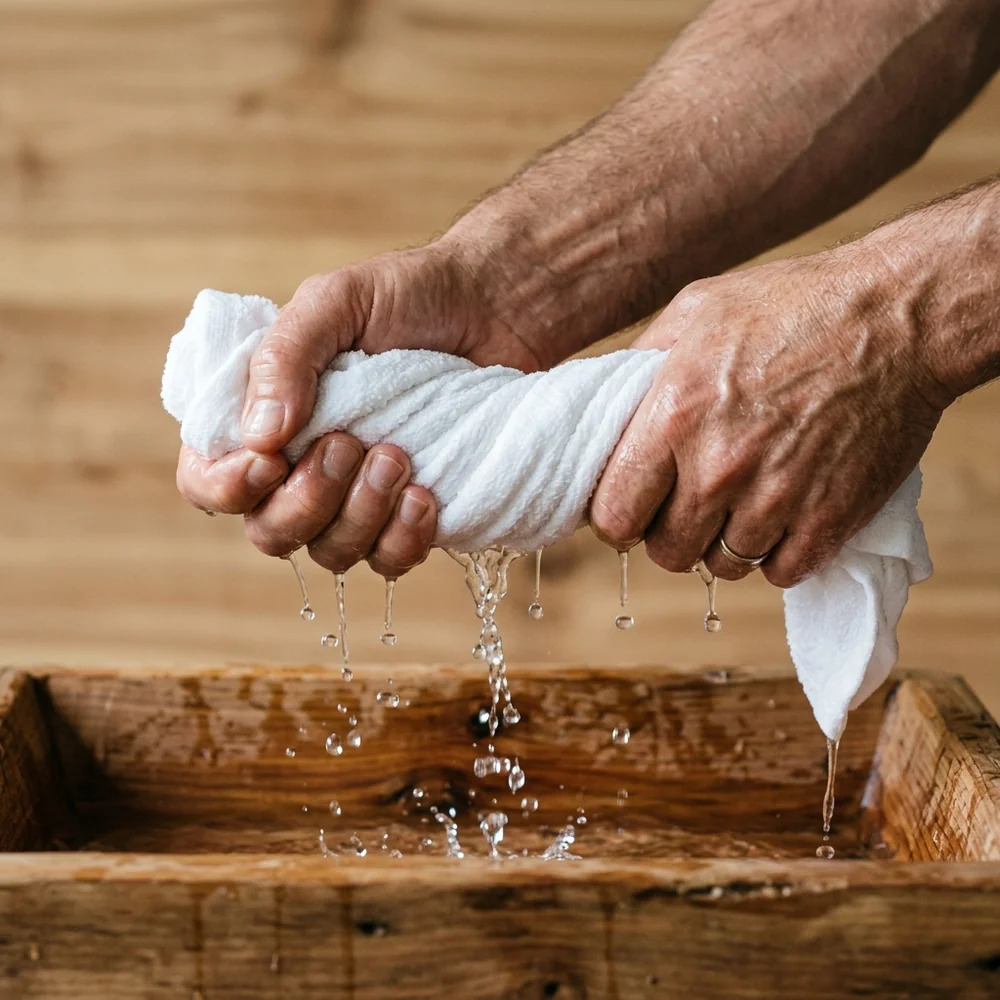
During your soak, you must maintain a quiet, respectful presence. Never swim, kick your legs, or splash water around. Keep your hands relaxed under the water surface. A crucial, absolute taboo governs the tub: **you must never let your small modesty towel touch the bathwater**. The towel, even if clean, is considered a potential source of contamination. You must place the folded, wet towel flat on top of your head while soaking, which medically helps cool your brain and balance your blood pressure, or rest it neatly on the dry stone edge of the pool. If the towel accidentally slips into the water, remove it immediately and wring it out completely outside the tub, keeping the shared mineral spring pristine.

To ensure maximum health benefits and spatial harmony during your soak, you must manage your exposure time using the traditional interval method. Limit your initial immersion to approximately 5 to 10 minutes. If you begin to feel a heavy thumping in your chest, quietly slide your body upward onto the stone ledge, leaving only your lower legs submerged in the warm water. This transition, known as Hanjinyoku (半身浴 - half-body bath), cools your core temperature while maintaining circulation, allowing you to enjoy the thermal sanctuary for longer periods without exhaustion.

Furthermore, keeping the modesty towel balanced on your head is a physical skill that promotes quiet posture. The weight of the damp cloth requires you to keep your chin aligned and your neck straight, which naturally prevents slouching or looking around. By focusing your gaze downward at a 45-degree angle and keeping your breathing slow and low, you contribute to a collective, silent sanctuary where dozens of bathers co-exist in perfect wabi-sabi harmony, treating the shared water as a temple of quiet restoration and complete mental emptiness. Be mindful of the physical distance (Ma) between yourself and other bathers, never staring directly at anyone but rather focusing on the distant garden lattice or volcanic rocks. Avoid generating sudden, aggressive movements inside the bath, letting the volatile minerals absorb quietly into your skin. By keeping your breathing soft and deep, you align your somatic rhythm with the natural thermal spring.

Medical studies conducted by Japanese balneologists demonstrate that natural hot spring waters can often exceed 42 degrees Celsius, which can cause mild thermal shock if entered abruptly. By systematically pouring the warm water over the extremities first, you trigger a gentle vasodilation, allowing your blood vessels to expand gradually. This protective mechanism stabilizes your heart rate, preventing dizziness and ensuring a completely safe, relaxing transition into the deep pools.

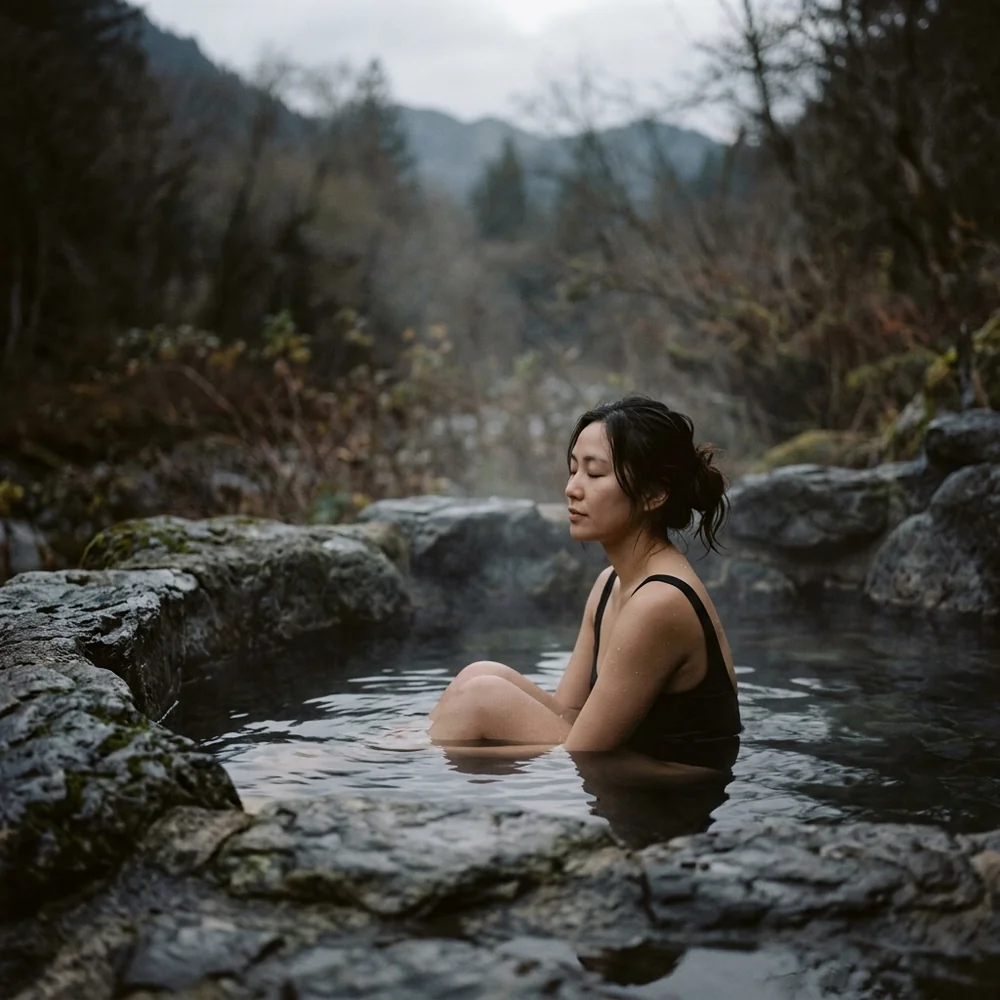
A silent bather submerged to their shoulders in a steaming open-air hot spring, with a small folded modesty towel on their head.
Soaking in the natural, mineral-rich hot spring waters with a folded modesty towel placed flat on top of the head.

The Dry Exit: Maintaining Spatial Respect in the Dressing Room

// 03

The final stage of the bathing ritual occurs as you prepare to exit the hot spring and return to the changing area. In Japanese bathhouse architecture, a strict spatial boundary separates the wet, tiled bathroom (Yukaba) from the dry, wood-paneled or tatami-covered dressing room (Datsuijo). The dressing room is a shared space where guests dress in clean clothing, style their hair, and relax. To respect this boundary, you must prevent any water from dripping from your wet body onto the dry floorboards, as wet floors are unhygienic, ruin the tatami mats, and create a slipping hazard for others.

To execute the dry exit correctly, stand near the exit threshold of the wet bathroom, just before the sliding glass door. Do not step onto the fabric bath mat yet. Grasp your small white modesty towel, which you kept on your head or the tub edge. Stand with your feet shoulder-width apart, and use the towel to vigorously wipe down your entire body, starting from your head and moving downward to your chest, arms, back, legs, and feet. Wring the water out of the towel into the bathroom drain, and wipe your skin a second time until it is barely damp. Your body must be completely dry before you cross the threshold.

Once dried, step gracefully across the threshold onto the bath mat in the dressing room. Immediately place your damp towel into your personal bag or the designated laundry bin. Walk quietly to your assigned locker, and slip into your clean clothes or yukata. As you style your hair or apply lotion at the vanity sinks, ensure you clean up any stray hair strands or water droplets you leave on the counter, leaving the shared space perfectly clean, dry, and welcoming for the next visitor. This final act of spatial housekeeping completes your cycle of physical and mental purification, leaving you completely restored.

To fully appreciate the significance of this final drying transition, one must examine the Japanese spatial concept of Kekkai (sacred boundary). The physical line where the wet tiles end and the tatami flooring begins is treated as an absolute threshold. Stepping onto the dry wood or straw while still dripping wet violates the structural integrity of the dressing room, which is designed as a clean, post-bath sanctuary. By taking the extra 60 seconds to completely dry your limbs inside the wet area, you demonstrate absolute mindfulness and respect for the guests who will follow in your footsteps.

Once dressed, take a moment to sit quietly in the temple lounge or the inn's tatami rest area, sipping on cold green tea or fresh mineral water. This slow, unhurried cooling period allows your skin to lock in the beneficial minerals absorbed during the soak, completing the natural cycle of renewal. By returning to the busy outside world with a completely dry body and a quiet, aligned spirit, you carry the peaceful sanctuary of the hot spring with you into the chaotic city streets, fully grounded in the present moment. Take care to align your guest slippers at the locker room doorway, toe pointing out, to complete your path of physical order. Take care to completely dry your feet and toes before stepping across the changing room genkan, keeping the dry cedar floor completely clean and unblemished. This small act of omoiyari ensures the room remains pristine for everyone.

As you step onto the woven tatami or rattan flooring of the locker room, take a moment to look back at the wet area, ensuring no puddles trace your path. By leaving the space as clean and dry as you found it, you complete your mindfulness loop, carrying the pristine, silent restoration of the mineral springs back with you into your daily coordinates.

A bather drying their skin thoroughly with a white towel just inside the wet bathroom exit threshold, next to a tatami doorway.
Drying the body completely inside the wet tiled area before stepping across the threshold onto the dry wood dressing floor.