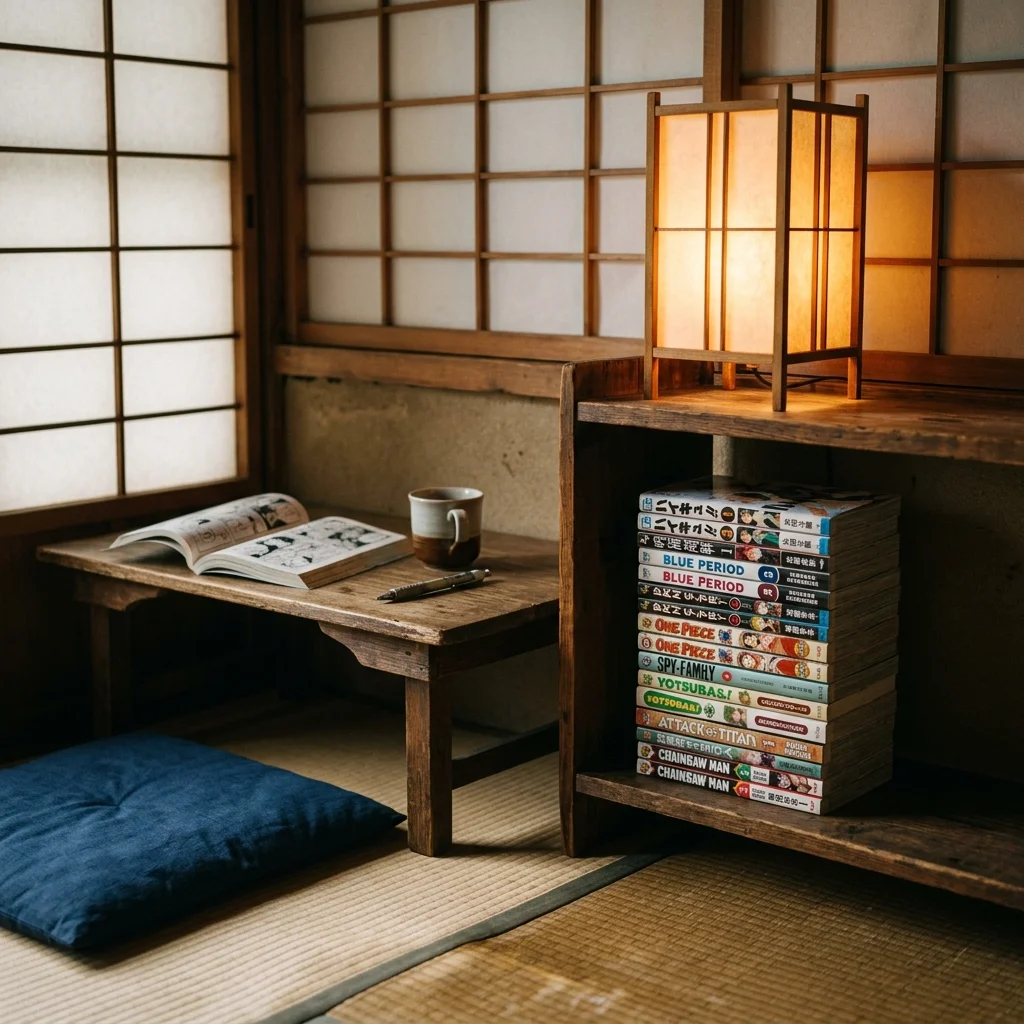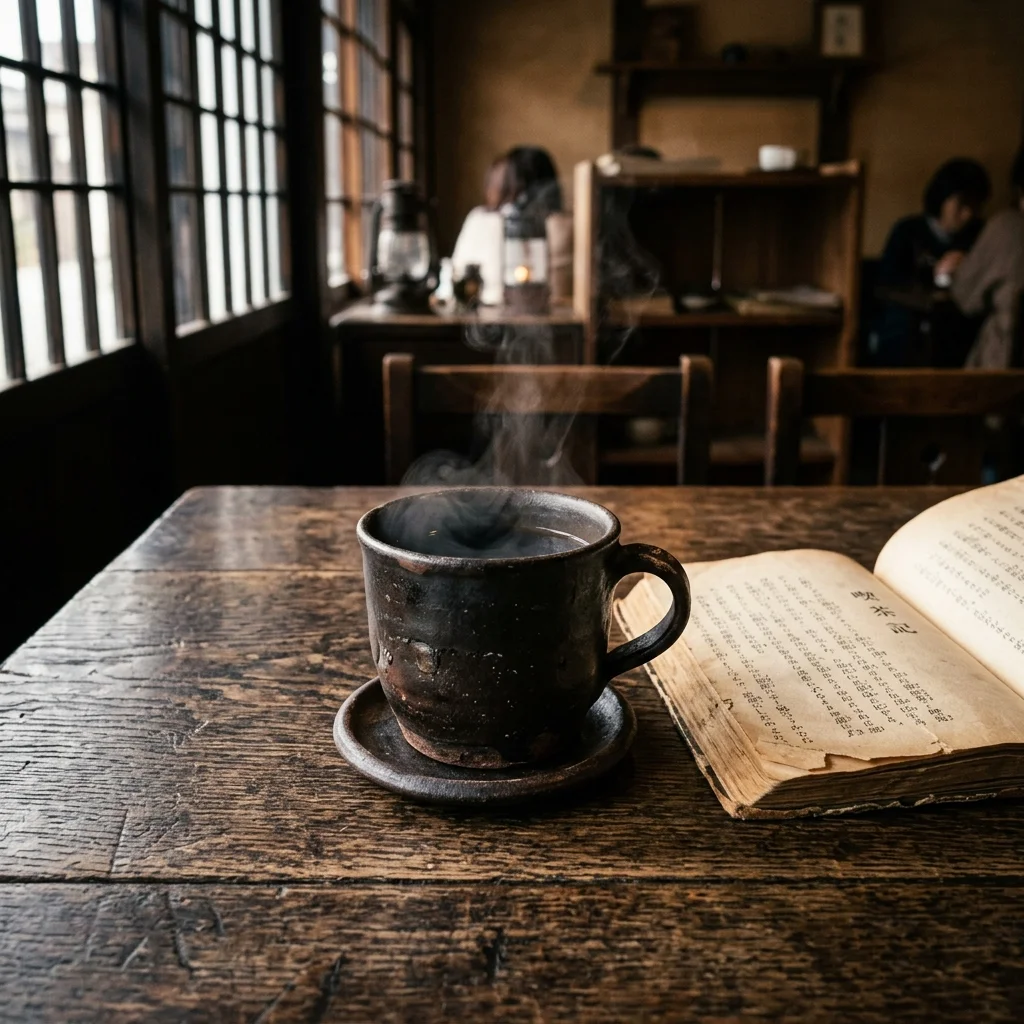
Entering a vintage Japanese Kissaten (喫茶店)—traditional coffeehouses that flourished during the Taisho and Showa eras—is a transition into a quiet, dim sanctuary of absolute physical and sensory peace. Unlike modern, fast-paced global coffee chains designed for noisy work meetings and rapid consumption, the classic Kissaten is a sacred space reserved for silent self-reflection, reading, and the slow, tactile appreciation of handmade coffee. The atmosphere inside is typically characterized by weathered dark cedar woodwork, soft classical vinyl records playing in the background, stained-glass lamps casting warm shadows, and a complete absence of loud human voices. To comfortably integrate into this quiet sanctuary, visitors must follow a strict, non-verbal protocol of physical movements.
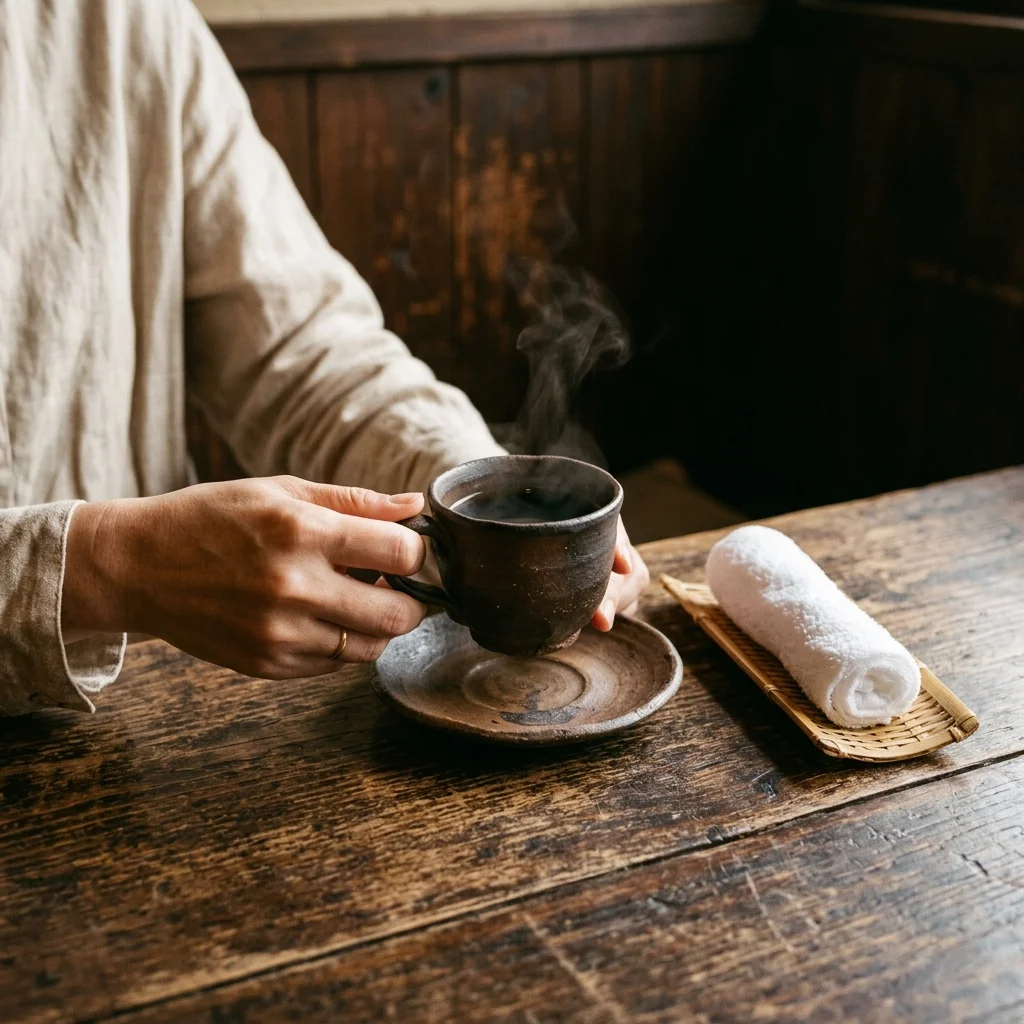
To fully appreciate this space, one must understand its deep historical lineage. Popularized in the late Meiji and Taisho eras (circa 1888-1926), Kissatens served as the intellectual laboratories for writers like Kafu Nagai and Ryunosuke Akutagawa, who sat for hours in Ginza coffeehouses, treating their tables as personal writing altars. The dyer, the carpenter, and the coffee master collaborated to design spaces that offered a quiet retreat (*Yutori*) from rapid industrialization. The host serves you a rolled, warm white cotton towel resting on a small bamboo tray, known as the Oshibori (おしぼり). The handling of the Oshibori is governed by a strict etiquette of cleanliness. You must unroll the towel gently with both hands, using the warm, steaming fabric to wipe only your palms and fingers to wash away the dust and stagnation of the outside world. Never use the Oshibori to wipe your face, neck, or the table surface, as this is considered a vulgar, unhygienic gesture that violates the spatial purity of the host's hospitality. Once finished, roll the towel back into its original shape with slow, deliberate movements and place it back on the bamboo tray, keeping the entryway of your table neat.
When your coffee is served—typically prepared using a slow, manual flannel drip method (Nel Drip) to extract rich, heavy oils—the way you handle the cup must reflect absolute physical control and gratitude. The coffee master calculates the exact water temperature (typically ninety degrees Celsius) and utilizes a hand-forged copper kettle, pouring a tiny, circular stream of mineral water over a dense cotton flannel filter. This slow paperless filtration preserves the delicate lipids, creating a heavy, aromatic body. To lift this cup, grasp the clay or porcelain handle slowly with your dominant hand, while supporting the bottom saucer lightly with your other hand to prevent any sudden, vibrating snaps. Keep your shoulders relaxed, your elbows aligned with your chest, and look down at the cup at a forty-five-degree angle, keeping your mind fully centered. As you lower the cup back to the wooden table, check your speed to make absolute zero sound upon contact. Letting a cup slam against the wood with a loud clang is a major breach of shosa, indicating a lack of physical focus and disrespect for the silent sanctuary of other guests. If you wish to read, open your book slowly, turning the yellowed paper pages quietly with your fingers, letting your mind dissolve into the rich sandalwood and roasted coffee aromas, keeping your breathing low and your voice at a hushed, respectful whisper. Avoid modern taboos like tapping brightly lit digital phone screens, leaving sugar packets unfolded, or generating loud chewing noises, preserving the pristine, historical boundary of the tea and coffee culture. Additionally, when requesting the bill, do not yell or wave enthusiastically across the quiet room. Instead, wait for the master to make direct eye contact, and then provide a subtle, elegant head bow or a light gesture of the hand, maintaining the sacred silence until you exit the dark cedar threshold into the bright, chaotic streets outside.