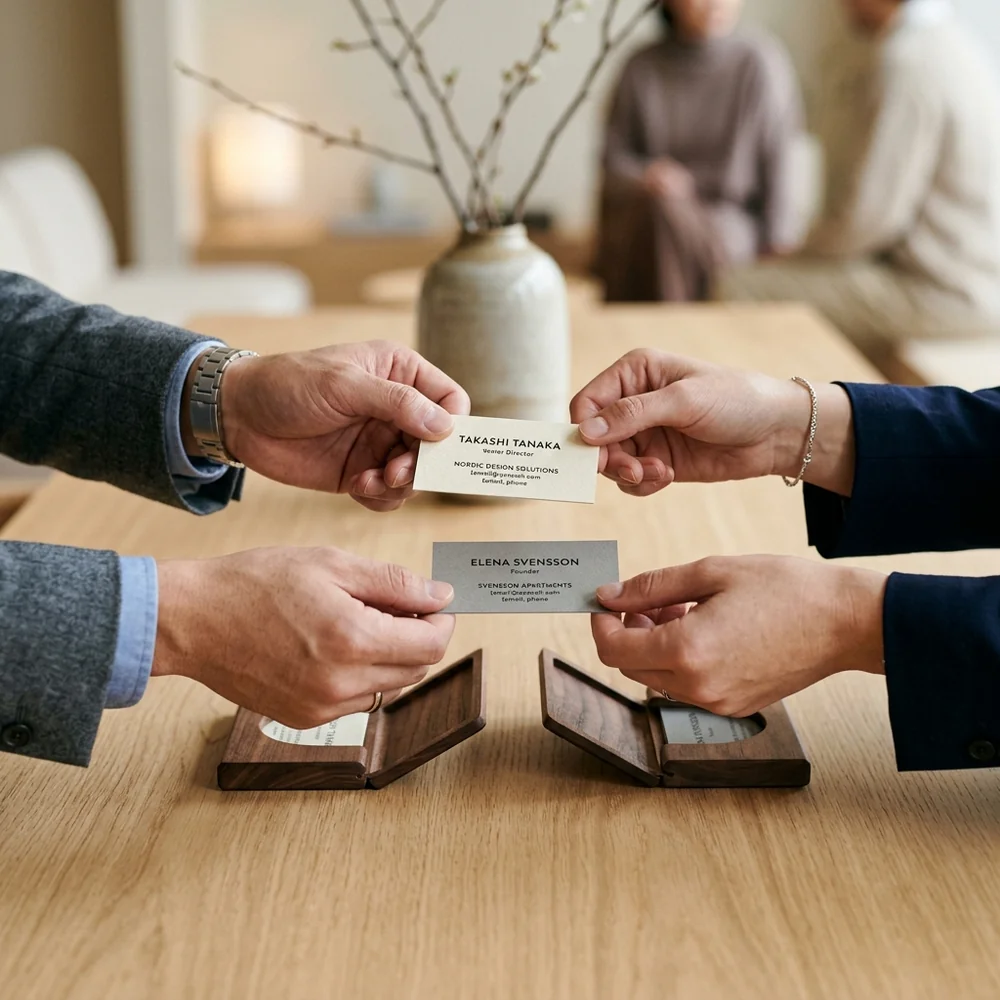
Meeting a professional counterpart in Japan begins with a formal, highly structured ritual of card exchange known as **Meishi Koukan (名刺交換)**. In western corporate culture, business cards are often treated as casual slips of paper, thrown onto tables or slipped into pockets without a second thought. In Japanese corporate philosophy, however, the business card is treated as the **Shin'tai (神体) — the physical vessel and soul of the individual's professional identity**. The card represents their lineage, their hard-earned rank, and the honor of their entire corporation. Therefore, the physical handling of the card must reflect the highest level of care and mindfulness (Omoiyari).
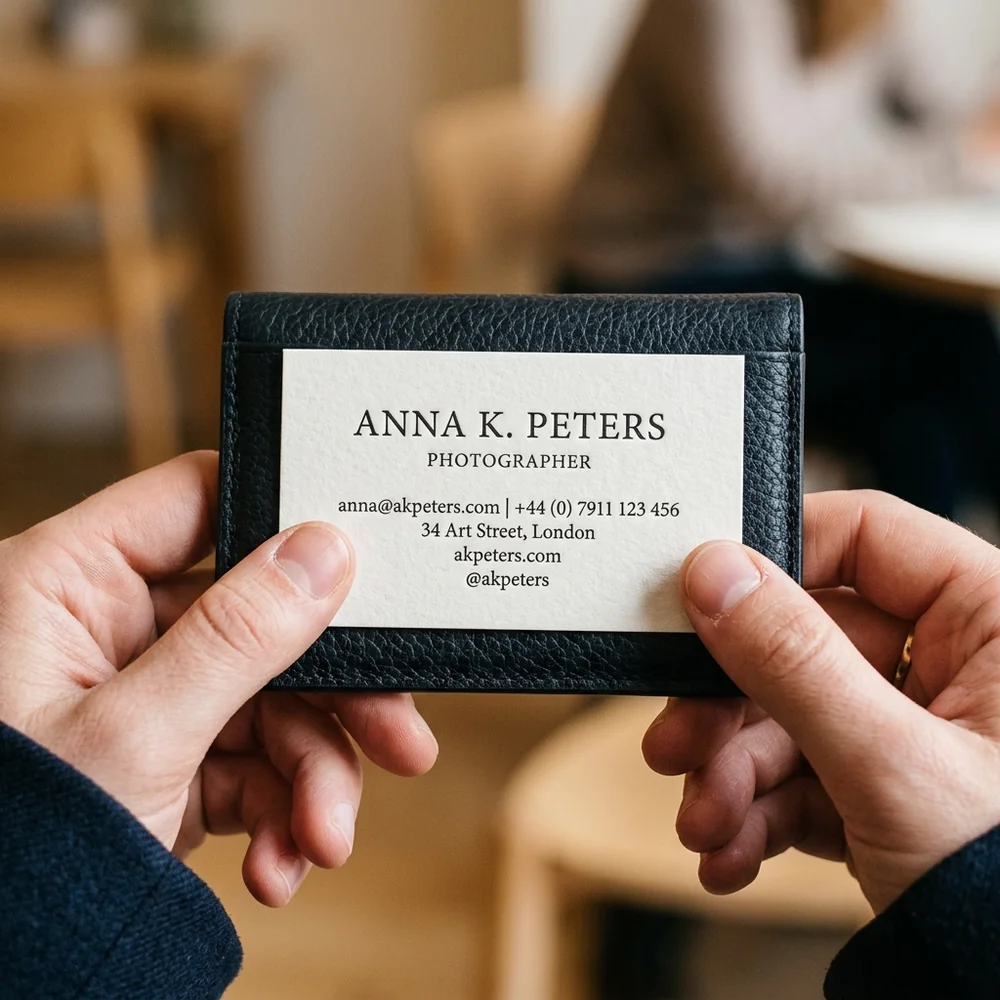
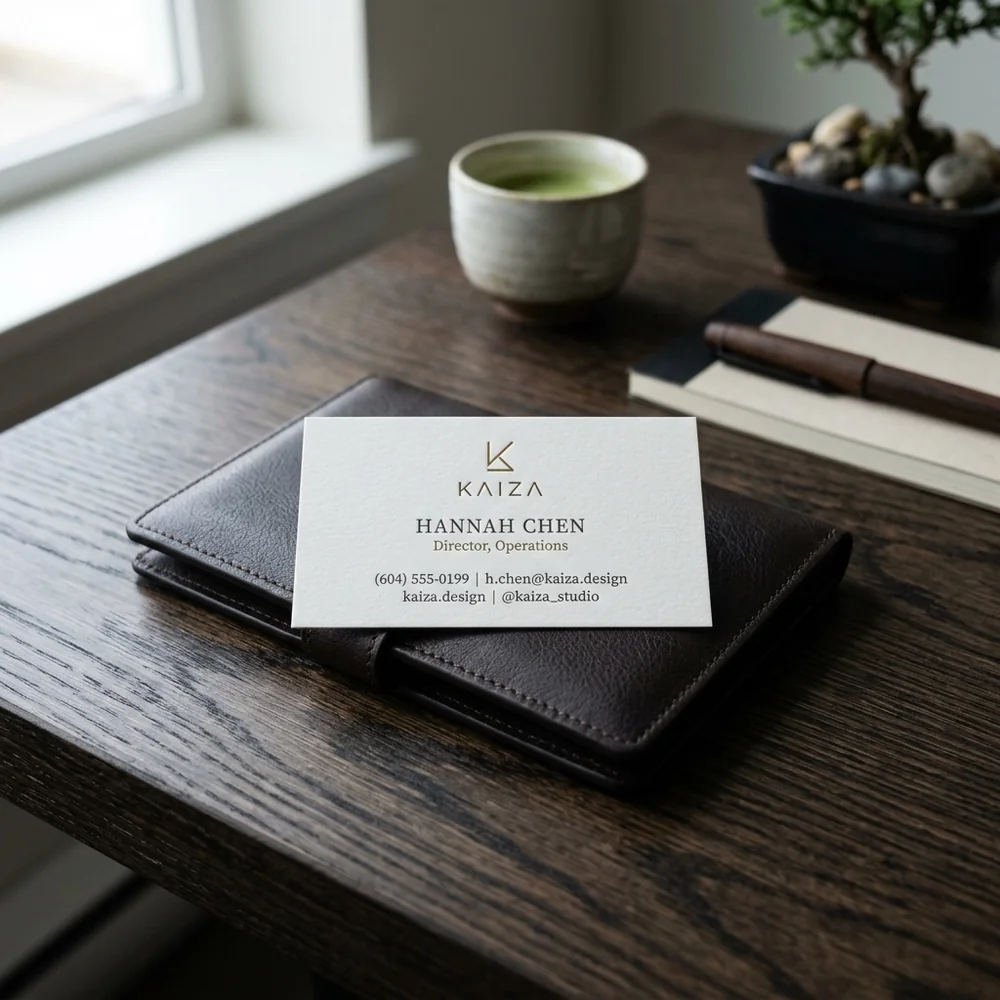
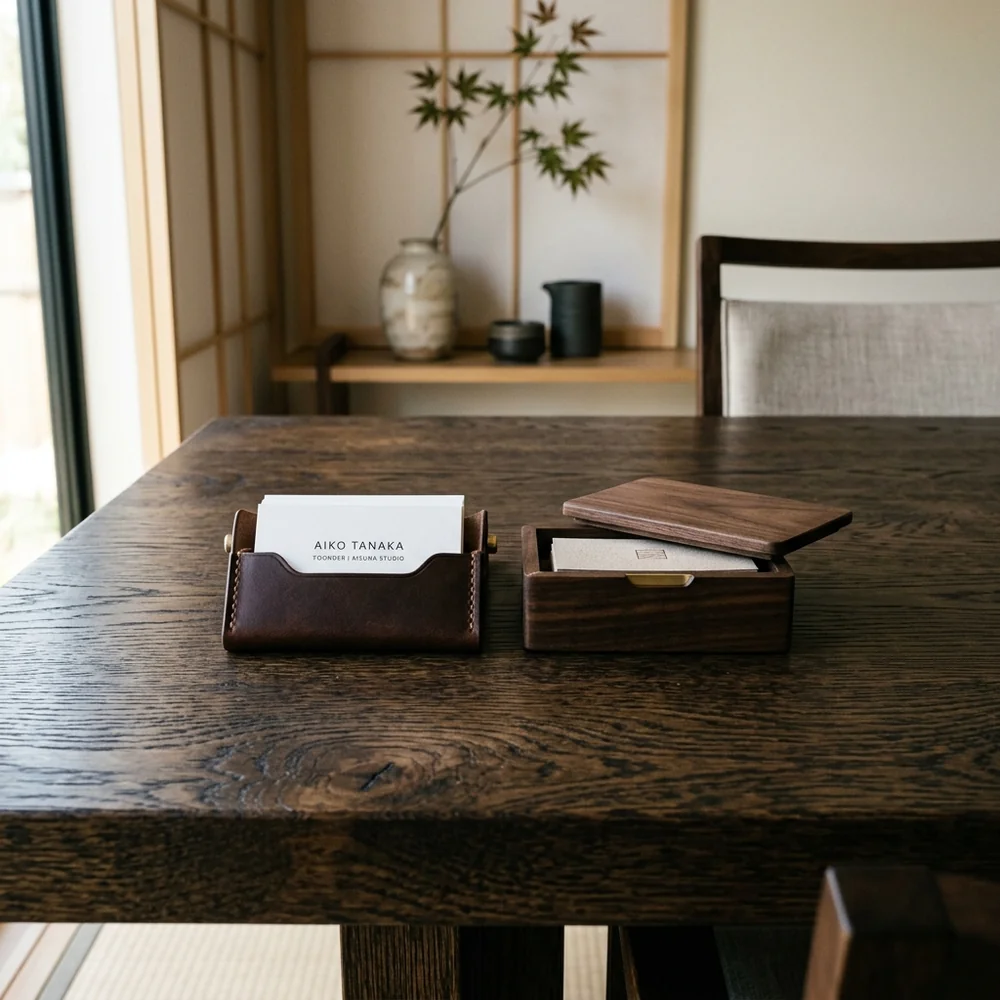
To present your card correctly, stand facing your counterpart with your feet parallel and shoulder-width apart, keeping your spine straight and your knees unlocked. Don't exchange cards across a table; step around the table to stand directly in front of the other person, maintaining a respectful distance of approximately 1 meter. Extract a single card from your holder. Place your card flat on top of your leather cardholder, which acts as a dignified pedestal. Hold the cardholder with both hands, placing your thumbs and index fingers flat on the bottom left and right corners of the card. Ensure that your thumbs do not cover the company logo or the printed name. Hold the card at chest height, with the text facing directly toward the recipient so they can read it instantly.
As you step forward, bow your upper body slightly at a precise 15-degree angle (Eshaku), and present your card while stating your company name, your department, and your full name clearly (e.g., *'Antigravity Editorial no Tanaka to moshimasu. Yoroshiku onegai itashimasu'*). Keep your arms extended gracefully, offering the card as a sacred gift. By keeping the card at chest-height and bowing with flat posture, you demonstrate complete humility, aligning your physical coordinates to show that you are fully present and honor the relationship from the very first second.
To ensure perfect execution of this presentation, the practitioner must pay strict attention to the structural alignment of the thumbs. Place the pads of your thumbs precisely on the lower 5 millimeters of the card's outer edge. This prevents covering any critical calligraphic kanji or corporate titles. Keep your wrists straight and your elbows slightly bent and extended, creating a smooth, forward-facing curve that frames the card like an altar. Your chest-height presentation ensures that the recipient's eyes naturally drop to read the text without needing to tilt their head aggressively, maintaining constant physical comfort.
Furthermore, the accompanying verbal statement must be delivered with a slow, controlled articulation cadence (using the formal Japanese business register). Speaking with low, quiet tones indicates high professional authority and internal calm. By treating your own card as a precious, hand-crafted gift rather than a cheap piece of marketing material, you set a dignified, respectful tone that instantly establishes mutual trust between both corporate lineages. This complete focus of energy ensures the meeting begins in perfect corporate harmony. Before approaching, make eye contact and synchronize your breathing with your partner, initiating a quiet rhythm (Aun no Kokyu - 阿吽の呼吸) that guarantees both players present simultaneously with zero hesitation.
Historically, business card exchange in Japan evolved from the Edo-period warrior custom of declaring one's lineage and battle record (Nanori - 名乗り) before engaging in single combat. By presenting your card with both hands at chest-height and bowing with absolute, flat-spined posture, you honor this deep historical tradition, showing that you do not take the upcoming relationship lightly and representing your firm with complete dignity. Gently place the cardholder at a chest-height coordinate that represents complete physical stability and respect, locking your gaze with your partner's eyes.