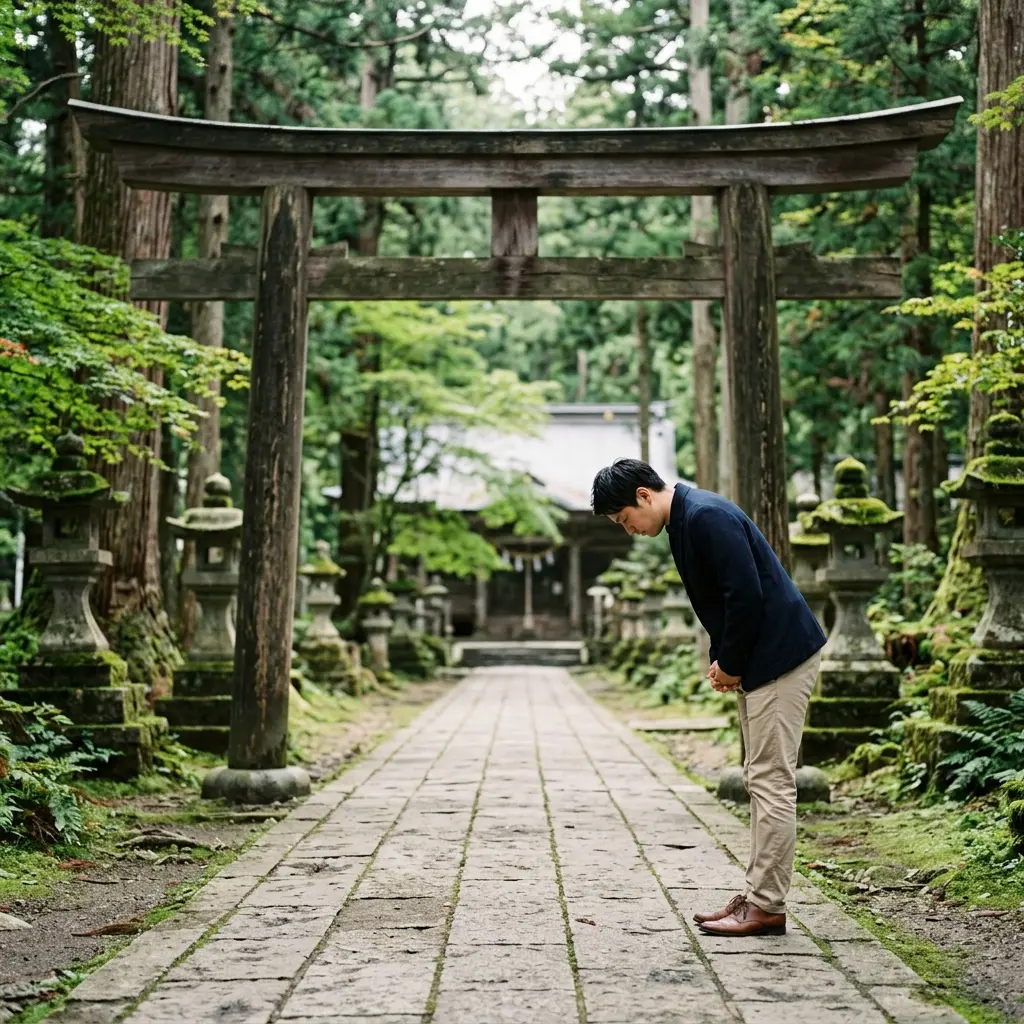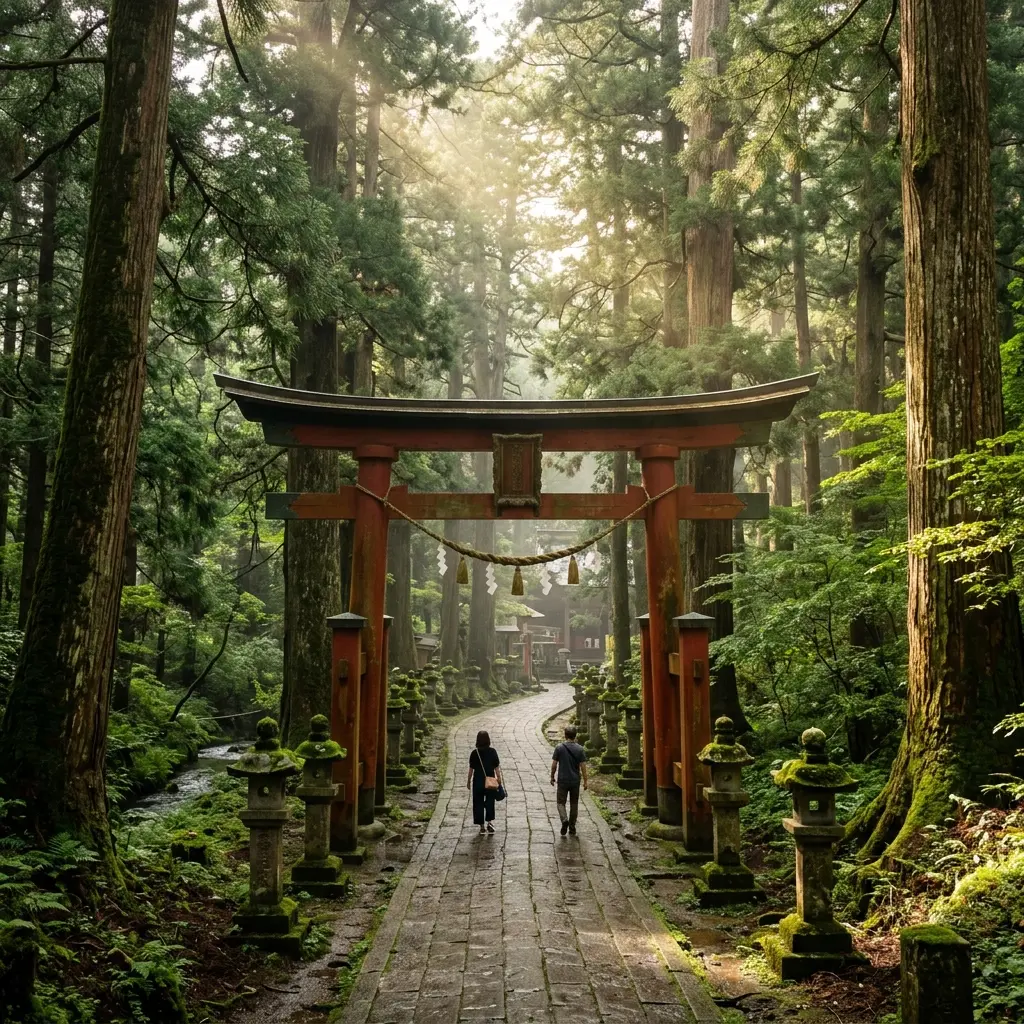
Crossing the threshold of a Shinto sanctuary is a transition of profound metaphysical significance. The Torii gate (鳥居) serves as a monumental, sacred boundary separating the secular, profane human world (Zokukai - 俗界) from the pristine, spiritual sanctuary of the Shinto deities (Shin'iki - 神域). These gates, typically lacquered in vermilion to ward off evil spirits and decay, act as silent sentinels. Before stepping through, a visitor must pause, align their posture, clear their mind, and execute a respectful, light bow of approximately 15 degrees, known as Eshaku (会釈). This simple gesture is not mere tourist theater; it is a formal petition for entry, an acknowledgement of Shinto spirits (Kami - 神), and a declaration of your humble presence.
Once you step beneath the lintel, a strict physical protocol governs your path. The stone-paved approach to the altar, known as the Sando (参道), is divided into invisible spiritual channels. The absolute center of the Sando is called the Seichu (正中)—the central axis reserved exclusively for the passage of the deities. Humans must walk strictly along the left or right margins of the path. Walking in the center is considered a grave breach of etiquette, an act of spiritual arrogance that disrupts the sacred flow of energy. As you walk, maintain a quiet, meditative pace, speaking only in hushed, respectful tones, keeping your thoughts grounded in the present moment.
In addition, Shinto priests instruct that when crossing the threshold under the Torii gate, you should step forward with the foot furthest from the center of the path. For example, if you are walking along the left-hand margin, you should step forward first with your left foot. This ensures that your body is naturally turned toward the sacred center as you move, maintaining an attitude of constant, physical deference to the Kami residing in the inner shrine.