The simple act of picking up your chopsticks (Hashi - 箸) from the table is governed by a beautiful, high-precision three-movement sequence known as Sante (三手). Unlike western cutlery, which is casually grasped with one hand, traditional Japanese etiquette treats the chopsticks as a sacred bridge between the diner and the food. Picking up the chopsticks carelessly with a single, aggressive downward claw is a major breach of manners. The Sante protocol ensures that your hands move with complete symmetry, grace, and deliberate focus, priming your mind for a mindful meal.
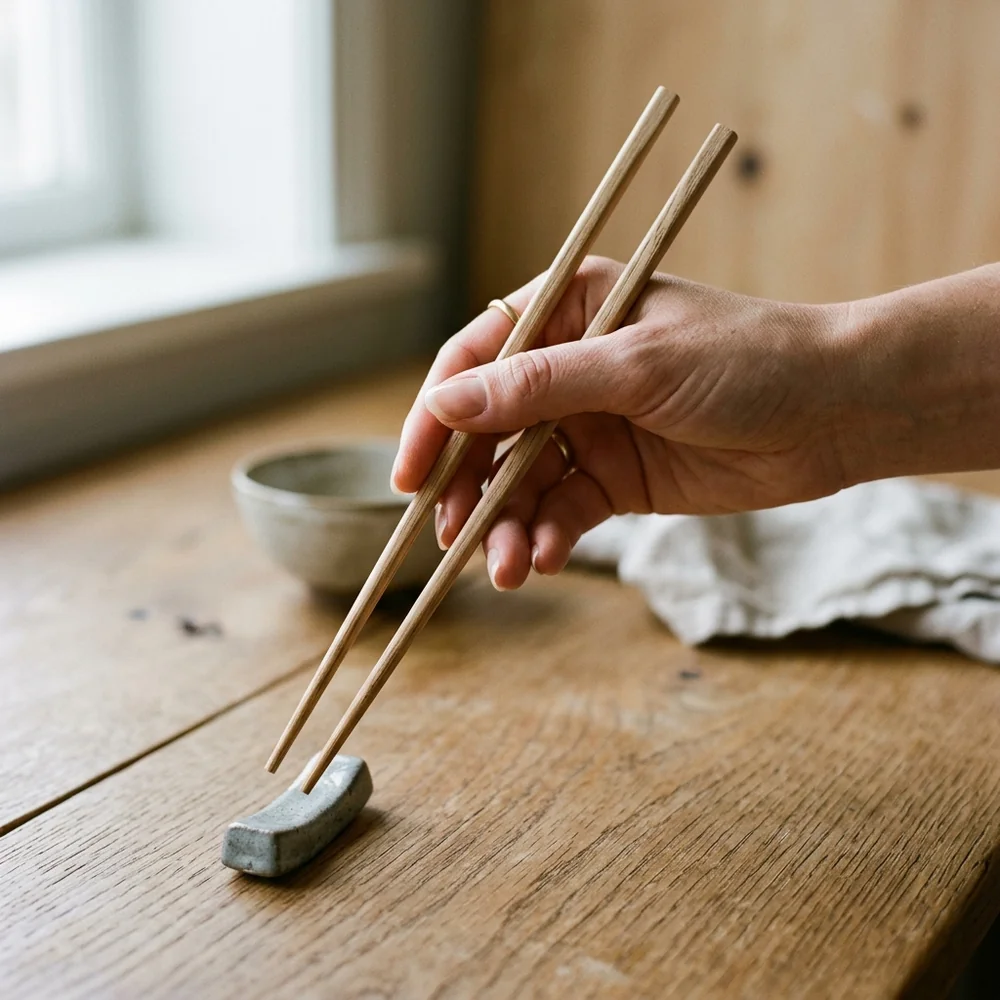
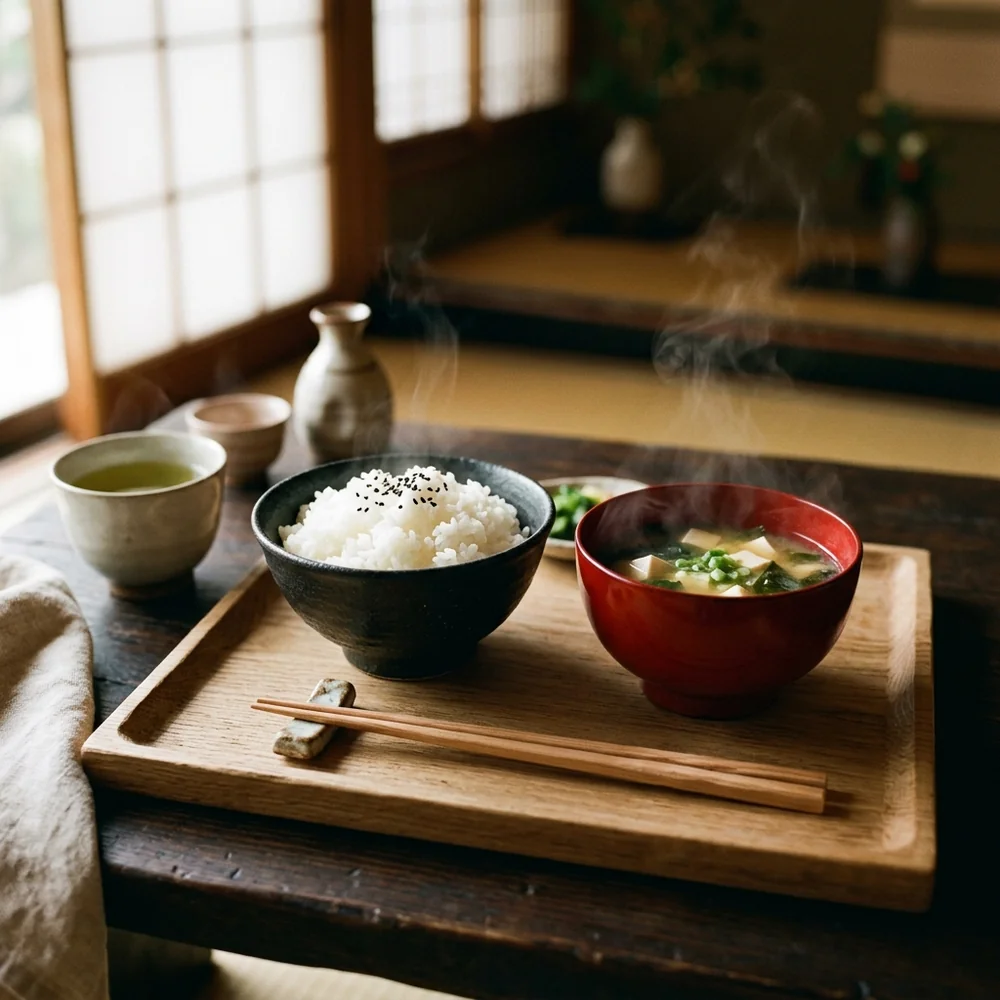
To perform the Sante lift correctly, locate your chopsticks resting horizontally on the ceramic holder (Hashioki) in front of your tray, with the tips pointing to the left. First, use your dominant hand (typically the right hand) to grasp the chopsticks gently from above, near the middle section, using your thumb, index, and middle fingers. Lift the chopsticks straight up by approximately 10 centimeters. Second, slide your non-dominant hand (the left hand) underneath the chopsticks, cradling the lower section near the tips with the open palm and fingers. The left hand acts as a stable, respectful support tray. Third, while the left hand holds the chopsticks securely, slide your dominant hand smoothly to the right, rotating your wrist underneath the chopsticks until your fingers slip into the classic, dynamic holding posture: the upper chopstick is held like a pen between the thumb, index, and middle fingers, while the lower chopstick remains completely stationary, braced firmly in the valley between the thumb and index finger.
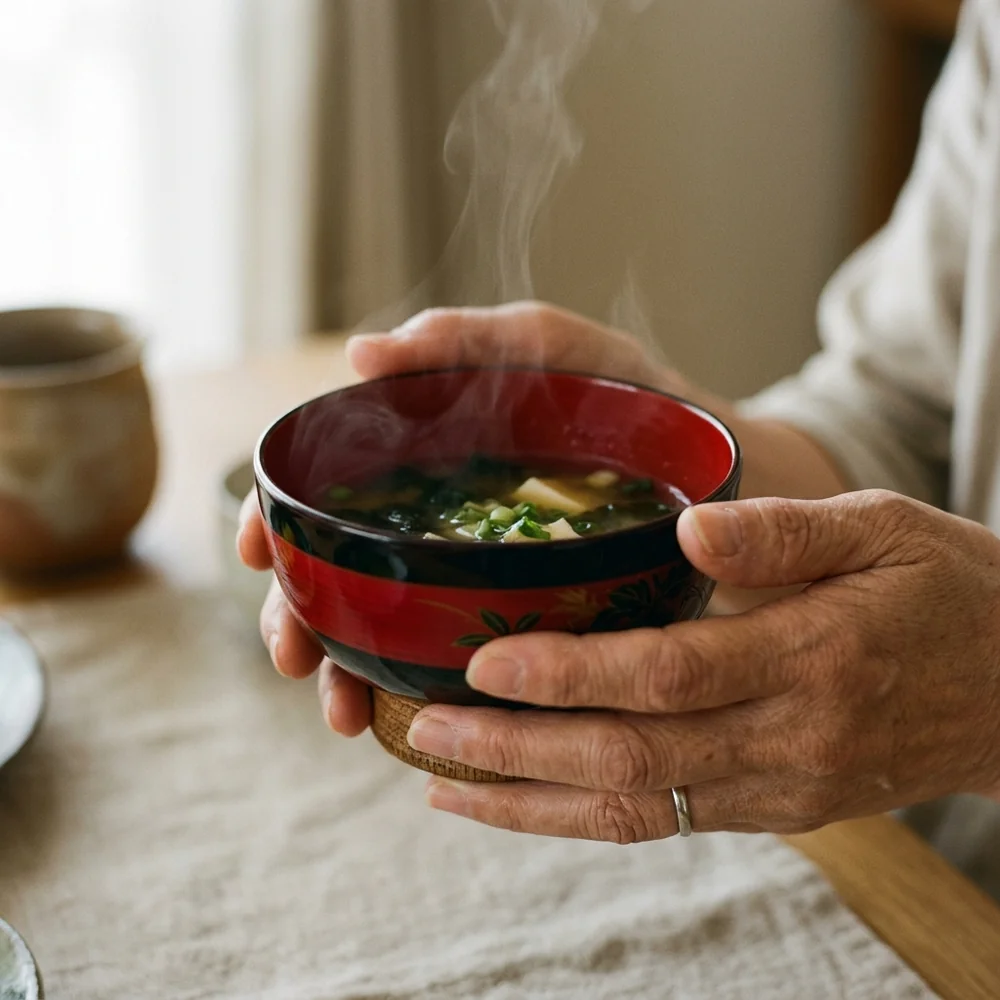
Once the grip is established, release your left hand slowly and return it to rest flat on the edge of the table or to lift your dining bowl. The chopsticks are now perfectly balanced and ready for use. By practicing this slow, elegant three-step transition every time you pick up or put down your chopsticks, you demonstrate absolute physical presence, showing the host that you treat their hand-crafted wooden utensils with the utmost care and respect, rather than as mere tools for rapid consumption.
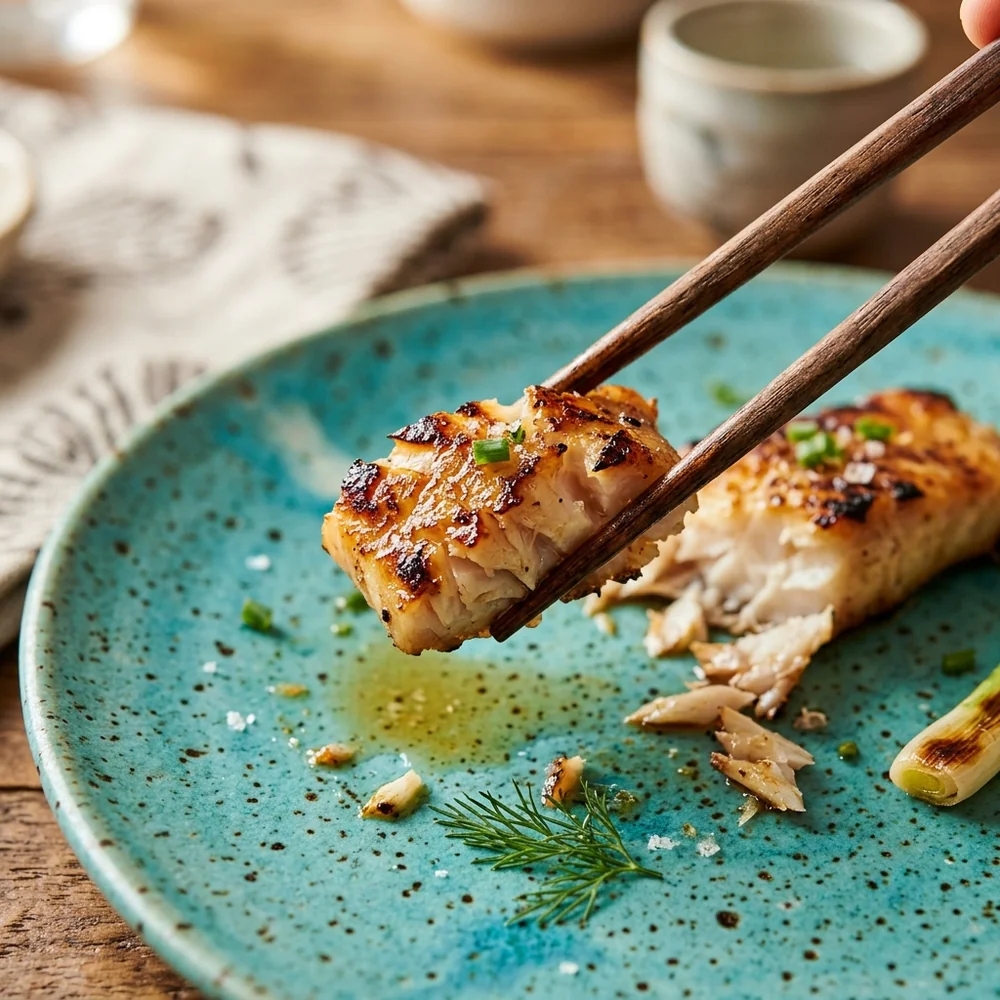
To ensure perfect execution of the Sante lift, the practitioner must develop muscle memory for each specific finger coordinate. When rotating the dominant hand underneath the wooden sticks during the third step, the movement must be fluid and completely continuous. The bottom chopstick must settle firmly against the root of the index finger and the first joint of the ring finger, remaining completely immobile. Only the upper chopstick, driven by the coordinated action of the index and middle fingers, should pivot to open and close the tips. This structural isolation of the moving parts allows you to pick up even a single grain of rice with absolute precision, reflecting complete physical focus and grace.
Furthermore, this three-step lifting method serves as a primary mental filter. By forcing yourself to execute a deliberate, multi-part physical sequence before touching any food, you interrupt the automatic, unthinking rush to consume. It acts as an active, sensory reminder that you are engaging in a shared ritual of gratitude, transforming dining from a basic physiological function into an elegant path of mindfulness. Every single meal should begin with this clean sequence, demonstrating absolute somatic presence and respect for the tools of nourishment. By resting the chopsticks on the Hashioki ceramic rest rather than leaving them crossed on top of the bowl, you prevent negative Shinto energy from stagnating at the table, honoring the spatial purity of the host's dining room. When the meal is completed, you must execute the reverse sequence with the exact same Sante protocol, returning the chopsticks to rest neatly parallel on the Hashioki, symbolizing a perfect closure to your physical dining cycle.