Back to Myths & Q&AMisconceptions & FAQ 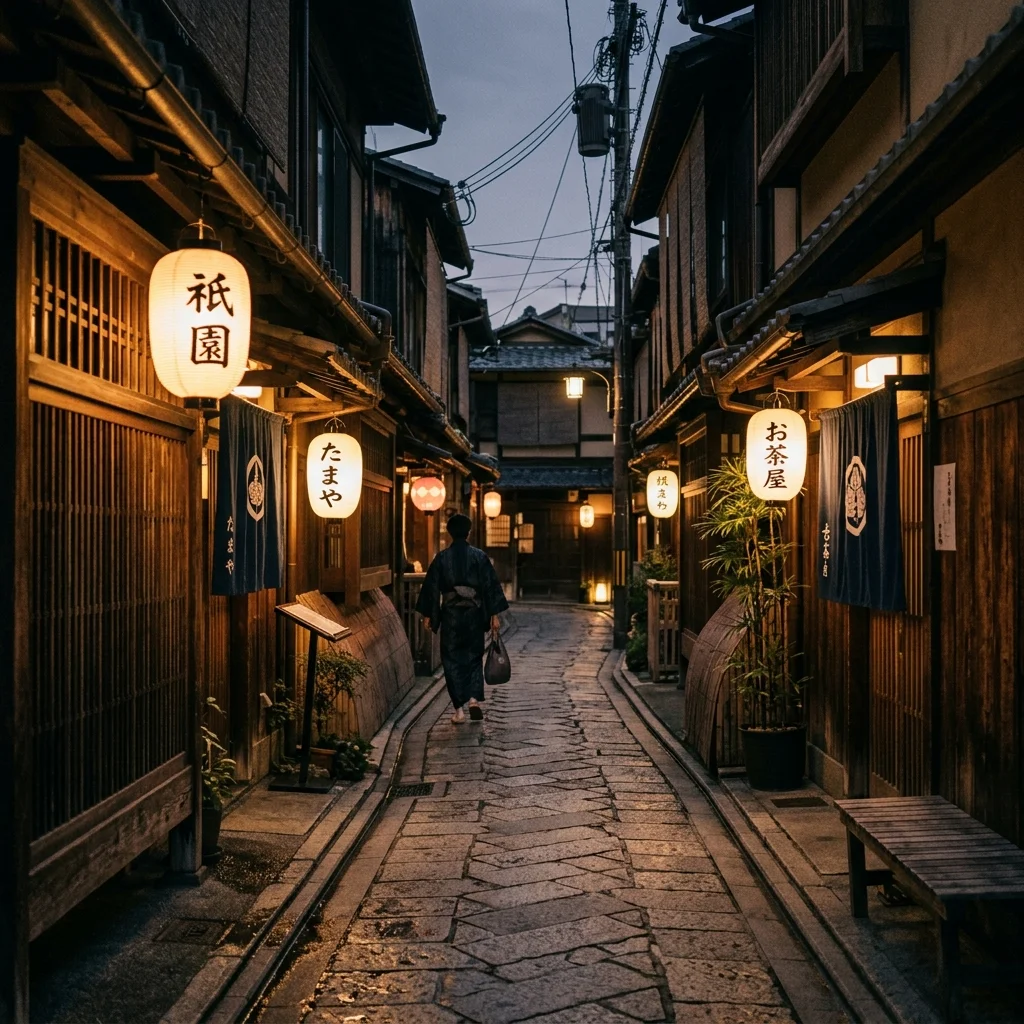
The historical alleys of Kyoto's Gion district (Hanamachi), serving as a self-governing cultural sanctuary where Maiko and Geiko preserve classical performing arts.
Popular Misconceptions Debunked
The Common Myth
Geisha are historically simple courtesans or high-end escorts.
The Cultural Reality
This is a profound historical and cultural error, largely born of post-World War II Western misunderstandings. In Japanese society, **Geisha (芸者) or Geiko (芸妓)** are strictly and exclusively professional artists, musicians, dancers, and conversation specialists who dedicate their entire lives to preserving classical Japanese heritage. The word 'Geisha' itself translates literally to 'person of the arts' (Gei - 芸 meaning art, and Sha - 者 meaning person). During the Edo period, the government enforced a strict legal and spatial separation between professional courtesans (Oiran or Tayu), who operated inside licensed red-light districts like Yoshiwara, and Geisha, who were legally prohibited from engaging in sexual commerce. In fact, Edo laws stipulated that a Geisha who engaged in commercial relations with a client would be severely fined and banised, as they were meant to be independent artists who provided only high-end cultural entertainment, music (specifically the three-stringed Shamisen), classical dance (Nihon-buyou), and refined conversational wit. The confusion arose during the Allied occupation of Japan, when street escorts dressed in cheap kimonos and white makeup styled themselves as 'Geisha girls' to appeal to foreign soldiers, creating a false, distorted representation that was later popularized in Western literature and media. Authentic Geisha are highly respected cultural custodians who maintain the absolute highest standards of artistic excellence.
The Common Myth
Modern Geisha are a dying, tourist-staged relic of the past.
The Cultural Reality
While the total number of practitioners has declined significantly from the golden era of the 1920s, the Geisha community is not a static museum display or a tourist-oriented performance. In Kyoto, Geisha (locally called Geiko) and their apprentices (**Maiko - 舞妓**) live in highly structured, self-governing, and thriving communities called **Hanamachi (花街 — Flower Towns)**. The lives of these women are defined by intense, professional rigor. An apprentice Maiko enters a communal lodging house, known as an **Okiya (置屋)**, typically at the age of fifteen after completing compulsory education. She undergoes an arduous, years-long training program under the guidance of the Okiya's proprietor (referred to as Okami-san or 'Mother'). The Maiko begins her day at 8:00 AM, attending rigorous daily classes at the regional performing arts school where she studies the classical Shamisen, horizontal bamboo flutes (Fue), traditional drums (Taiko), tea ceremony, calligraphy, and highly demanding, subtle movements of fan dancing. This training is not tourist theater; it is a serious, elite performing arts discipline equivalent to a high-end Western ballet academy. Only after five years of daily, exhausting practice and mastery of these arts can a Maiko be promoted to a full Geiko, continuing to serve as an elite living carrier of Japan's intangible cultural heritage.
The Common Myth
Anyone can walk up, pay a fee, and hire a Geisha for an evening.
The Cultural Reality
This is a common misconception of the modern tourist era. It is virtually impossible for a first-time visitor to walk into a traditional tea house (Ochaya - お茶屋) and hire a Geiko or Maiko. The Geisha entertainment system operates under a strict, ancient protocol known as **Ichigen-san Kotowari (一見さんお断り — No first-time customers without introduction)**. Under this rule, a customer cannot enter a tea house or request a banquet (*Ozashiki*) unless they are introduced by an established, high-profile patron who acts as their financial and moral guarantor. The tea house does not accept cash or credit cards at the end of the night; instead, all expenses (including food, premium sake, and the fees for the Geiko and Maiko) are recorded on a ledger and billed directly to the guarantor's corporate account at the end of the month. If a guest behaves rudely, makes inappropriate gestures, or defaults on their bill, the guarantor's reputation is permanently ruined, and they are banned from the Hanamachi. This strict gatekeeping system is not intended to exclude foreigners; it is a functional, highly defensive system designed to protect the privacy, dignity, and absolute safety of the Maiko and Geiko, allowing them to perform their delicate arts in a secure, trusted sanctuary where guests can relax without the intrusion of the outside world.
Frequently Asked Questions
What is the key difference between a Maiko and a Geiko? (Kyoto Guild Classifications)
To the untrained eye, Maiko and Geiko appear identical, but they represent distinct professional stages in Kyoto's Hanamachi. A Maiko (舞妓) is a young apprentice undergoing intense training, whereas a Geiko (芸妓) is a fully licensed professional artist. Visually, a Maiko's attire is highly ornate and colorful: she wears a long, flowing sash called a *Darari-obi* that hangs down to her heels, a kimono with long, swinging sleeves (*Furisode*), and high, wooden platform sandals called *Okobo*. Furthermore, a Maiko styles her own natural hair into highly intricate traditional coiffures (*Nihongami*) adorned with seasonal, dangling silk hairpins (*Kanzashi*). This hair styling is so tight and demanding that Maiko must sleep on a hard, elevated wooden pillow (*Takamakura*) to preserve the hair shape for a week, resulting in a permanent bald spot on the crown of their head—prized as a mark of apprentice dedication. In contrast, a fully fledged Geiko wears a refined, solid-colored kimono with standard-length sleeves, a standard short obi sash, and flat wooden sandals (*Geta*). Crucially, a Geiko wears a professional wig (*Katsura*) styled in the elegant *Shimada* shape, allowing her to sleep on standard comfortable pillows. While a Maiko is focused on visual color and graceful, youthful dance, the Geiko represents the pinnacle of mature conversational wit, expert musical accompaniment, and refined elegance, serving as the master director of the banquet room.
What is the historical structure of Kyoto's five Hanamachi? (Historical Case Study: Gokafugai)
The preservation of authentic Geisha culture in Kyoto is driven by five historically designated districts collectively known as the **Gokafugai (五花街 — The Five Flower Towns)**: Gion Kobu, Gion Higashi, Pontocho, Miyagawacho, and Kamishichiken. Each of these districts functions as an autonomous, self-governing guild consisting of registered Okiya (lodging houses), Ochaya (tea houses where banquets are held), and a central school for the performing arts. Kamishichiken is the oldest district, located near the Kitano Tenmangu Shrine, tracing its origins to the Muromachi period when tea house workers utilized leftover structural wood to build shops. Gion Kobu is the largest and most famous, renowned for its strict preservation of the Inoue school of classical dance (*Kyomai*), which mimics the slow, horizontal gliding motions of traditional Noh theater. Each Hanamachi holds a massive, public spring theater production—most famously the **Miyako Odori (都をどり)** in Gion—where Maiko and Geiko perform highly choreographed seasonal dances before thousands of spectators. By maintaining these five separate, competitive districts, Kyoto preserves a vibrant ecosystem of historical costumers, wig-makers, shamisen craftsmen, and tea guilds, ensuring that the physical and material culture of the Edo period remains economically viable today.
How should international travelers respect Geisha in Kyoto? (Actionable Gion Etiquette Guide)
In recent years, the massive influx of international tourism has placed extreme physical and social stress on Kyoto's historic Gion district, leading to instances of 'Geisha harassment' (Maiko paparazzi) where tourists chase, grab, and photograph Maiko on public streets. To combat this and maintain a respectful, peaceful boundary, Kyoto's local residents and municipal government have established strict, actionable rules for visitors: Rule 1: Never Touch or Block a Maiko Maiko moving through public streets are on their way to strict, timed appointments at tea houses. Under no circumstances should you touch their kimono, pull their hair ornaments, or block their path to take a selfie. Treat them with the same physical distance and professional deference you would accord a high-court judge or a classical orchestra performer on their way to a concert hall. Rule 2: Respect Public Photography Bans Kyoto has implemented strict photography bans on all private streets (*Shido*) throughout Gion, marked by prominent warning signs. Violating these bans carries a 10,000 yen fine. Limit your photography to major public avenues, and utilize long lenses to avoid invading the personal physical space of residents. Rule 3: Walk in Single File and Keep Voices Low The historic alleys of Gion are quiet residential zones. Walk in single file along the sides of the street, keep your voice to a low whisper, and allow Maiko, local residents, and delivery carts to pass freely. By demonstrating self-restraint and quiet elegance, you align yourself with the core Japanese value of *Omoiyari* (empathy), ensuring that Gion remains a living, breathing sanctuary rather than a chaotic theme park.