Back to Glossary
Concept Glossary

Ichigo Ichie: One Time, One Meeting - Cherishing Once-in-a-Lifetime Encounters

Ichigo Ichie: One Time, One Meeting - Cherishing Once-in-a-Lifetime Encounters
Cultural Concept

ICHIGO-ICHIE

一期一会 / いちごいちえ

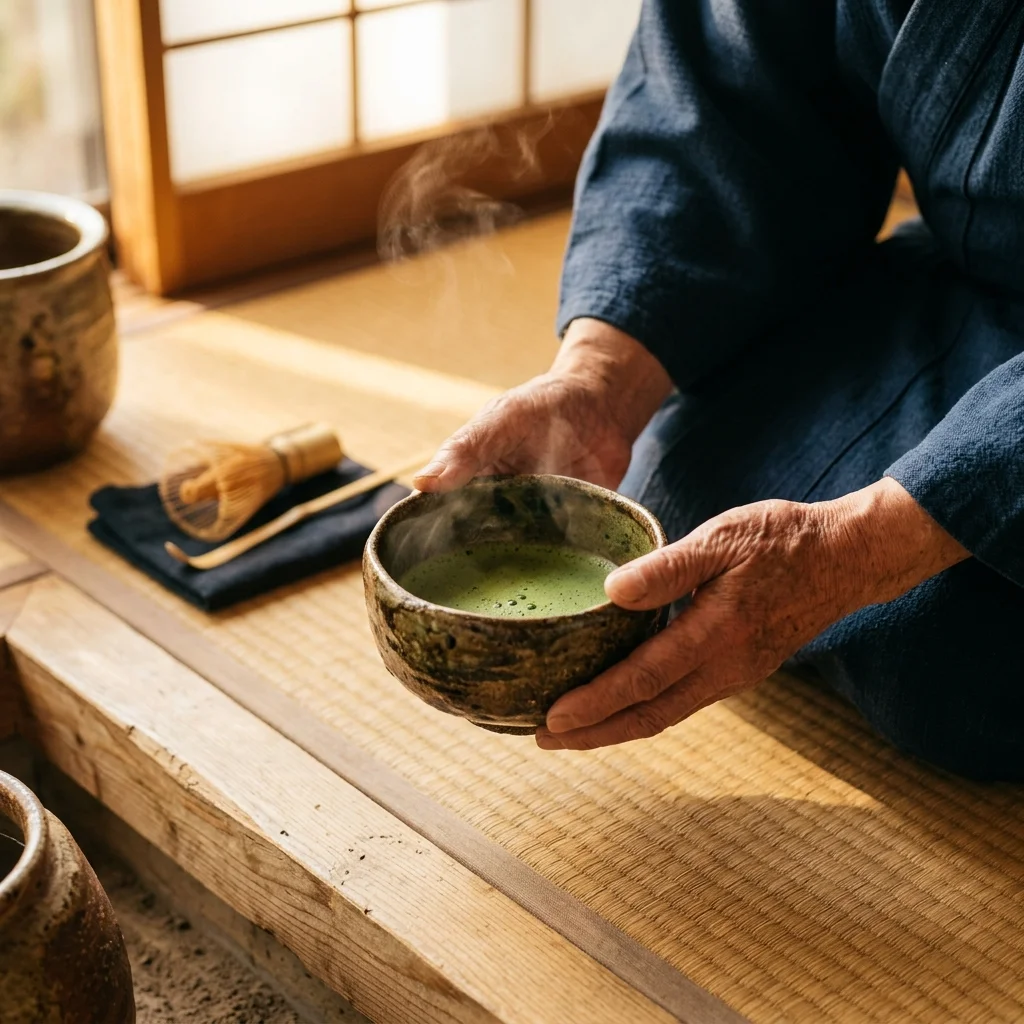
A quiet statement of Ichigo Ichie: warm afternoon sun illuminating a handmade rustic tea bowl, reminding us that this shared instant will never return.

Linguistic Definition (TL;DR)

Ichigo Ichie is the quintessential Japanese Zen philosophical concept representing the absolute uniqueness of once-in-a-lifetime encounters. Rooted in impermanence and tea master Sen no Rikyu, it demands complete, sensory mindfulness in the present moment, acknowledging that any gathering is fragile and can never be duplicated.

Etymology & Linguistic Analysis

// 01

The word Ichigo Ichie (一期一会) is a profound four-character idiomatic compound (known as a Yojijukugo) that etymologically bridges classical Sanskrit Buddhist terminology with Japanese aesthetic values. The first component, Ichigo (一期), is a Buddhist term that translates literally to 'one's entire lifetime' or 'from birth until the moment of death'. It represents a complete, finite cycle of human existence. The second component, Ichie (一会), combines the character for 'one' or 'single' with 'assembly' or 'meeting'. Taken as a whole, the phrase literally translates to 'one lifetime, one meeting' or 'once-in-a-lifetime encounter'.

Phonetically pronounced as /ee-chee-go-ee-chee-eh/, the word carries a rhythmic, meditative cadence. Its earliest recorded conceptual origins trace back to the 16th century, specifically formulated by the legendary tea master Yamanoue Soji, a disciple of Sen no Rikyu. Soji noted in his diaries that a host must treat guests with the deep realization that the meeting is a singular event that will occur only once in their lives. The phrase was later refined and popularized in the mid-19th century by Naosuke Ii, a prominent political figure and tea scholar. Ii codified the philosophy in his treatise Chanoyu Ichirakushuu, explaining that even if the host and guest meet frequently, today's specific gathering is a unique cosmic alignment that can never be replicated, establishing a beautiful baseline of absolute emotional sincerity.

Deep Philosophical Foundations

// 02

At its philosophical core, Ichigo Ichie is the practical application of Zen Buddhist mindfulness, specifically the fundamental doctrines of Impermanence (Mujo) and Dependent Origination (Pratītyasamutpāda). It represents the profound realization that everything in the universe is in a constant state of flux, and that our human existence is a fleeting series of non-repeatable moments.

In the Zen worldview, there is no static, permanent self or reality. Every second that passes is a complete creation and destruction of the universe. The specific temperature of the air, the angle of the sun, the mood of the individuals present, and the scent of the room will never align in exactly the same way again. To ignore this transience is to live in a state of spiritual slumber. Ichigo Ichie demands that we wake up to this reality: by recognizing the fragile, fleeting nature of the present moment, we are forced to treat it with absolute reverence. The person standing before you is a unique event; the tea you are drinking is a unique sensory experience. This philosophy transforms everyday interactions into sacred acts of deep attention, freeing us from the anxieties of the past and the expectations of the future.

Complementing this is the concept of Omoiyari (anticipatory empathy). Because the host understands that this specific meeting is a once-in-a-lifetime event, they invest their entire spirit into preparing the physical environment. Every element—from the chosen calligraphy scroll hanging in the alcove to the charcoal arrangement under the kettle—is meticulously calibrated to harmonize with the guest's mental coordinates, establishing a profound spiritual bridge of mutual care and absolute presence.

Historical Evolution

// 03

The historical evolution of Ichigo Ichie is intimately bound to the development of Chanoyu (the Japanese tea ceremony) during the chaotic, war-torn Sengoku period (Warring States period, 1467–1603) and its subsequent consolidation in the Edo period.

During the 16th century, Japan was gripped by brutal, continuous civil war. Samurai warriors left for the battlefield daily, never knowing if they would return. Within this crucible of mortal danger, the tea master Sen no Rikyu revolutionized the tea ceremony, shifting it from a show of wealthy Chinese imports to a quiet, spiritual sanctuary of rustic simplicity (Wabi-Cha). The tea room, typically measuring just two tatami mats (known as Taian), was designed with a tiny, low entrance (*Nijiriguchi*) that forced samurai to leave their swords outside. In this dark, intimate space, master and warrior met as absolute equals. Rikyu taught his disciples that a tea gathering must be treated with the deep realization that the host and guest might never meet again—that a sudden battle could claim their lives the very next day. This physical proximity to death charged the simple act of whisking green tea with supreme spiritual weight, turning the tea ceremony into a dense, high-fidelity exercise in mutual presence.

Following the stabilization of Japan under the Tokugawa shogunate, the philosophy transcended the tea room. In the mid-19th century, Naosuke Ii, facing intense political crises and the threat of assassination, consolidated Ichigo Ichie as a guiding light for everyday life. Ii wrote that even if the host and guest are intimate friends who meet daily, they must approach each gathering as if it were their last. This historical transformation from a wartime survival protocol into an everyday aesthetic code ensured that Ichigo Ichie was permanently woven into the DNA of Japanese hospitality, etiquette, and social relations, establishing a culture where every minor act of hospitality is treated with the weight of a lifetime.

Cultural Case Studies

// 04

In modern Japanese society, the spirit of Ichigo Ichie is beautifully integrated into high-end retail, culinary arts, and public infrastructure, serving as a structural blueprint for premium human-centric experiences.

1. The Art of Omakase Dining: In Japan’s traditional sushi and kaiseki restaurants, the dining experience is governed by Omakase (leaving the choice to the chef). When you sit at a historic wooden counter, the master chef does not simply serve a standard menu. They observe your eating pace, note your reactions to specific textures, and adjust the seasoning, temperature, and order of the dishes in real-time. This culinary dance is a direct, sensory application of Ichigo Ichie: the chef recognizes that your presence tonight is a singular cosmic alignment, and crafts a bespoke sensory sequence that can never be duplicated, turning a simple meal into an intimate work of collaborative art.

2. Traditional Ryokan Hospitality: When check-in occurs at a historic Japanese inn (*Ryokan*), the staff practices an extreme form of *Omotenashi* (selfless service) powered by Ichigo Ichie. Prior to your arrival, the innkeeper researches your background, regional preferences, and dietary needs. Upon entry, you are escorted to a private room where a seasonal scroll and wildflower arrangement have been selected specifically for you. The room attendant (*Nakai-san*) serves tea with non-verbal grace, anticipating your fatigue and modifying the room's temperature and lighting. The staff treats your single night's stay as a once-in-a-lifetime honor, creating a psychological sanctuary of absolute safety and respect.

3. Municipal Tea Gatherings and Cultural Preservation: Across historic prefectures like Kyoto, Ishikawa, and Shiga, local governments and historical guilds organize annual public tea gatherings (*Kencha-sai*) in ancient temples and public gardens. These events are not simple tourist attractions; they are highly structured civic rituals designed to train citizens in the physical coordinates of presence. By participating, younger generations learn the micro-etiquettes of receiving a bowl of tea, bowing in unison, and appreciating the ephemeral beauty of seasonal sweets, preserving a biological and geological lineage of shared attention that has survived the digital age.

Practical Guide for Foreigners

// 05

For international travelers and foreign residents in Japan, adopting the spirit of Ichigo Ichie is the key to showing deep respect for the local community and forming authentic, memorable human connections.

Digital Presence and Phone Etiquette: When dining at a traditional sushi counter, visiting a historic temple, or enjoying a tea house, always place your mobile phone on silent. Avoid the temptation to record every single moment or check email. By actively removing digital screens, you signal to your host and companions that you value their physical presence and respect the fragile, non-repeatable nature of the shared space, allowing you to experience the sensory coordinates of the environment completely.

Active Observation and Appreciation: When entering a traditional room or dining spot, take a moment to look closely at the details. Notice the specific seasonal scroll hanging in the alcove (*Tokonoma*), the flower arrangement, and the texture of the ceramic ware. If you are served tea or food, hold the bowl with two hands, appreciate its weight and warmth, and express sincere gratitude (*Arigatou gozaimasu*). This active, mindful observation is the core of Ichigo Ichie, showing the host that their meticulous preparations have been received and appreciated.

Sincerity in Casual Encounters: Treat everyday transient interactions—such as buying a train ticket with the help of a station master, receiving directions from a local resident, or chatting with a shopkeeper—with absolute sincerity. Smile, make gentle eye contact, bow respectfully, and offer a warm word of thanks. By approaching even the briefest, most mundane encounters with the realization that you may never meet this person again, you bring warmth and dignity to the public commons.

Dialogue Scenarios

// 06

Review these bilingual dialogue scenarios to understand how Ichigo Ichie is discussed and practiced in natural, everyday Japanese settings.

Scenario A: A Tea Master instructing an Apprentice (茶室での稽古の合間に)
A veteran tea master explains why they must change the hanging scroll for a specific guest.

Apprentice: 家元、今日の田中様のお席ですが、昨日と同じ「一期一会」の掛け軸でよろしいでしょうか?
(Master, for Mr. Tanaka's gathering today, is it fine to use the same 'Ichigo Ichie' hanging scroll we used yesterday?)
Master: いや、田中さんは最近ご家族を亡くされたばかりだ。昨日の賑やかな雰囲気とは違う。今日は静かな「日日世好日」の軸に変えて、お茶を点てよう。一期一会というのはね、同じ客であっても、その時々の心に寄り添うということなんだよ。
(No, Mr. Tanaka recently lost a family member. The atmosphere is different from yesterday's lively gathering. Today, let's change the scroll to a quiet 'Every day is a good day' scroll and whisk the tea. Ichigo Ichie means aligning with the guest's heart in this exact, unique moment.)
Apprentice: なるほど。お客様の今の心境を察し、二度とないこの瞬間にふさわしい空間を整えるのですね。勉強になります。
(I understand. We must sense the guest's current state of mind and arrange a space fitting for this once-in-a-lifetime instant. Thank you for the teaching.)

Scenario B: A Ryokan Host and a departing Traveler (歴史ある温泉旅館の玄関前で)
An international traveler thanks the innkeeper for their extraordinary hospitality before departing.

Traveler: Thank you so much for the beautiful room, the incredible seasonal meals, and the warm hospitality. I will never forget this stay.
Innkeeper: 温かいお言葉をいただき、本当に恐縮でございます。お客様をお迎えできたこの二日間は、私どもにとりましても一生に一度の「一期一会」の大切な時間でございました。またいつの日か、ご縁がございますように。
(Thank you for your warm words. We are deeply honored. The two days we spent hosting you were indeed a precious once-in-a-lifetime Ichigo Ichie for us as well. May our paths cross again someday.)
Traveler: Yes, it truly felt like a special connection. I will carry this spirit of presence back home with me. Safe travels!

Modern Ecological & Social Relevance

// 07

In our modern globalized 21st-century society, Ichigo Ichie has emerged as a crucial philosophical framework to combat the epidemics of digital fragmentation, chronic distraction, and shallow human connections.

In the digital age, our attention is systematically mined and commodified by social media algorithms, push notifications, and screens that fragment our focus. We are physically present in one space but mentally translocated to a dozen digital networks. This state of continuous partial attention has led to a social isolation. The practice of *Ichigo Ichie* stands as a powerful antidote: it demands that we draw a hard boundary around the present moment, mute our devices, and invest our entire sensory apparatus into the immediate physical reality. By training ourselves to treat every meeting and every meal as a non-repeatable lifetime event, we restore depth, focus, and quality to our human experience.

Furthermore, in the realm of modern product design and software development, *Ichigo Ichie* is driving a transition toward highly personalized, contextual experiences. By designing technologies that respect the user's finite time and cultivate quiet presence rather than chasing constant engagement, engineers can build a more humane, ethical digital commons, proving that a truly advanced civilization is defined by the quality of its shared attention, mutual respect, and mindful existence.

Practical Mastery

Actionable Cultural Skills

Integrate the philosophical wisdom of Ichigo-ichie into your everyday lifestyle through these practical, hands-on Japanese technical disciplines.

Mindful Tea Whisking

心静かな点茶
初級 (Beginner)⏱️ 15 Mins

Mastering the precise physical hand coordinates to whisk premium Matcha into a perfect, velvety emulsion using a traditional bamboo whisk.

Handmade Matcha Bowl (Chawan)Bamboo Whisk (Chasen)Uji Matcha Powder
📋 Practical Steps
  1. 01.Prepare a clean Japanese ceramic tea bowl (Chawan) and a standard 80-prong bamboo whisk (Chasen). Rinse the bowl with warm water to preheat the ceramic.
  2. 02.Add exactly 2 bamboo scoops (approx. 1.5 grams) of high-grade Wazuka Matcha powder into the bowl. Sift the powder to eliminate micro-clumps.
  3. 03.Pour exactly 60ml of pure spring water heated to 80°C (176°F). Water that is too hot will scorch the fragile green tea, releasing bitter tannins.
  4. 04.Hold the Chasen handle firmly with your dominant hand's thumb, index, and middle fingers. Stabilize the rim of the Chawan with your non-dominant hand.
  5. 05.Plunge the Chasen into the water. Instead of stirring in a circular motion, move your wrist rapidly back and forth in a strict 'W' or 'M' pattern.
  6. 06.Whisk using only your wrist, keeping your forearm and shoulder relaxed. Continue for 20 to 30 seconds until a thick, micro-froth forms on the surface.
  7. 07.Gently draw a circular loop along the surface with the Chasen to gather any large bubbles into the center, then lift the whisk straight up, presenting a perfect, jade-green emulsion.

Designing a Silent Spatial Shitsurae

静寂の空間しつらえ
中級 (Intermediate)⏱️ 30 Mins

Deconstruct and rearrange your workspace or study room to eliminate digital noise and foster absolute, present focus.

Clean Cotton DusterSeasonal Wildflower sprigSimple Clay Vase
📋 Practical Steps
  1. 01.Select a specific designated area in your home, such as a wooden desk or a quiet corner. Remove all temporary objects from the surface.
  2. 02.Collect and remove all digital distractions: laptops, tablets, smartphones, and chargers. Place them in a separate room or inside a closed drawer.
  3. 03.Wipe down the wooden surface with a clean, damp cotton cloth. Sweep the surrounding floor to establish physical order and cleanliness.
  4. 04.Introduce a single, high-fidelity seasonal element: a small sprig of wild greenery in a simple clay vase, or a small stone gathered from a riverbed.
  5. 05.Set up a single comfortable wooden chair or a meditation cushion, aligning it to face the seasonal element or a clean, blank wall.
  6. 06.Sit quietly in the space for 15 minutes. Focus entirely on the natural shifting of light, the sound of the wind, and your own steady breathing.
  7. 07.Use this silent space daily for reading, contemplation, or face-to-face conversations, treating every entry into this zone as a sacred transition.

Traditional Tatami Bowing and Seiza

正座と三礼の所作
上級 (Advanced)⏱️ 45 Mins

Master the rigorous physical coordinates of sitting in Seiza and executing the three traditional formal bows to show absolute respect in shared spaces.

Clean Tatami Mat or Soft RugTraditional Kimono or Loose Garment
📋 Practical Steps
  1. 01.Stand upright on a tatami mat or a soft, clean rug. Keep your arms relaxed at your sides and align your feet together.
  2. 02.Slide your left leg back slightly, bending your knees to drop your left knee onto the floor, followed immediately by your right knee.
  3. 03.Flatten the tops of your feet onto the mat, overlapping your big toes slightly. Sit your hips back onto your heels, keeping your spine erect.
  4. 04.For men, separate your knees by approximately two fist-widths; for women, keep your knees touching. Place your hands flat on your thighs.
  5. 05.To execute the moderate bow (Shin-rei), slide your hands down your thighs onto the floor in front of your knees, forming a neat triangle with your index fingers.
  6. 06.Bend forward from the hips, keeping your spine straight and your neck aligned. Lower your head until your chest is parallel to the floor, holding for two breath cycles.
  7. 07.Slowly raise your torso back to the upright Seiza position, sliding your hands back onto your thighs, maintaining quiet presence throughout.