Vending Machines of Japan: A Visual Guide to Everyday Innovation
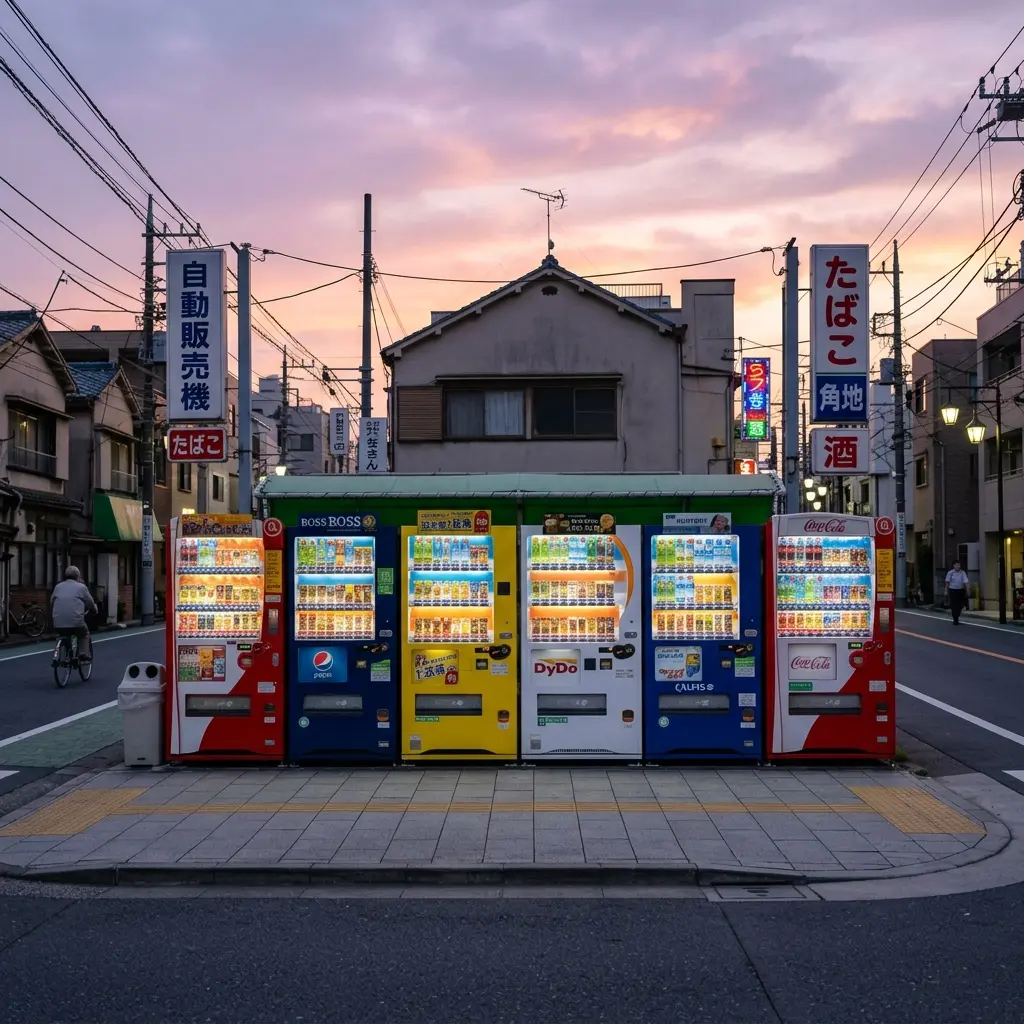
Japan's Jidouhanbaiki stand as glowing monoliths of community convenience, beautifully lighting up quiet alleys and operating flawlessly 24/7.
Nocturnal Luminescence & Urban Spatial Security
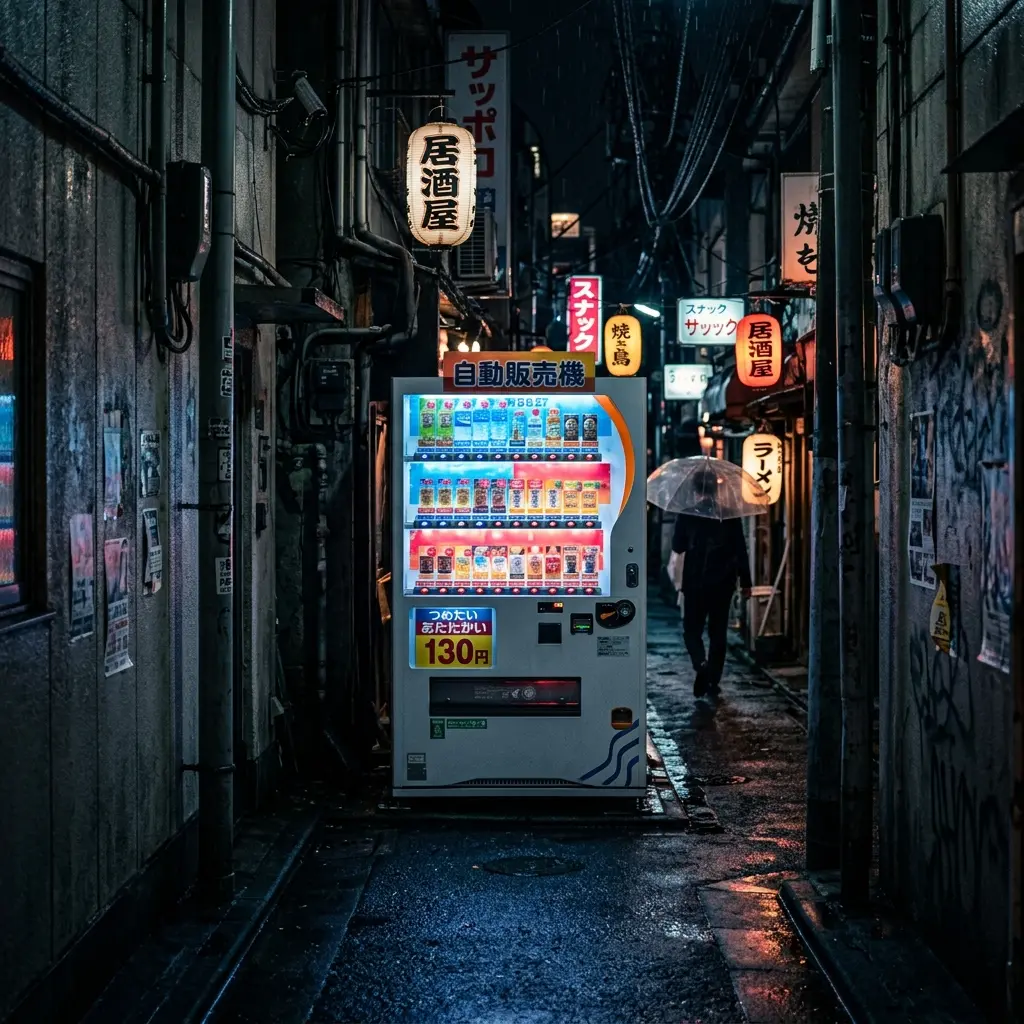
This image captures the striking red and blue LED glow of a Jidouhanbaiki lighting up a quiet residential Tokyo back alley (rojiura). In the dense urban layout of Tokyo, where narrow alleys wind between closely packed houses, these machines act as decentralized public streetlamps. Renders of warm crimson for hot beverages and cool blue for cold ones cast high-lumen, colored pools onto the asphalt, creating a sense of safety and visual warmth for pedestrians returning home after dark. The low crime rates of Japanese cities are intimately connected to this ambient illumination; the presence of a well-lit, fully operational, cash-carrying machine in a deserted alley is a powerful symbol of societal trust and public security.
Cognitive Ergonomics of the Physical Showcase
The interface design of this machine displays physical, three-dimensional product samples (mihon) inside a brightly illuminated glass showcase, rather than relying on flat digital renders. This physical showcase provides immediate cognitive feedback: consumers can judge the exact size, shape, and tactile properties of the can or PET bottle before purchasing. Underneath each sample sits a large, transparent, rectangular pushbutton carrying the price in bold typography. The button is engineered with a satisfying, short-travel mechanical tactile 'click' that gives users immediate physical confirmation of their selection. This physical click is highly intentional, designed to prevent duplicate purchases and reduce cognitive friction, especially when compared to the sterile, non-tactile touch screens of modern digital kiosks.
Behind the sleek facade, the coin-handling mechanism is a marvel of high-precision metallurgy and physics. When a user slides a 100-yen or 500-yen coin into the funnel throat, the coin slides down an inclined chute where it passes through a series of high-frequency electromagnetic sensors. These sensors calculate the coin’s mass, thickness, electromagnetic conductivity, and diameter in less than 50 milliseconds, cross-referencing these measurements with a localized database to detect counterfeits with absolute precision. Concurrently, the machine accommodates modern payment systems via contactless RFID readers. A prominent, angled reader allows users to tap their transportation IC cards (such as Suica or Pasmo) or smartphones. The transaction is completed with a distinctive, high-pitched mechanical chirp, accompanied by the dramatic, low-frequency acoustic clatter of the beverage dropping down the internal chute into the curved retrieval bay. This sensory sequence—from the soft tap of the card to the heavy thud of the can—forms a satisfying tactile ritual that marks the transition of modern convenience.
Preservation Aesthetics & The Kyoto Landscape Act
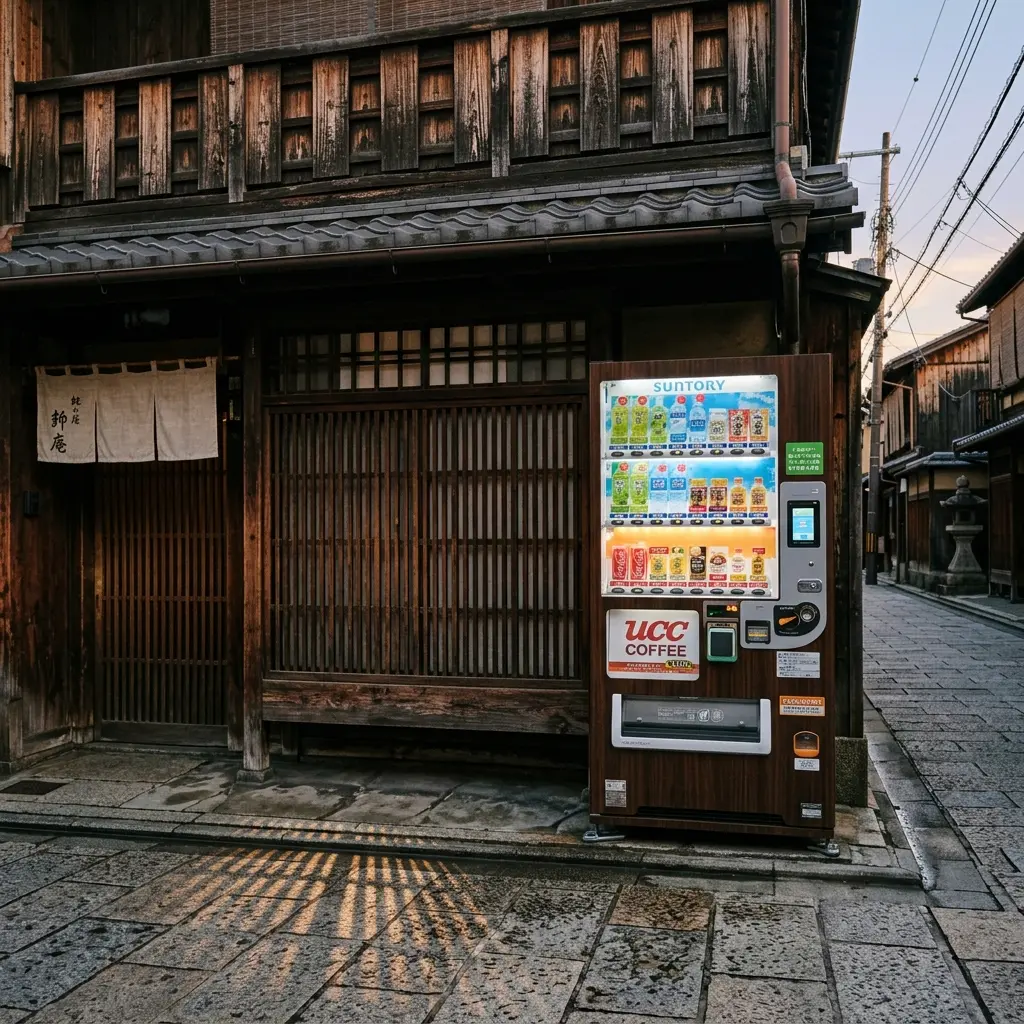
This image showcases the fascinating spatial intersection of modern electronic convenience and historical preservation, where a Jidouhanbaiki is installed against the traditional wooden facade of a historic merchant townhouse (machiya) in Kyoto. In cities rich with historical heritage, standard commercial vending machines—with their brilliant white panels and flashing advertisements—can severely disrupt the visual integrity of the streetscape. To combat this, the Kyoto municipal government enforces some of the strictest aesthetic regulations in the world under the Kyoto Landscape Act. These codes regulate color schemes, prohibiting highly saturated primary colors and requiring brands to adapt their logos and cabinet colors to muted, earthy tones (such as deep brown, forest green, or charcoal gray) that harmonize with Kyoto’s historic architectural fabric.
The Craft of Machiya-ko Wooden Lattice Enclosures
To blend these modern steel cabinets into the ancient streetscapes, local shopkeepers and artisans construct custom wooden lattice enclosures known as machiya-ko. Built from highly durable, aromatic native cypress (hinoki) or cedar (sugi), these wooden frames completely envelop the vending machine, leaving only the interface display and the product buttons visible. The wooden lattice serves a double aesthetic purpose: it visually anchors the machine within the wooden architecture of the street, and it filters the bright LED illumination of the product showcase. The light is diffused through the wooden slats, casting soft, warm shadows that resemble the traditional lanterns (andon) of old Japan, rather than the harsh glare of modern neon. Over time, the untreated cedar panels age gracefully under the elements, developing a deep, weathered silver-brown patina (ame-iro) that further integrates the machine into the historic environment.
Architectural Sympathy & Aesthetic Coexistence
This visual juxtaposition illustrates the Japanese design philosophy of chowa—the creation of harmony between seemingly contradictory elements. Rather than banning modern technology to preserve the past, or destroying the past to accommodate the future, the wooden-cased vending machine represents a compromise of peaceful coexistence. The strict vertical and horizontal lines of the wooden lattice mirror the structural geometry of the machiya’s windows, creating a seamless visual rhythm along the street. This design approach demonstrates that even the most mundane object of modern convenience can be elevated into a work of spatial art when treated with respect for regional heritage, environmental context, and traditional craftsmanship.